

THIS PAGE WILL BE UPDATED WITH THE LATEST NEWS
UPDATE: 4:30 PM CEST
Kansas City Leaders from Both Parties Want a Free Iran, We All Should

This month, a bipartisan majority in the U.S. House of Representatives supported Iranian dissident Maryam Rajavi’s 10-point plan for a free Iran. The initiative — House Resolution 166 — was cosponsored from both sides of the aisle, representing an array of ideological leanings. From the Greater Kansas City area, Missouri Reps. Emanuel Cleaver and Sam Graves and Kansas’ Sharice Davids are among them. It was led by California Reps. Tom McClintock, a Republican, and Brad Sherman, a Democrat. The legislators recognize the right of the people of Iran — especially the rebellious youth, led by the Mojahedin-e-Khalq or MEK, the pivotal opposition — to confront the suppressive forces of the Islamic Revolutionary Guard Corps inside Iran. This is consistent with the inalienable rights that the U.S. Constitution recognizes for people to choose their destiny and a government to serve them — if needed by abolishing the existing regime.
UPDATE: 7:30 AM CEST
The PMOI’s Unbroken Struggle for a Free Iran

May 25th marks a solemn yet inspiring anniversary in the history of the Iranian people’s struggle for liberty: the day the founders of the People’s Mojahedin Organization of Iran (PMOI/MEK) were martyred. Mohammad Hanifnejad, Saeed Mohsen, and Asghar Badizadegan, alongside PMOI Central Committee members Mahmoud Asgarizadeh and Rasoul Meshkinfam, were executed by firing squad on May 25, 1972, under the orders of the Shah.
This pivotal event, far from extinguishing the flame of resistance, ignited a legacy that continues to burn brightly, embodied today by the courageous actions of PMOI Resistance Units across Iran, steadfastly challenging the ruling clerical dictatorship.
PMOI Resistance Units in Zahedan: Resistance against oppression is a legitimate right
The Iranian city of Zahedan witnessed a notable escalation in the activities of PMOI Resistance Units, which directly target the ruling mullahs’ regime. These activities are embodied in large-scale campaigns of installing banners and writing graffiti throughout the city, in a clear indication of growing popular resistance.
May 23—Zahedan, southeast Iran
PMOI Resistance Units resume anti-regime activities, condemning regime corruption that is leading to power and water outages and is exacerbating poverty and misery across the country. pic.twitter.com/GYnEWDYVBp— People's Mojahedin Organization of Iran (PMOI/MEK) (@Mojahedineng) May 24, 2025
The slogans of the Uprising Units carry powerful messages that reject oppression, call for fundamental change, and expose the tyrannical nature of the regime. These slogans reflect the aspirations of the Iranian people for freedom and democracy:
- “Death to the oppressor, be it the Shah or Khamenei”: This slogan is not merely a protest cry, but a categorical rejection of all forms of dictatorship and tyranny, whether represented by the former Shah or the current rule of the mullahs. It emphasizes that the people want no alternative to dictatorship but complete freedom.
Sakineh Parvaneh, Political Prisoner in Evin Prison, Denied Phone Calls for Over Nine Months

Sakineh Parvaneh, a political prisoner held in the women’s ward of Evin Prison, has been denied the right to make phone calls to her family for over nine months, since September 2024. This prolonged deprivation, reportedly enforced through an official directive and under the direct order of a judge, has drawn criticism as a clear example of increased pressure on political prisoners in Iran.
Throughout this time, Ms. Parvaneh has repeatedly protested the decision, describing it as unlawful and inhumane. She has demanded that her right to communicate with her family be restored. However, no official response or effective action has been taken by Evin Prison authorities or the Iranian judiciary.
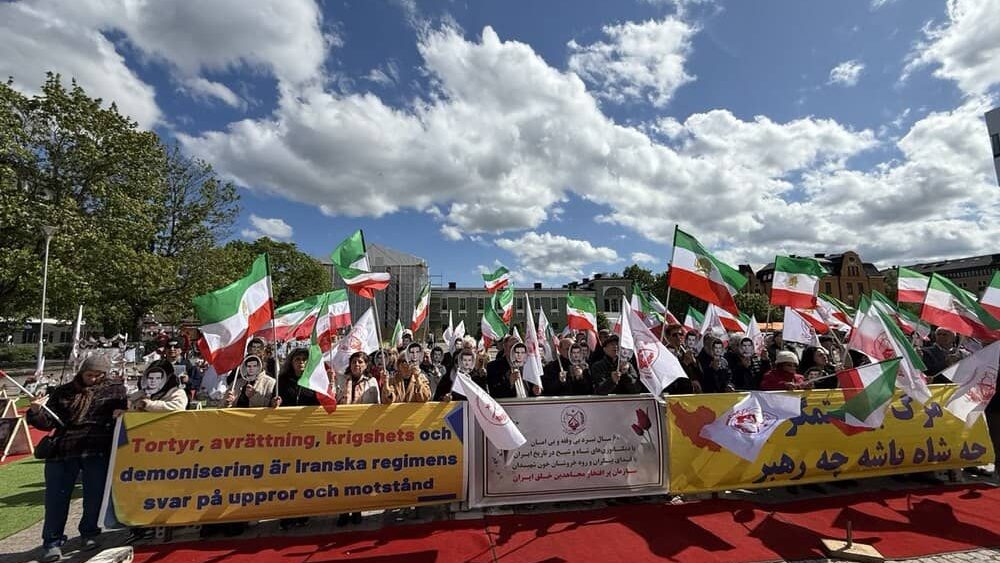
Gothenburg Rally Backs Maryam Rajavi’s 10-Point Plan for a Democratic Iran

Gothenburg, Sweden – May 24 2025: Supporters of the People’s Mojahedin Organization of Iran (PMOI/MEK) gathered in Gothenburg to reaffirm their steadfast backing of the National Council of Resistance of Iran (NCRI), advocating it as the only democratic and viable alternative to the religious dictatorship ruling in Iran. Participants strongly endorsed Mrs. Maryam Rajavi‘s 10-point plan, which outlines a vision for a free, democratic, and secular Iran grounded in human rights and the rule of law.
MEK Supporters in Uppsala, Sweden Honor PMOI Founders, Urge End to Executions in Iran

Uppsala, Sweden – May 24, 2025: Supporters of the Iranian Resistance held a rally in Uppsala to commemorate the anniversary of the execution of the PMOI/MEK’s founders by the Shah’s regime on May 25, 1972. The gathering also marked the 60th anniversary of the MEK’s founding in 1965 and six decades of steadfast struggle against two successive dictatorships in Iran: first the monarchy of the Shah, and now the theocratic regime of the mullahs.
Double the Price, None of the Promise: Corruption Behind Iran’s Aircraft Barter Deal
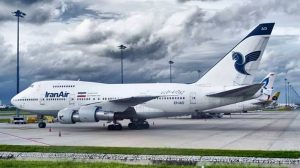
On Sunday, May 25, ILNA, a state-affiliated news agency, reported that officials from Iran’s regime Civil Aviation Organization had purchased two Airbus aircraft from China for $116 million. This comes despite the fact that the actual value of each plane is less than $30 million.
The receipt of significant kickbacks and personal profits by regime officials from secret deals under the pretext of bypassing Western sanctions has repeatedly been highlighted in both domestic and international media over the past decade. The most prominent example is the accumulation of legendary wealth by Ali Shamkhani—an advisor to regime leader Ali Khamenei—and his sons through covert sales of Iranian oil.
On Saturday, May 24, the official news of the arrival of two Airbus A330 aircraft into the fleet of Iran’s airline was published. In April, Mehrdad Bazrpash, the former Minister of Roads and Urban Development, had claimed on X (formerly Twitter) that the purchase of the two aircraft had been finalized under the previous administration.
Truckers’ Strike in Iran Enters Fourth Consecutive Day
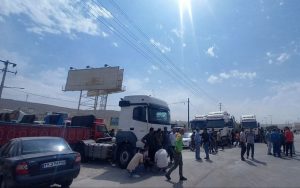
Truck drivers and operators of heavy vehicles in Iran went on strike for the fourth consecutive day on Sunday, May 25. Government agents attacked some of the protesters and arrested several drivers.
Images and videos shared on social media show widespread strikes in dozens of cities across the provinces of South Khorasan, Ardabil, Bushehr, Sistan and Baluchestan, Gilan, Fars, Isfahan, Qazvin, West Azerbaijan, Yazd, and Razavi Khorasan. The Union of Truckers and Heavy Vehicle Drivers of Iran, in a statement on Sunday, May 25, reported that the police used pepper spray on some of their members and arrested several individuals.
The new wave of protests by truck drivers began on May 19 in the southern port city of Bandar Abbas, where the strikers blocked the port’s entry and exit points.
Iran’s Rising Energy Exports Amid Deepening Domestic Crisis

Despite grappling with a severe domestic energy shortfall, Iran continues to increase its electricity and natural gas exports, raising serious concerns about the government’s energy management strategy. Official statistics show that, even as Iran has experienced persistent electricity and gas deficits across all seasons since early 2023, its exports of these critical energy resources have not only continued but expanded. According to the latest monthly report from Turkey’s Energy Market Regulatory Authority (EMRA), Turkey imported approximately 6.14 billion cubic meters of natural gas from Iran between March 2024 and February 2025—marking a 5% increase compared to the previous year.
A Nation Rises: Iran’s Widening Wave of Protests Signals a Turning Point

May 24, 2025 — Iran witnessed a powerful and unprecedented wave of protests that swept across the country, from shuttered highways to streets filled with chants of defiance. Truck drivers, bakers, oil workers, farmers, and defrauded citizens united in a striking display of nationwide solidarity, confronting the corruption, mismanagement, and economic ruin inflicted by the ruling regime. This eruption of protests reveals more than a livelihood crisis—it marks a growing national resolve to challenge a system that has trampled on basic rights for decades.
Across more than twenty cities—including Khorramabad, Dezful, Yazd, Sirjan, Mashhad, and Bandar Abbas—Iran’s truckers brought the transportation network to a standstill. These heavy vehicle drivers, essential to the country’s supply chain, are protesting the soaring costs of fuel, parts, and insurance, coupled with stagnant wages and official indifference. For many, working under these conditions no longer makes economic sense—it simply means deeper poverty.