

THIS PAGE WILL BE UPDATED WITH THE LATEST NEWS
UPDATE: 07:30 AM CEST
PMOI Resistance Units Target Regime Symbols in Response to Execution of Dissidents
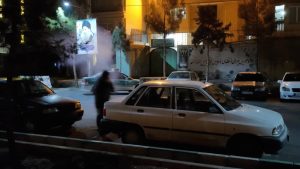
On April 29, PMOI/MEK Resistance Units launched a daring and widespread wave of operations across Iran. These coordinated activities were carried out in direct response to the Iranian regime’s recent execution of dissidents, targeting the very centers and symbols of the ruling establishment’s repression and corruption. The primary message behind these nationwide actions is a resolute defiance against the regime’s brutal repressive measures.
To demonstrate that the Iranian people will not be intimidated, Resistance Units struck multiple military and security sites across the country. In the cities of Hamedan, Bandar Abbas, and Zahedan, the units successfully set fire to the entrances and signposts of the Islamic Revolutionary Guard Corps (IRGC) Basij bases. Furthermore, a regime building was set ablaze in Malard.
Beyond military targets, the Resistance Units took aim at the regime’s ideological footprint. In both Tehran and Mashhad, brave youths torched banners featuring the eliminated regime supreme leader Ali Khamenei. Similar acts of defiance occurred in Juneqan, where Resistance Units set fire to a prominent propaganda poster featuring both the regime founder Ruhollah Khomeini and the eliminated Ali Khamenei. Meanwhile, in Tabriz, a regime propaganda billboard was entirely torched.
Iranian Nurses Braved Fire with Defiance During January 2026 Uprising

In the blood-stained annals of the January 2026 uprising, Iran’s healthcare professionals stood witness to a stark battle between human dignity and sheer depravity. As the clerical regime, with chilling defiance, sought to turn medical centers into extensions of their detention cells—redefining crimes against humanity by sabotaging life-support systems and seizing the wounded from the very midst of surgery—the medical community, and most notably the female Iranian nurses, stood as a resolute fortress of self-sacrifice.
Those who were trained to sustain the flicker of life within the confines of Intensive Care Units, instead found themselves in the “ICU of the Streets,” shielding the people with their own chests against a hail of bullets.
The epic saga of nursing during this uprising was written through the defiance of women who honored their healing oath even at the cost of their lives. The luminescent stars of this struggle stand as a living testament to this truth:
Iran’s Regime Escalates Repression: Death Sentences, Executions, and Torture Mark New Phase of Crackdown
In a sharp escalation of repression following the January 2026 protests, Iranian regime authorities have issued multiple death sentences, carried out executions, and stand accused of torture and extrajudicial killings—underscoring a systematic effort to silence dissent through fear and force.
At the center of these developments is a ruling by Branch 1 of the Revolutionary Court in Shiraz, where Judge Mahmoud Sadati sentenced four protesters from Marvdasht—Hamidreza Sabet-Raei, Hamidreza Fathi, Abdolreza Fathi, and Saeed Zarei Kordshouli—to death on charges of “enmity against God” (efsad-e fel-arz).
The charges stem from alleged involvement in the killing of a Basij member and the destruction of public property during the January 2026 protests.
Reports from human rights monitors indicate that the convictions were secured under severe coercion. The defendants were reportedly subjected to prolonged physical and psychological torture to extract forced confessions.
Checkpoints, Fear, and Humiliation: Iran Regime’s Expanding Machinery of Control After War

Two months have passed since the outbreak of war between the United States and Israel and the Iranian regime—a conflict that culminated in the death of Ali Khamenei. The war began shortly after the bloody January 2026 crackdown, at a time when public anger in Iran had already reached a boiling point. In the weeks since, the regime’s security apparatus has moved aggressively to prevent a resurgence of nationwide protests. The strategy has been multi-layered. Authorities have deployed individuals equipped with so-called “white SIM cards” to operate across social media platforms as part of a coordinated “soft war.” At the same time, they have organized pro-regime nighttime gatherings and established widespread checkpoints across urban centers.
These measures serve distinct but complementary purposes. The first two—digital operatives and staged gatherings—are designed to manufacture legitimacy and project an image of popular support. The checkpoints, by contrast, are instruments of direct coercion, relying on intimidation, humiliation, and intrusive surveillance.
Nobitex Under Scrutiny: Reuters Investigation Links Iran’s Largest Crypto Exchange to Sanctioned Entities

A new investigative report has revealed that Nobitex, Iran’s largest cryptocurrency exchange—widely used by millions of ordinary citizens seeking to preserve their savings—may also function as a key financial conduit for sanctioned entities within the Iranian regime, including the Central Bank and the Islamic Revolutionary Guard Corps (IRGC).
According to the report published by Reuters on Friday, May 1, Nobitex was founded by two brothers, Ali and Mohammad Kharazi, members of the influential Kharazi family, though they operated under the lesser-known surname “Aghamir.” The Kharazi family has long-standing ties to Iran’s political establishment.
Reuters reports that the brothers concealed their family connections for years, even from some close associates. They are reportedly related through their father to Kamal Kharazi, a prominent regime diplomat who was killed in a direct Israeli strike during last month’s conflict.
Iran Executes Protest Detainee Mehrab Abdollahzadeh Despite Disputed Case
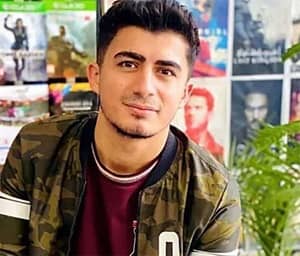
Iran has executed Mehrab Abdollahzadeh, a young man arrested during the 2022 nationwide protests, following a judicial process that rights organizations say was marked by serious flaws.
According to HRANA and other human rights groups, Abdollahzadeh was born in March 1999 in Urmia and was arrested on October 22, 2022, at his workplace by agents of the Islamic Revolutionary Guard Corps’ intelligence unit. His detention came amid a sweeping crackdown on protesters that saw thousands arrested across the country.
Throughout his interrogation and trial, Abdollahzadeh consistently denied the charges against him, including “enmity against God” (moharebeh). He had requested a technical review of his mobile phone location data to demonstrate he was not present at the scene of the alleged crime. A source familiar with the case also said that video evidence from the incident did not show him at the location.
Malmö Rally Condemns Executions in Iran, Voices Support for NCRI as Democratic Alternative
Malmö, Sweden – May 2, 2026: Supporters of the People’s Mojahedin Organization of Iran (PMOI/MEK) held a rally in Malmö to protest the execution of political prisoners, including PMOI members and protesters arrested during the January 2026 uprising in Iran.

Demonstrators strongly condemned the actions of the ruling clerical regime, describing the executions as a blatant violation of human rights. Participants paid tribute to the victims by holding their photos and reaffirmed their commitment to continue the struggle against the regime until its overthrow and the establishment of peace, freedom, and justice in a democratic republic.
Paris Exhibition Honors Executed Political Prisoners, Urges June 20 Rally for a Democratic Iran
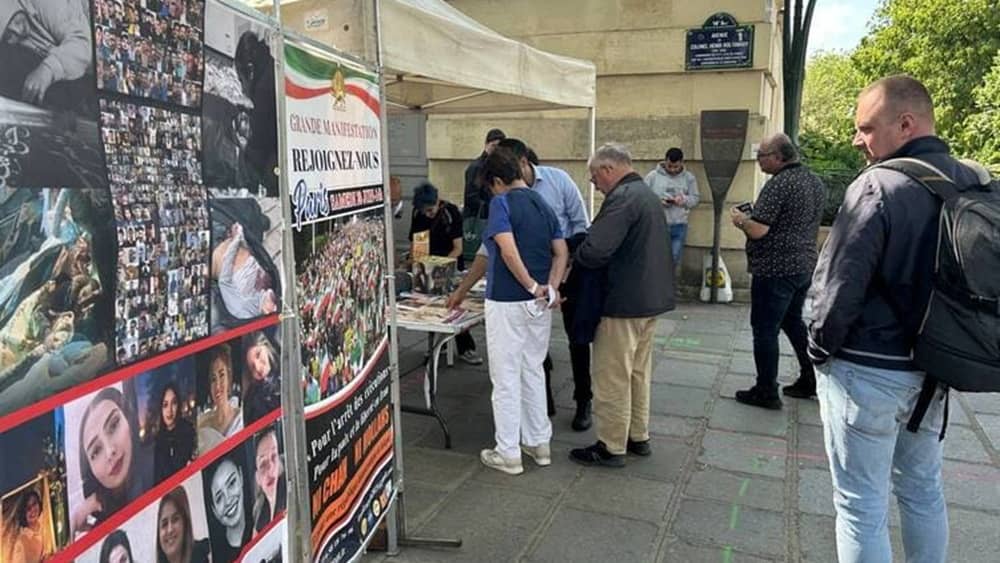
Paris, France – May 2, 2026 – A book stall and photo exhibition by the People’s Mojahedin Organization of Iran (PMOI/MEK) honored executed political prisoners and protesters of the January 2026 uprising, renewing calls for freedom and justice in Iran.

Organized by supporters of the Iranian Resistance, the event paid tribute to those executed by the Iranian regime, highlighting their sacrifice through powerful images and personal testimonies. The exhibition underscored the Iranian people’s continued resistance and their demand for a democratic republic.