

THIS PAGE WILL BE UPDATED WITH THE LATEST NEWS
UPDATE: 9:30 PM CET
Iran Allegedly Planned to Assassinate Human-Rights Crusader Irwin Cotler

Iran allegedly plotted to assassinate Irwin Cotler, a noted Canadian human-rights advocate and harsh critic of the clerical regime, but the attempt on his life was recently foiled by law-enforcement authorities. According to a source, the RCMP on Oct. 26 informed Mr. Cotler, a former Liberal justice minister, that he faced imminent threat of assassination within 48 hours from Iranian agents.
The source said legal authorities had knowledge of two suspects in the plot but it is not known whether they have been arrested or fled the country. The source said the 84-year-old Mr. Cotler was advised on Thursday that the threat against him had been significantly lowered. The Globe and Mail is not identifying the source because they were not authorized to discuss national security issues.
UPDATE: 5:30 PM CET
UK Sanctions Iran for Aiding Russia’s Illegal War in Ukraine, As Foreign Secretary Chairs UN Security Council

ran’s national airline, Iran Air, is today subject to an asset freeze which will further restrict its direct, scheduled commercial air services to and from the UK, following financial sanctions imposed by the UK government. As a state-owned airline, Iran Air, is sanctioned in response to the Government of Iran’s transfer of ballistic missiles to Russia, following commitments outlined by the E3 in September.
The UK is also announcing sanctions against the state-owned national shipping carrier of Iran, the Islamic Republic of Iran Shipping Lines (IRISL), and the Russian cargo ship, PORT OLYA-3 (IMO 9481910). These measures include an asset freeze and shipping sanctions respectively, taken against both entities for their role in supporting the Iranian defence sector or transporting weapons to Russia for use on the battlefield in Ukraine.
UPDATE: 7:00 AM CET
Confronting the Epicenter of Terrorism and Warmongering
From the early days of his rule, Khomeini, the founder of the Iranian regime, imposed a repressive theocracy on the people of Iran. His reactionary and warmongering policies plunged vast parts of the Middle East into chaos, insecurity, and bloodshed—an ongoing legacy.
After the devastating eight-year war with Iraq (1980–1988), which claimed the lives of one million Iranians, the regime established the Quds Force, a division of the Revolutionary Guard Corps (IRGC). The Quds Force is tasked with orchestrating terrorism and fueling conflicts across the region, including in Iraq, Syria, Yemen, Afghanistan, Pakistan, Lebanon, and Palestine. The Quds Force had dedicated a specialized unit to each of these countries.
The Iranian regime employs a duplicitous strategy: while its proxies launch attacks and receive financial, logistical, and military support from Tehran, the regime denies direct involvement, feigning innocence and claiming that these groups act independently.
Don’t Ignore Iran’s Continued Persecution of Pro-Democracy Activists

A somber scene unfolded on Oct. 6 in Tehran’s Revolutionary Court that underscores the brutal clampdown on dissent in Iran. Seven political prisoners, including seasoned activists and young professionals, faced grave charges under the watchful eyes of the regime. Among the accused is Abolhassan Montazer, a 65-year-old with a storied history of political resistance dating back to the 1980s. Despite suffering from serious health conditions, Montazer faces charges that could lead to the most severe penalties. Alongside him are young professionals like Pouya Ghobadi and Vahid Bani-American, whose only crime appears to be their unyielding demand for a free Iran.
The Iranian judiciary, acting as an arm of suppression rather than a pillar of justice, has begun resorting to increasingly harsh measures. The recent trial of these seven men is conducted by Judge Iman Afshari, who is known for his harsh rulings. The proceedings lack the most basic standards of fairness and due process, and they are often characterized by predetermined outcomes and accusations of torture and forced confessions.
Read more
Iran’s Energy Crisis: Mazut, Blackouts, and Broken Promises

In a time when air pollution from heavy fuel oil (mazut) combustion in Iran makes breathing difficult and each breath leads toward illness and death, power blackouts appear as an unavoidable option. This forced choice between “bad” and “worse” prompting reflection on the totalitarian nature of Iran’s regime and the duplicity of its so-called reformists. The choice between “bad” and “worse” is a grand deception; for by choosing “bad,” we create the opportunity for things to worsen. In Iran, reformist factions have constantly highlighted the “worse” option to make “bad” seem reasonable. In today’s crisis, the state-proposed solution of power cuts appears preferable to breathing toxic air.
Iran’s Regime Faces Anxiety and Division over Shifting U.S. Politics

The government-affiliated Iranian newspaper Setareh Sobh published an article titled “Anxious Days” on November 17, referring to the victory of Donald Trump in the U.S. presidential elections. It stated: “Biden has 63 more days in office, and this period could be filled with anxiety for Iran. For the sake of the people, the hardliners should avoid making provocative gestures or raising their voices, so the situation does not deteriorate further for the country and its citizens.”
The state-affiliated media also warned regime officials: “Iran must recognize that circumstances have shifted with Trump in power… Caution is essential, and strategies must be reassessed.”
Addressing such fear-driven advice, which has proliferated during Iran’s “anxious days,” Ali Motahari, former deputy speaker of the regime’s parliament, remarked a few days ago: “There is a condition called ‘Istisba.’
Iranian Regime Faces JCPOA Deadline Amid Nuclear Tensions

As the expiration of the Joint Comprehensive Plan of Action (JCPOA) approaches, officials of the Iranian regime are intensifying warnings about the “critical conditions” they face. Abbas Araghchi, Deputy Foreign Minister, has highlighted the shrinking window for diplomacy, while a member of the regime’s parliament has openly called for pursuing nuclear weapons. Speaking on state television on Saturday, November 16, Araghchi warned that the JCPOA’s expiration on October 18, 2025, leaves little time for negotiations to secure a new agreement. He cautioned that failure to act could lead to “a critical situation” where European nations might invoke the “trigger mechanism,” or snapback sanctions.
The Iranian Regime’s Economic Ventures in Syria: Failures Amid Political Alliance
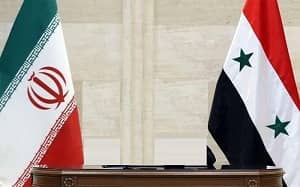
The Iranian regime has long portrayed its alliance with the Syrian government as a cornerstone of its regional policy. While political ties between the two regimes remain robust, economic partnerships have faltered, exposing significant challenges. Recent developments highlight the inactivity of Iranian industries in Syria, despite years of promises and investments. On November 16, Saeed Aref, Secretary General of the Iran-Syria Joint Chamber of Commerce, announced that all Iranian factories in Syria, including those of Saipa, Iran’s primary car manufacturer, are inactive. This revelation underscores the failure of the Iranian regime’s industrial ambitions in Syria.
The Saipa facility in Homs, inactive since mid-2023, was reportedly targeted by Israeli airstrikes in October, further exacerbating its stagnation. While the Iranian Chamber of Commerce reported $15 million in car part exports to Syria in 2022, this figure plummeted to zero last year.
The Winners and Losers of Iran’s New Gasoline Pricing Policies
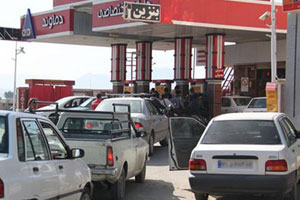
The Iranian regime has decided to liberalize the price of premium gasoline. Who are the winners and losers in this price liberalization? Various labels such as imbalance and shortage are used, but the country is grappling with a major crisis. The treasury is empty, and the government needs funds to cover daily operations and current expenses. The primary issue concerning the import of premium gasoline is the source of its foreign exchange funding. Under these circumstances, instability in the price of premium gasoline might start here and spread to other markets. Currently, the FOB Gulf price of premium gasoline is approximately $1.2 (roughly 840,000 rials).
Iran’s Carpet Exports Plummet by Over Tenfold
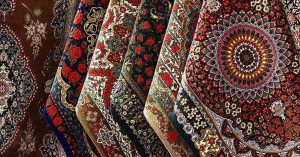
Iran’s carpet exports have faced a dramatic decline, dropping from $426 million in 2017 to less than $40 million in 2023.
Morteza Haji-Aghamiri, head of the Carpet, Art, and Handicrafts Commission of Iran’s Chamber of Commerce, announced these figures on Sunday, November 17, in an interview with ILNA, Iran’s Labor News Agency. He stated that India has now replaced Iran in the global carpet market, dominating the U.S. market, which accounts for 44% of global carpet imports.
He attributed this decline primarily to sanctions and misguided currency policies, especially the “foreign exchange repatriation policy.”
This policy has hindered exporters from promptly repatriating revenue from carpet sales, causing them to lag in the global market.
Iranian Officials Make Contradictory Statements on Internet Censorship

On November 12, the second meeting of the Supreme Council of Cyberspace was held to discuss the state of the internet and social networks. This meeting, ostensibly aimed at examining the possibility of lifting internet censorship measures, ended without any concrete outcome, as was the case previously. Officials who themselves issued the filtering orders talk about reviewing the matter in such sessions; however, no solution to resolve users’ issues is provided. Iranian state media wrote, “The agenda of the second meeting of the Supreme Council of Cyberspace was ensuring easy access to cyberspace.”
“In this session, the follow-up of the previous meeting’s resolutions regarding access to cyberspace was discussed.”
State-Sanctioned Murders in Iran’s Prisons

In recent months, Iranian authorities have intensified their use of torture, denial of medical care, and psychological abuse as systematic methods to exert control over detainees, particularly those involved in the 2022 nationwide protests. This escalation comes alongside a sharp increase in executions, with 178 prisoners executed in October 2024 alone. Beyond the surge in executions, the regime employs various covert methods to murder prisoners, including physical torture, deliberate medical negligence, and psychological pressure that drives detainees to suicide. This report highlights numerous cases where prisoners—both political and non-political—have died under suspicious circumstances in detention facilities, with evidence suggesting state complicity in their deaths.
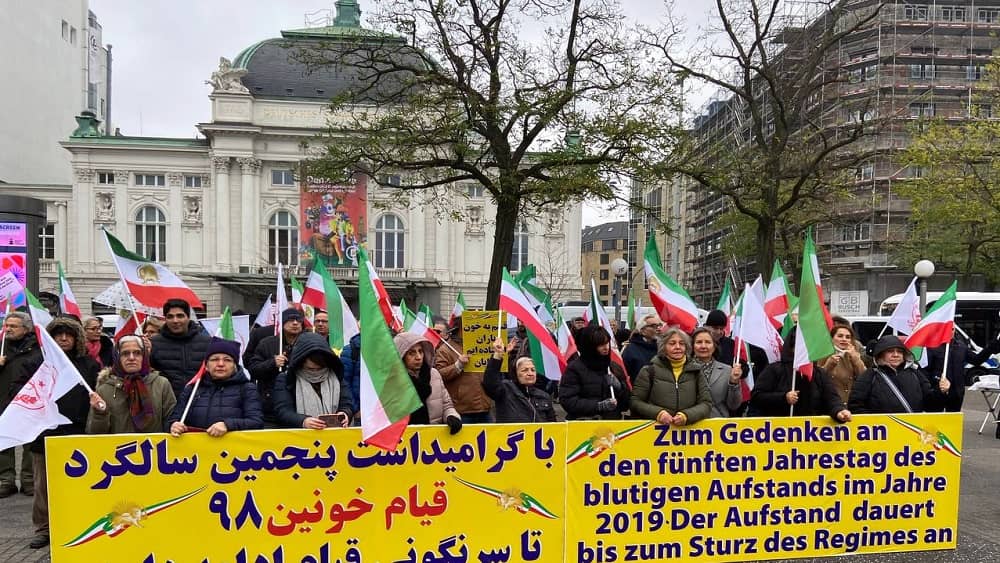
Aarhus, November 14, 2024: MEK Supporters Rally to Honor November 2019 Martyrs and Denounce Iran Regime’s Crimes

Aarhus, Denmark—November 14, 2024: Freedom-loving Iranians and supporters of the People’s Mojahedin Organization of Iran (PMOI/MEK) organized a rally and exhibition to express solidarity with the Iranian Revolution. This rally served as a tribute to the martyrs of the nationwide Iranian uprising in November 2019 and in 2022.
Lugano, Switzerland—November 16, 2024: MEK Supporters Exhibition to Honor November 2019 Martyrs and Denounce Iran Regime’s Crimes

Lugano, Switzerland—November 16, 2024: Freedom-loving Iranians and supporters of the People’s Mojahedin Organization of Iran (PMOI/MEK) organized an exhibition to express solidarity with the Iranian Revolution. This rally served as a tribute to the martyrs of the nationwide Iranian uprising in November 2019 and in 2022.
Oslo, Norway—November 14, 2024: MEK Supporters Rally to Honor November 2019 Martyrs and Denounce Iran Regime’s Crimes
Oslo, Norway—November 14, 2024: Freedom-loving Iranians and supporters of the People’s Mojahedin Organization of Iran (PMOI/MEK) organized a rally and exhibition to express solidarity with the Iranian Revolution. This rally served as a tribute to the martyrs of the nationwide Iranian uprising in November 2019 and in 2022.
The rally also protested the rising wave of executions carried out by the Iranian regime and called for the immediate release of all political prisoners held in the regime’s prisons.
#Oslo, #Norway—November 14, 2024: #MEK Supporters Rally to Honor November 2019 Martyrs and Denounce #Iran Regime’s Crimes #FreeIran #IranProtests #IranRevolution #BlacklistIRGC #No2ShahNo2Mullahshttps://t.co/NfWB9SSmln
— Iran Freedom (@4FreedominIran) November 17, 2024