


THIS PAGE WILL BE UPDATED WITH THE LATEST NEWS
UPDATE: 5:30 PM CET
Iran Faces Fresh Censure Over Lack of Cooperation at UN Nuclear Meeting
Agence France-Presse (AFP) – European powers — backed by the United States — are pushing ahead with a plan to censure Iran for its poor cooperation with the UN nuclear watchdog at a board meeting starting Wednesday, diplomats told AFP.
Tensions between Iran and the International Atomic Energy Agency (IAEA) have repeatedly flared since a 2015 deal curbing Tehran’s nuclear programme in exchange for sanction relief fell apart.
In recent years, Tehran has cut cooperation with the IAEA by ramping up its nuclear activities, deactivating surveillance devices to monitor the nuclear programme and barring UN inspectors.
UPDATE: 12:30 PM CET
US Accuses Iran’s Regime of Fueling Regional Instability at UN Security Council Meeting

In a session of the UN Security Council on Middle East developments, the United States accused Iran of stoking regional conflicts and exploiting them for its own agenda. Ambassador Linda Thomas-Greenfield stated, “This conflict was stoked and exploited by Iran, which provided support to regional proxies and partners, and directly put millions of innocent Israelis, Palestinians, and Lebanese civilians at risk.”
She highlighted the Iranian regime’s role in exacerbating tensions through its support of groups like Hezbollah, which threaten regional stability and defy international resolutions. “For far too long, Hizballah has threatened the security of Israel, Lebanon, and the region. With support from Iran, Hizballah built up its forces in plain sight and in disregard of Resolutions 1559 and 1701. This cannot and must not reoccur,” Thomas-Greenfield emphasized.
The U.S. representative warned that Tehran’s actions have undermined opportunities for sustainable solutions in the region. She called on the international community to take decisive steps against Tehran’s destabilizing activities, stressing that “members of this Council should speak with one voice in support of diplomatic efforts to achieve a durable end to the fighting.”
The remarks come as the region remains tense, with ongoing conflicts in Gaza, Lebanon, and the West Bank, and as the UN Security Council seeks diplomatic pathways to reduce hostilities.
UPDATE: 11:30 AM CET
MPs Condemn Alleged Iranian Plot to Assassinate Ex-Minister Irwin Cotler

The House of Commons on Monday condemned an alleged Iranian plot to assassinate former Liberal justice minister Irwin Cotler. MPs in the House unanimously supported a Bloc Québécois motion saluting Cotler’s human rights work and recognizing his political contributions, and condemning what it termed death threats orchestrated by agents of a foreign regime.
The Globe and Mail first reported that the RCMP warned Cotler on Oct. 26 that there was an imminent threat of assassination within 48 hours, and then later said the threat against him had been significantly lowered. It said Cotler, a vocal critic of the Iranian regime, has been under RCMP protection since the Oct. 7, 2023, Hamas attack on Israel. Cotler’s office confirmed the Globe and Mail reporting to the Canadian Press.
UPDATE: 8:30 AM CET
Dutch Law Firm Helped Iranian Oil Industry Evade U.S. Sanctions for Years

A Dutch-based law firm has helped the Iranian oil industry evade United States sanctions for years, according to research by BNR. International Law Firm Taheri (ILFT) has set up at least six companies since 2020 to manage oil tankers with paid intermediaries as directors so that the real owner remained out of sight. This was done by a Surinamese subsidiary of the law firm based in Capelle aan den IJssel, according to the broadcaster.
Last month, the United States put three companies registered at ILFT’s office address in Suriname on its sanctions list. The companies are accused of involvement in the trade of Iranian oil. According to the American authorities, Iran uses the income from its oil trade to fund terrorist organizations like Hamas and Hezbollah.
ILFT owner Masoud Taheri (44) told BNR that he is merely a service provider offering a “solution” for a client faced with a “legal issue at an international level.” The six oil tankers registered with ILFT are managed on paper by Surinamese people affiliated with the firm.
UPDATE: 7:00 AM CET
Iran’s Regime Faces Disarray as Public Dissatisfaction Reaches A Breaking Point

The disarray in Iran’s regime has become so evident that even media affiliated with the regime do not shy away from highlighting aspects of this chaos.
On November 13, Jahan-e Sanat news website wrote, “We have reached a point where Iranian livelihoods, whether at the family level, business level, or even on a macro scale, are on a path of structural collapse. A glance at discouraging economic news reveals that the 14th government is stuck in a quagmire, where every action, right or wrong, leads to sinking further.”
The structural integrity of affairs has unraveled. A vivid example of this quagmire is the crisis of power outages, fuel shortages at power plants, and the excuse of electricity cuts due to air pollution caused by heavy fuel oil consumption.
Khamenei’s Succession Remarks Cause Turmoil within Iran’s Regime

On November 7, Iranian regime supreme leader Ali Khamanei met with the Assembly of Experts and discussed plans for his successor.
“The Assembly of Experts, as defined in our Constitution, is one of the most revolutionary institutions of the Islamic Republic,” he said. “Its significance lies in its unique responsibility to select the nation’s leader. This readiness to fulfill that role must always be maintained.”
One day after Khamenei’s remarks to the Assembly of Experts, where he emphasized the need for their readiness to select the next Supreme Leader, Mohammad Bagher Heydari Kashani, a member of the Assembly, described both the speech and the atmosphere as such: “We held our breath. He gave explicit orders for the Assembly to act swiftly and decisively, without hesitation, to appoint the next leader in accordance with constitutional guidelines… The mere thought of the Leader’s absence moved some members to tears; they couldn’t hold back their emotions at the possibility of the Supreme Leader’s martyrdom.”
A Nation in Crisis: Rising Poverty and Inflation in Iran

A recent report by the Research Center of the Iranian Chamber of Commerce paints a grim picture of Iran’s economic state. By the end of 2021, approximately 32 million people—nearly 40% of the population—were living below the food poverty line, with this figure expected to rise further due to the severe inflation of recent years. The report, published on November 16, examines Iran’s inflation crisis from two perspectives: monetary policy and exchange rate dynamics. It highlights a key concern: Iran’s annual inflation rate has averaged 20% over the past 44 years. This persistent inflation, according to the Iranian Chamber, renders discussions about economic growth, investment, or production largely futile.
Inflation has exacerbated poverty levels dramatically. In 2017, the Ministry of Welfare estimated that 18 million Iranians lived below the food poverty line. However, following the inflationary shocks of 2018 and 2019, this number surged to over 26 million by the end of 2019. By 2023, the poverty rate had climbed again, reaching 30.1%, according to an October report by the Parliament Research Center.
The Rising Price of Bread in Iran: A Growing Burden on Citizens

In recent weeks, the price of Sangak bread, a staple in Iran, has skyrocketed, sparking widespread concern among citizens. Following the announcement of new pricing by the head of Tehran’s Sangak Bakers Union, the cost of this traditional bread in some bakeries has surpassed 20,000 tomans. Justifications for these price hikes often include claims of heavier loaves or the addition of ingredients like sesame or vegetables. However, this has created significant challenges for many households already grappling with economic difficulties.
On November 5, the head of the Sangak Bakers Union cited high production costs as a reason for granting bakeries permission to raise prices by up to 5,000 tomans. Consequently, the price of plain Sangak bread rose from 10,000 to 15,000 tomans, while double-sesame Sangak reached 20,000 tomans.
Nasimeh Eslam Zehi with Her 7-month-old Baby Held in Iran’s Evin Prison for Over 400 Days

For over 400 days, Nasimeh Eslam Zehi has been held in detention without formal charges, sharing a cramped space in Tehran’s infamous Evin Prison with her seven-month-old daughter, Tasnim. Her case highlights the Iranian regime’s ongoing human rights abuses, targeting women, children, and religious minorities with impunity.
Nasimeh Eslam Zehi, approximately 40 years old, is also the mother of a two-year-old daughter named Ayesha, who was separated from her during her arrest in September 2023. Authorities claimed the child was placed in the care of Iran’s Welfare Organization, but despite repeated inquiries, Nasimeh has not been allowed to see her.
Establishment of Hijab Rehabilitation Clinic in Iran with a Large State Budget
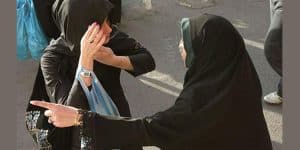
The Iranian regime, which has positioned “hijab” as one of the central aspects of its identity since its inception and imposed high costs on the people, particularly women, over the years, has now launched a new initiative called the “Hijab Rehabilitation Clinic” with a budget of 2.55 trillion rials (approximately $3.73 million). The Iranian regime uses the pretext of the hijab to suppress Iranian women, who have consistently been at the forefront of protests against injustice, employing it as a tool to control the shifting dynamics of Iranian society. The regime allocates large budgets for this purpose and utilizes governmental forces and agencies to maintain control.
In 2022, following the death of Mahsa Amini in the custody of the morality police, widespread protests erupted in Iran, which the regime brutally suppressed. This crackdown resulted in the deaths of at least 750 people and the imprisonment and torture of over 30,000 individuals.
Half a Billion Liters of Diesel Reserves Sold on Tehran Stock Exchange

Abbas Kazemi, former CEO of the National Iranian Oil Refining and Distribution Company, stated that Abadan Refinery “instead of supplying fuel to power plants, has offered 400 to 500 million liters of diesel, needed for winter reserves, on the stock exchange,” resulting in a depletion of diesel reserves. In an interview with the state-run ILNA news agency, Kazemi described the sale of diesel on the stock exchange as “legal,” but he criticized it as lacking in “foresight and planning.”
It is noteworthy that according to domestic laws, refinery products are considered part of national assets. Therefore, the sale of diesel on the Tehran Stock Exchange, if it leads to a reduction in strategic reserves and harms national interests, can be legally pursued.
At Least Seven Executions Carried Out in Iran Within Two Days

Reports indicate that at least seven prisoners were executed in various prisons across Iran on Saturday, November 16, 2024, and Sunday, November 17, 2024. The executions took place in Khorramabad, Rasht, Zanjan, Birjand, and Isfahan prisons. The charges ranged from drug-related offenses to murder. On Sunday, November 17, 2024, a prisoner named Mostafa Molaei was executed in Khorramabad Central Prison. He had been sentenced to death after being convicted of murder. The execution reportedly took place at dawn.
In Lakan Prison, located in Rasht, authorities carried out the execution of Mehdi Gilani on Saturday, November 16, 2024. He was convicted on drug-related charges and had been sentenced to death accordingly.
Iran’s Foreign Minister Says ‘Limited Opportunity’ for Nuclear Diplomacy

Iran’s Foreign Minister has expressed concerns about the “critical situation” as the one-year countdown to the end of the JCPOA (Joint Comprehensive Plan of Action) begins. He warned about the possibility of European countries triggering the snapback mechanism.
Meanwhile, some Iranian lawmakers have proposed that the government should consider moving towards nuclear weapons development.
During a televised program on the evening of November 16, 2024, the Foreign Minister stated that there is little time left for diplomacy and nuclear negotiations. He described this opportunity as “very limited,” emphasizing that if no new agreements are reached before the JCPOA expires in October 2025, a “crisis” could arise.
Stockholm, November 16, 2024: MEK Supporters Rally to Honor November 2019 Martyrs and Denounce Iran Regime’s Crimes

Stockholm, Sweden—November 16, 2024: Freedom-loving Iranians and supporters of the People’s Mojahedin Organization of Iran (PMOI/MEK) organized a rally and exhibition to express solidarity with the Iranian Revolution. This rally served as a tribute to the martyrs of the nationwide Iranian uprising in November 2019 and in 2022.
Amsterdam, November 16, 2024: MEK Supporters Rally to Honor November 2019 Martyrs and Denounce Iran Regime’s Crimes

Amsterdam, the Netherlands—November 16, 2024: Freedom-loving Iranians and supporters of the People’s Mojahedin Organization of Iran (PMOI/MEK) organized a rally and exhibition to express solidarity with the Iranian Revolution. This rally served as a tribute to the martyrs of the nationwide Iranian uprising in November 2019 and in 2022.
Hamburg, November 16, 2024: MEK Supporters Rally to Honor November 2019 Martyrs and Denounce Iran Regime’s Crimes

Hamburg, Germany—November 16, 2024: Freedom-loving Iranians and supporters of the People’s Mojahedin Organization of Iran (PMOI/MEK) organized a rally and exhibition to express solidarity with the Iranian Revolution. This rally served as a tribute to the martyrs of the nationwide Iranian uprising in November 2019 and in 2022.
Cologne, November 16, 2024: MEK Supporters Rally to Honor November 2019 Martyrs and Denounce Iran Regime’s Crimes

Cologne, Germany—November 16, 2024: Freedom-loving Iranians and supporters of the People’s Mojahedin Organization of Iran (PMOI/MEK) organized a rally and exhibition to express solidarity with the Iranian Revolution. This rally served as a tribute to the martyrs of the nationwide Iranian uprising in November 2019 and in 2022.