

THIS PAGE WILL BE UPDATED WITH THE LATEST NEWS
UPDATE: 10:00 PM CEST
The Mullahs Have a New Weapon, and It Is Artificial Intelligence
 For decades, Iran’s clerical dictatorship has treated propaganda as an instrument of state power. Newspapers, television, mosques, cultural centers, intelligence agencies, and diplomatic missions have all played their part in spreading the regime’s message and demonizing its enemies. Now the mullahs have acquired a powerful new weapon. Artificial intelligence.
A disturbing investigation published by Anthropic has exposed three Iranian state-aligned influence operations using its Claude artificial intelligence system to construct sophisticated propaganda campaigns. These were no collection of enthusiastic amateurs posting slogans from Tehran. Anthropic says the operations were linked to Iranian state propaganda institutions and formed part of what their organizers themselves described as a “soft war” and “cognitive warfare” program.
The implications are chilling. According to Anthropic, Claude became what amounted to an administrative and operational headquarters. It helped create campaign plans, operational manuals, artificial personas, target databases, amplification schedules, and ministerial planning documents. Government intelligence bulletins could be transformed rapidly into material in Farsi, Arabic, Urdu, Malay, Spanish, and English, with ambitions extending to 20 languages. Even more sinister was the deliberate laundering of attribution.
UPDATE: 5:00 PM CEST
Operation Economic Outcast Sanctions Major Bank Helping Iran Evade Sanctions
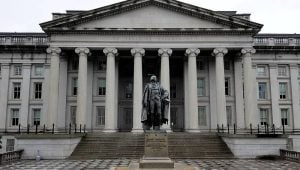
WASHINGTON—Today, under Operation Economic Outcast, the U.S. Department of the Treasury’s Office of Foreign Assets Control (OFAC) designated prominent Russian financial institution, VTB Bank Public Joint Stock Company (VTB Bank) for its involvement in Iranian sanctions evasion, including establishing correspondent relationships with sanctioned Iranian banks.
“Under Operation Economic Outcast, Treasury will continue to target and disrupt those who provide material, technological, or financial support that allows the Iranian regime to sustain its terrorist enterprise,” said Secretary of the Treasury Scott Bessent. “Treasury will not tolerate any support to the regime and will continue to identify, expose, and isolate Iran’s enablers.”
OFAC’s action against VTB Bank is being taken pursuant to Executive Order (E.O.) 13902, which targets certain sectors of the Iranian economy, including Iran’s financial sector. VTB is now among the most comprehensively sanctioned financial institutions in the world.
Mauritania Summons Iranian Ambassador Over Visit to Trarza Village
Mauritania’s Foreign Ministry summoned the Iranian ambassador in Nouakchott and delivered an official protest regarding several actions and movements it considered inconsistent with established diplomatic customs and traditions.
The ministry stated that the actions in question did not comply with the regulations governing diplomats’ conduct in host countries.
The ministry stressed the need for strict adherence to the rules and protocols regulating the work of diplomatic missions in the future, to ensure respect for recognized diplomatic norms.
U.S. Attorney Seeks Forfeiture Of $61 Million In Cryptocurrency from the Iranian Military’s Black-Market Oil Sales
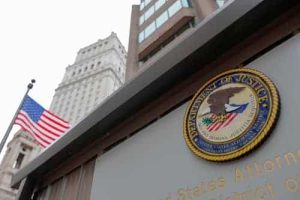
Deputy United States Attorney for the Southern District of New York, Sean S. Buckley, and Assistant Director in Charge of the New York Field Office of the FBI, James C. Barnacle, Jr., announced the filing of a civil forfeiture Complaint against approximately $61 million in cryptocurrency as the proceeds of black-market sales of sanctioned Iranian crude oil and petroleum products, intended to finance the Government of Iran and Iranian military components, including Iran’s Islamic Revolutionary Guard Corps (“IRGC”), a designated terrorist organization.
“Today’s complaint demonstrates the FBI’s ability to follow the money, root out illicit schemes, and halt the stream of cryptocurrency to any government attempting to evade sanctions or committing terrorist activities,” said FBI Assistant Director in Charge James C. Barnacle, Jr. “By cutting off funds raised by the black-market sale of crude oil, the Iranian military and terrorists are weakened. The FBI will not relent in its resolve to drain the funds from dangerous foreign actors.”
UPDATE: 7:00 AM CEST
Iran’s Gasoline Price Hike Adds Another Shock to a Deepening Cost-Of-Living Crisis

On September 8, Iran’s regime doubled the price of gasoline purchased beyond the monthly subsidized quota, raising the third-tier rate from 50,000 to 100,000 rials per liter. Motorists can still purchase 60 liters per month at 15,000 rials and another 50 liters at 30,000 rials.
Regime officials have presented the measure as a limited adjustment aimed at heavy consumers and addressing the growing imbalance between gasoline supply and demand. But the increase comes at a time when Iranian families are already struggling with soaring food prices, declining purchasing power, a battered currency, and rapidly rising living expenses.
Under such conditions, the significance of the increase goes far beyond the additional amount some motorists will pay at filling stations. Higher fuel costs risk becoming another inflationary shock that spreads through transportation, distribution, services, and ultimately household budgets.
The regime argues that most motorists remain protected because the higher rate applies only after consumption exceeds 110 liters per month. The state oil distribution company said about 15% of consumers would be directly affected.
Smearing The PMOI With False Claims of Misusing Artificial Intelligence

While the destructive and fraudulent use of artificial intelligence by the clerical regime and monarchist remnants has been well-documented, the Anthropic company has claimed that the People’s Mojahedin Organization of Iran (PMOI/MEK) and the National Council of Resistance of Iran (NCRI) have engaged in deceptive influence operations on the Claude platform in violation of regulations. The PMOI and the NCRI became aware of these entirely false allegations only upon the publication of the Anthropic report, having had no prior knowledge of them. The company did not once contact the PMOI or the NCRI regarding this matter. It appears that the leveling of unilateral accusations were prioritized over an impartial investigation and the presentation of concrete evidence. Notably, Anthropic admitted its report did not ‘show visible sign of coordination’ between users and the PMOI and that it ‘is not able to confirm the level of centralized control’ by the PMOI.
The PMOI and the NCRI have no knowledge of or connection to the activities described in the Anthropic report, have strictly adhered to all relevant regulations, and remain unaware of the specific activities cited in the report or the grounds for their subsequent removal. The findings of the PMOI’s investigation into these allegations, as of 16:30 (Central European Time) on Sunday, September 13, 2026, are as follows:
Equal Participation of Women in Political Leadership: An Imperative for True Democracy

September 15, International Day of Democracy, offers a vital moment to evaluate the true benchmarks of freedom, human rights, and popular governance. In any society, the ultimate measure of democracy and progress lies in the equal participation of women in politics—specifically within political leadership.
Five decades of struggle against religious tyranny in Iran demonstrate a clear reality: democracy can only be genuine and sustainable when women not only possess equal rights but also play a decisive role in leadership and political decision-making.
Over the past five decades, Iranian women have proven to be the primary force and vanguard of change. They played a pivotal role in the 1979 Revolution, joining demonstrations against the Shah in the millions for the first time. Yet, from the earliest days of the post-revolution era, the ruling religious dictatorship began stripping women of their fundamental freedoms under the guise of “compulsory hijab.” The regime recognized that to shackle an entire society, it first had to subdue the women who carried its most progressive demands.
Marziyeh Ebrahimi Faces Execution for Taking a Single Photo of a Missile Strike Site
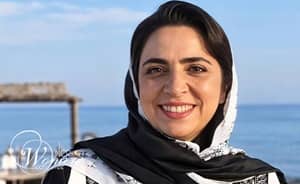
Marziyeh Ebrahimi (Soda), a 32-year-old woman living in Bandar Abbas and suffering from multiple sclerosis (MS), has been sentenced to execution in Bandar Abbas Prison, confiscation of all her property, and dismissal from government service on charges including “corruption on earth” and “intelligence and security activities.”
Ms. Ebrahimi was born in Arak and lives in Bandar Abbas. According to the verdict issued in her case, the basis for opening the case against her was taking a photograph of the site where a missile had struck; judicial authorities have characterized the act as photographing a military site.
Marziyeh Ebrahimi, also known as Soda Ebrahimi, was arrested in April 2026. Following her arrest and the opening of a case against her by the Hormozgan judicial authorities, serious security charges were brought against her.
Information about the court branch that issued the verdict, the exact date of the trial, the presence of a lawyer of her own choosing, the lawyer’s access to the case file, and the status of any appeal against the ruling is unavailable.
Imprisoned Women; From Pellets in the Head to Severe Charges Against a Teenager

The situation of imprisoned women in Iran, ranging from keeping a detainee with three pellets remaining in her head to arresting a 16-year-old teenager on the charge of “Moharebeh” (waging war against God) and depriving a political prisoner of treatment for a shoulder injury, reflects their difficult and critical conditions in prison.
Rezvaneh Sadeghi was arrested during the nationwide January 2026 protests. Three pellets resulting from gunfire remain in her head, and no action has been taken to remove them so far.
Rezvaneh Sadeghi’s condition requires immediate specialist examination, medical imaging, and a clinical decision regarding the removal of the pellets. Yet, despite her deteriorating physical condition, she remains detained and continues to be denied adequate medical care.
Narges Alishahi is held alongside Rezvaneh Sadeghi in Ward 5 of Fardis Prison. Despite the identification of her place of detention, there is no information regarding the time of her arrest, charges, physical condition, court branch, or her access to a lawyer and family.
Iran’s Land Subsidence Crisis Expands Tenfold in Eight Years

Iran’s environmental crisis is taking an increasingly dangerous form beneath the surface. The area affected by land subsidence has expanded roughly tenfold in just eight years, according to a senior official from Iran’s Geological Survey and Mineral Exploration Organization.
Reza Shahbazi, deputy head of the organization, told the state-run ISNA news agency that the area affected by subsidence increased from approximately 10,000 square kilometers in the mid-2010s to around 100,000 square kilometers by 2024.
More alarming, he said, is that areas previously affected by subsidence as separate and isolated patches are increasingly merging. In parts of Iran, formerly distinct subsidence zones have now formed continuous, interconnected areas.
The development represents a major warning about the consequences of the country’s worsening water crisis and the excessive pressure placed on underground water resources.
Iran’s Economic Crisis: Even Bread and Cheese Become a Luxury for Workers
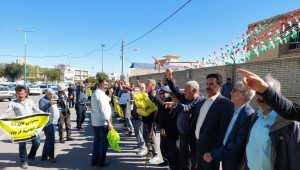
For millions of working families in Iran, the country’s economic crisis is increasingly being measured not in financial statistics but in the food they can no longer afford. A recent report by the state-run ILNA news agency warned of sharp, unofficial increases in bread prices in Tehran, noting that even the once-basic combination of bread and cheese is becoming a luxury for low-income households.
The warning comes as the cost of essential goods continues to rise while wages and pensions fail to keep pace. With the Iranian regime simultaneously increasing fuel prices, workers are facing a new wave of pressure that threatens to push the cost of food and other necessities even higher.
In a September 14 report, ILNA attributed the latest inflationary pressures in part to the continuing rise in foreign-exchange rates and higher energy costs. The agency warned that basic commodities are increasingly moving beyond the reach of low-income households.
For working families, bread is among the most fundamental components of the household budget. Yet rising production, transportation, and energy costs are now feeding directly into its price.
Iran’s Poverty Line Surpasses 70 Million Tomans as Workers Face Deepening Economic Crisis
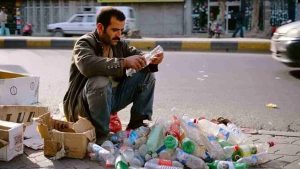
The gap between income and the cost of living in Iran has reached unprecedented levels, exposing the growing economic hardship faced by millions of workers and low-income families. New figures reported by the state-run ILNA news agency reveal that the poverty line in Iran has surpassed 70 million tomans per month, while the minimum monthly income of workers, including benefits, remains below 25 million tomans.
These figures underscore a stark reality: for a large portion of Iran’s workforce, monthly earnings do not even cover one-third of the income required to remain above the poverty threshold.
According to labor activists cited by ILNA, the actual monthly cost of living for a working-class family has reached nearly 90 million tomans. This means that workers receiving the minimum wage face a monthly deficit of approximately 65 million tomans.
For many families, bridging such a gap is impossible. Workers are increasingly forced to take multiple jobs, reduce essential consumption, accumulate debt, or accept a steady decline in living standards. Even holding two or three jobs is no longer sufficient to provide a minimum standard of living.
Paris Rally Voices Support for Iran’s Resistance and Demand an End to Executions
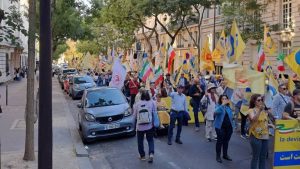
A demonstration by supporters of the Iranian Resistance in Paris on Saturday, September 12, brought together French political figures, human-rights advocates, representatives of the Syrian-French community, and activists in solidarity with the Iranian people. Speakers focused on the continuing repression in Iran, the growing role of organized resistance inside the country, the persecution of women and political prisoners, and the urgent need to stop executions.
A central message of the rally was that the Iranian people continue to resist despite the severe risks imposed by the regime.
Parnian Saramad highlighted recent acts of defiance in Karaj, near Tehran, where motorcyclists reportedly raised the flags of the People’s Mojahedin Organization of Iran (PMOI/MEK). She described the act as a significant expression of courage given the potentially lethal consequences of displaying symbols associated with the organized opposition.
She also pointed to the election of Mahnaz Maimant as the PMOI’s Secretary-General following three rounds of voting in several European countries, presenting the development as another indication of the organization’s determination to continue its struggle against Iran’s ruling theocracy.
Jean-Pierre Brard, former mayor of Montreuil and president of the French Committee for a Democratic Iran, emphasized the persistence of people inside Iran who continue to challenge the regime despite arrests, torture, and the threat of execution.
Iranian Regime Judiciary Freezes Assets of Dissidents
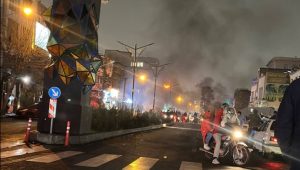
Iran’s regime judiciary announced that in recent months, the scope of financial measures against individuals whom the government labels as “traitors,” “traitors to the homeland,” and “collaborators with hostile countries” has increased significantly.
According to a report by the state-run Mizan news agency, affiliated with the judiciary, 240 properties and assets belonging to these individuals have so far been seized by judicial order, and the bank accounts of 182 people have also been frozen.
Iran’s regime judiciary has also announced that, to identify the defendants’ assets, it has obtained more than 2,000 inquiries from the Central Bank, and that examinations of these accounts and properties are still ongoing.
In Tehran alone, 143 properties and assets belonging to individuals whom the judiciary has accused of “propaganda or practical activities against the country and in favor of hostile governments” have been seized.
The judiciary’s spokesperson said that cases have been opened against many of these individuals, and that in some cases indictments and judicial verdicts have been issued, while proceedings in other cases are continuing.
Iran: Escalating Rights Violations Against Political Prisoners & Urgent Call
This comprehensive report, backed by documented data from seven Iranian prisons (Langarud in Qom, Urmia, Evin, Zahedan, Vakilabad in Mashhad, Fardis in Karaj, and Qarchak in Varamin), illustrates new dimensions of systematic violations of the fundamental rights of political prisoners and prisoners of conscience:
- Health and Living Conditions Crisis: Widespread outbreak of contagious diseases, bedbugs, and vermin infestation in Qom Prison, alongside severe reductions in food rations and strict water quotas in Zahedan Prison, directly endangering prisoners’ lives.
- Clandestine Transfers and Forced Isolation: Opaque transfer of approximately 30 political prisoners from Tehran to Zahedan, detention in isolated cells, threats against ordinary inmates to enforce total isolation, and denial of family visitation rights.
- Denial of Medical Treatment and Compound Pressures: Neglect of critical medical conditions, including Rezvaneh Sadeghi (retaining three pellets in her head) and Sara Mosiqi (shoulder injury from interrogation beatings), alongside heightened restrictions on death-row prisoners such as Mohammad Javad Vafaei.
- Violations of Children’s Rights: Detention of Diana Taherabadi, a 16-year-old juvenile, in the “Kindergarten” ward of Fardis Prison on heavy charges of Moharebeh (enmity against God), in direct violation of the Convention on the Rights of the Child.
Conclusion: These actions constitute explicit violations of the International Covenant on Civil and Political Rights (ICCPR) and the Nelson Mandela Rules, calling upon United Nations human rights bodies to take immediate action and document these abuses.
As Iran Joins Oman Talks on Hormuz, Hardliners Push for NPT Exit
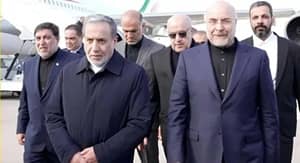
President Masoud Pezeshkian’s government sees the maritime agreement with Oman as a way to manage the Hormuz crisis, but hardline media and figures within the ruling establishment warn that the initiative could weaken one of Iran’s most important sources of leverage.
The planned Oman meeting on the Strait of Hormuz has become the scene of one of the clearest divisions within Iran’s ruling establishment over how to continue the war and use the strategic waterway. On one side are President Masoud Pezeshkian’s government and the diplomatic apparatus; on the other are hardline media outlets and figures who view any easing of shipping through the strait as a retreat from a key source of pressure. The Salalah meeting, which was due to examine the framework of the Iran-Oman agreement with regional countries, was postponed in the latest development.
Foreign Minister Abbas Araghchi has said Iran and Oman reached an agreement on creating a new maritime route through the Strait of Hormuz, and that the maps and joint statement related to it would be presented to regional countries before being submitted to the International Maritime Organization for registration. At the same time, he stressed: “The agreement with Oman in no way means the reopening of the Strait of Hormuz, and Iran’s condition for reopening the Strait of Hormuz is for the United States to return to its commitments under the Islamabad memorandum.”
Supporters of Iranian Resistance Call on Iranians to Join Major Rallies Outside UN on September 22–23
NEW YORK — The Organization of Iranian American Communities (OIAC) has issued a broad call to Iranian-Americans and freedom-seeking Iranians worldwide to take part in two major rallies outside the United Nations on September 22 and 23, 2026.
4 Days Away – Starting Thursday.
Be the voice. Be the change. pic.twitter.com/10AYq4pmL8
— OIAC: Organization of Iranian American Communities (@OrgIAC) September 13, 2026
The gatherings will be held at Dag Hammarskjold Plaza (Second Avenue and 47th Street) from 9 a.m. to 1 p.m. each day. Organizers say the events form the climax of a week-long campaign that begins on September 17, coinciding with the 81st session of the UN General Assembly.
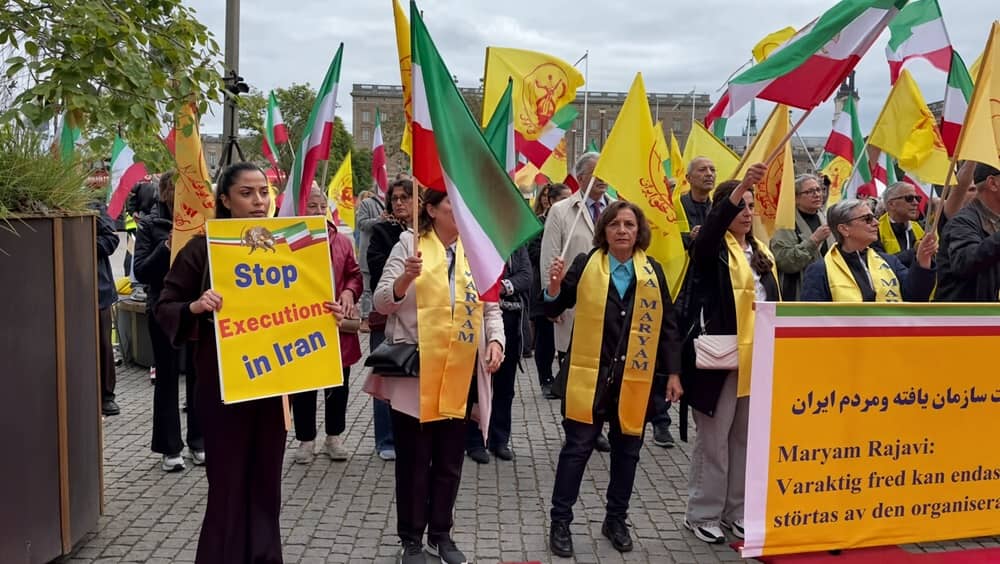
Stockholm Rally Marks Fourth Anniversary of Iran’s 2022 Uprising, Calls for a Democratic Republic
Stockholm, September 12, 2026 — Supporters of the Iranian Resistance and members of the Iranian community gathered in Stockholm to mark the fourth anniversary of Iran’s nationwide uprising of September 2022.
The rally began in front of the Swedish Ministry for Foreign Affairs, where demonstrators voiced their support for the Iranian people’s struggle for freedom and their rejection of all forms of dictatorship. They denounced both the former monarchical dictatorship and the current clerical dictatorship ruling Iran, emphasizing that the Iranian people seek neither a return to the past nor the continuation of the present regime, but a democratic future.

Alongside the march, a photo exhibition honoring protesters who lost their lives during the 2022 uprising was held, paying tribute to those who gave their lives in the struggle for freedom and keeping their memory and aspirations alive.
Following the gathering, demonstrators marched through the streets of Stockholm, raising calls for an end to executions of protesters and political prisoners and demanding the immediate release of political prisoners in Iran.