Three-minute read
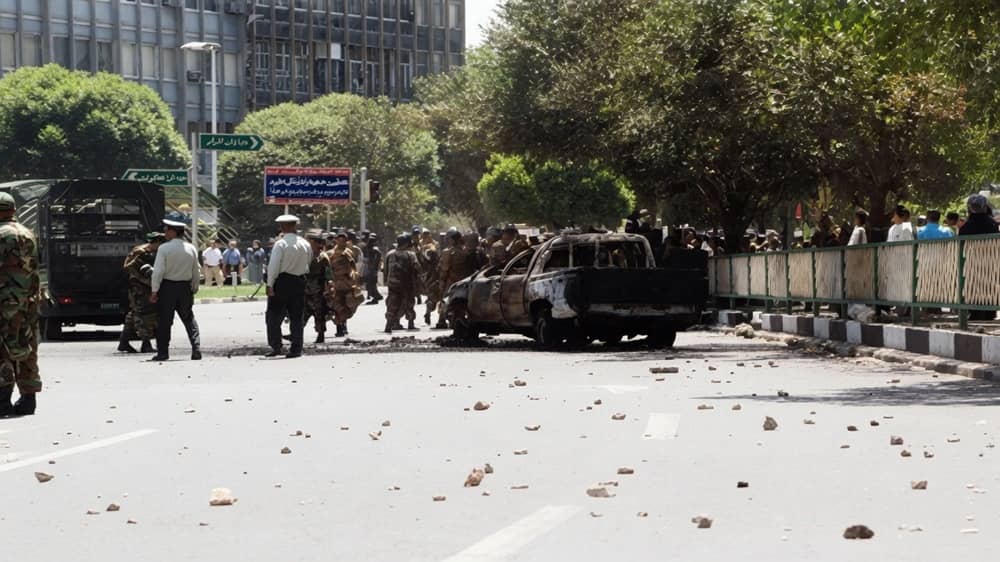
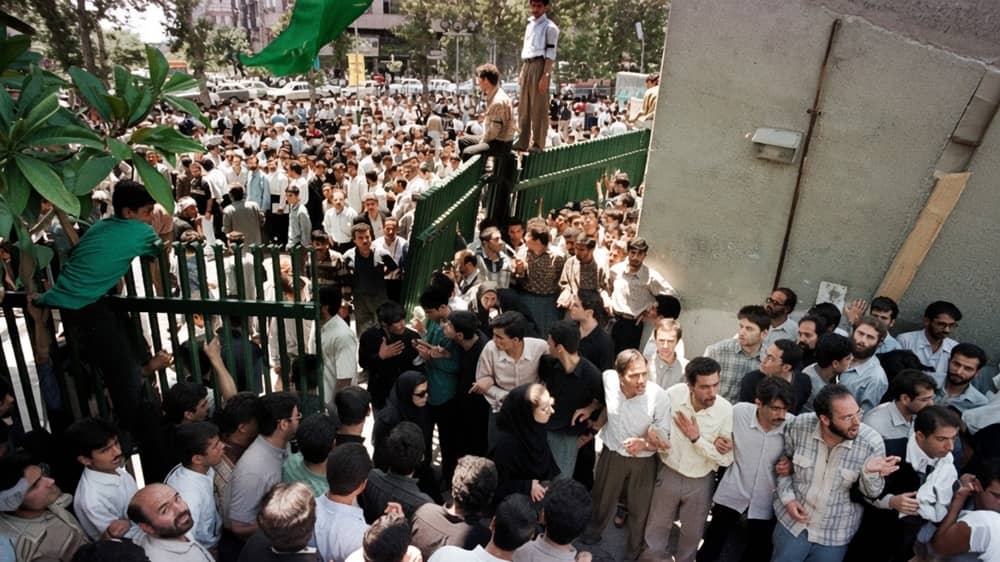
The 1999 uprising ignited on July 9, when students at the University of Tehran gathered to protest the judiciary’s closure of the newspaper Salam. What began as a campus sit-in demanding press freedom quickly expanded into a nationwide uprising. Tens of thousands poured into the streets, shaking the clerical dictatorship to its core. The regime responded with brutal force: plainclothes vigilantes and riot police stormed the dormitories at dawn, beating students in their beds and hurling some from third- and fourth-floor windows. By the time the blood dried, the chants had radicalized from appeals for a free press into a phrase that has echoed through every Iranian uprising since: “Down with the dictator.”
This episode serves as a recurring diagnostic, exposing two truths about the regime that remain perfectly intact twenty-seven years later: first, when forced to choose between genuine change and regime survival, every figure inside the system will choose the system; second, the people know it.
The Unmasking
Consider the officials the 1999 crackdown revealed. Mohammad Khatami was then president, having campaigned on an empty promise of “civil society.” Yet Khatami sat on the Supreme National Security Council that authorized the raid, seamlessly aligning with the Supreme Leader to crush the protests. His presidency limped on for six more years, producing no structural reform, because the crackdown had already disclosed the operating principle: the system’s survival is the absolute ceiling above every regime insider.
#Iran News in Brief
Sep 19- #IranProtests reported in several universities in #Tehran. Students chanted "Death to the dictator" and "Death to the Basij". Clashes erupted in Amir Kabir Uni when the paramilitary Basij attacked peaceful protesters. Videos in: https://t.co/gxewVeZnJT pic.twitter.com/Zobx3MTGGE— NCRI-FAC (@iran_policy) September 19, 2022
Then there was Mohammad Bagher Ghalibaf—today the speaker of Parliament who attempts to position himself as the technocratic face of a battered establishment. In 1999, he was a senior IRGC commander who not only supervised the violence but took personal pride in it. That the same man now speaks in measured tones about governance only proves that the regime recycles its enforcers; it does not produce reformers.
The Regime in 2026: Fracture, Not Strength
Fast-forward to July 2026, and the clerical dictatorship is expending enormous resources—money, manpower, and media bandwidth—on orchestrating elaborate burial theatrics for Ali Khamenei to project continuity. State-run cameras scan carefully curated crowds, while regime-aligned accounts flood social media platforms with imagery of grief. Yet, this choreography must not be mistaken for cohesion.
Behind the spectacle, the regime is tearing at its own seams. Senior officials openly question whether Mojtaba Khamenei commands the legitimacy or the institutional loyalty to hold the system together. The Supreme National Security Council voted twelve to one against Khamenei’s own stated position on the memorandum of understanding with the West—a once-unthinkable rebuke. The prospect of conceding on the nuclear program undermines the foundational claim of the Supreme Leader’s office: that the Leader’s word is final. When the Leader himself concedes that he was overridden, the mystique of divine authority dissolves into bureaucratic arithmetic.
The scenes of #Iranprotests today are a reminder of the 1999 student uprisings. Bringing to mind your slogans “reformists, hardliners, the game is over!” during the Dec 2017-Jan 2018 uprisings #IranRevolution#MahsaAmini pic.twitter.com/OyUpRw87fb
— Maryam Rajavi (@Maryam_Rajavi) September 22, 2022
Why the Anniversary Matters Now
The students of 1999 taught the clerical dictatorship a lesson it has spent twenty-seven years failing to unlearn: repression can silence a generation for a season, but it cannot extinguish the memory of why they rose. The protesters of that July have since been joined by the protesters of the 2009 uprising, the economic uprisings of 2017–2018, the nationwide revolt of 2019, the movement of 2022, and the explosive protests of January 2026. Each wave has been broader, faster, and harder to contain than the last.
The clerical dictatorship has not grown stronger through these encounters; it has merely grown more expensive to maintain. Its coercive apparatus is brittle, its ideological legitimacy is exhausted, and its internal elite is deeply divided. Compounding these fractures are a crippling economic meltdown and the mounting pressure of the organized Iranian Resistance and its domestic network of MEK Resistance Units. The burial pageantry is not a sign of vitality—it is the regime’s resource-intensive admission that it can no longer command genuine loyalty, only stage-managed spectacle.
Twenty-seven years ago, tens of thousands of citizens saw through the illusion. Today, the regime’s own security council votes against its supreme leader. The students were early. They were not wrong.