

A wave of protests has erupted across Iran, with diverse groups expressing discontent over a range of economic and social issues.
Customers of the state-backed Modiran Vehicle Manufacturing Company gathered in front of the company’s office in Tehran, protesting a seven-month delay in their vehicle deliveries. The delayed deliveries have caused significant dissatisfaction among the customers, who demand timely fulfillment of their orders.
The Tehran Stock Exchange saw a separate protest rally by shareholders, highlighting concerns over financial mismanagement and lack of transparency. The shareholders’ demands reflect a broader frustration with economic mismanagement and lack of accountability in the financial sector.
Contract teachers in Tehran protested outside the Presidential building against job cuts, unstable employment, and lack of job security. They demanded better employment conditions and security from the government, highlighting the precarious nature of their work situation.
August 5—Tehran, Iran
Customers of state-backed Modiran Vehicle Manufacturing Company rally in front of the company's office in Tehran as the company has delayed their deliveries for 7 months.#IranProtestspic.twitter.com/jk51ZJAtqh— People's Mojahedin Organization of Iran (PMOI/MEK) (@Mojahedineng) August 5, 2024
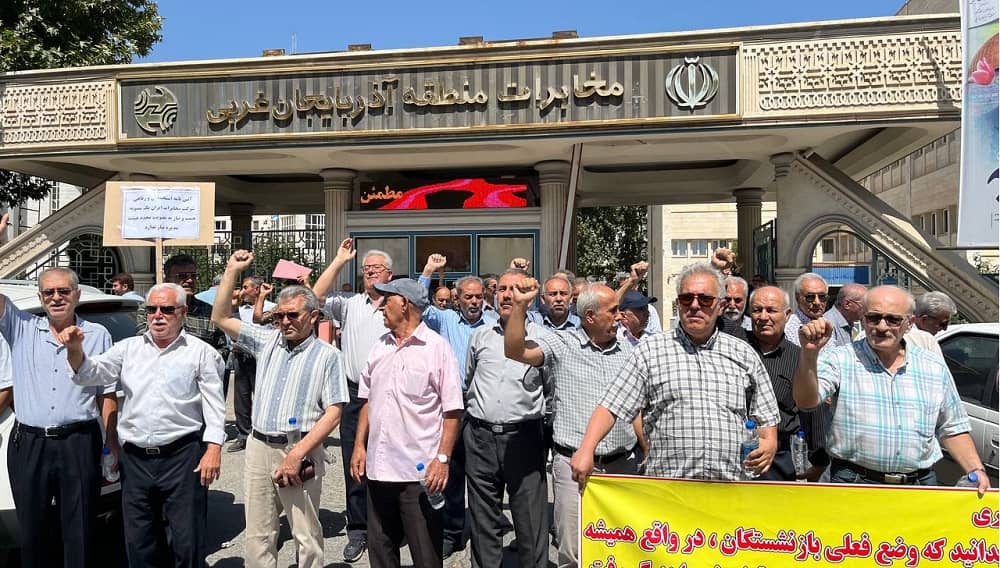
Retirees from the Telecommunication Company of Iran (TCI) resumed their weekly protests in multiple cities, including Tehran, Zanjan, West Azarbaijan, Ardebil, Hamedan, Hormozgan, Kermanshah, Isfahan, and Kurdistan. These retirees are demanding higher pensions and basic rights, with chants such as “Shame on incompetent managers,” “Injustice has only brought us lies,” and “Managers, show some shame, fulfill our rights” echoing through the streets. The persistent protests highlight the retirees’ frustration with the government’s failure to address their longstanding grievances. Protesters in Kurdistan chanted “Shame on lying managers,” while those in Kermanshah emphasized their determination by stating, “Neither sun nor heat can stop us.”
In Isfahan, urban truck drivers continued their strikes, struggling with fuel rations that have significantly impacted their livelihoods. The strike has led to significant disruptions, with a social media video showing dozens of trucks parked along the roadside in a unified protest against insufficient diesel fuel allocations.
Nurses in Shiraz went on strike, protesting poor working conditions and low wages. They demanded that the Ministry of Health address their concerns, which include basic wage levels, the amount of overtime pay, and mandatory overtime. Their protest underscores the critical state of the healthcare sector amidst the country’s ongoing economic struggles.
More footage of protest rally by reserve teachers in Tehran.#IranProtestspic.twitter.com/Iw9bduJhky
— People's Mojahedin Organization of Iran (PMOI/MEK) (@Mojahedineng) August 5, 2024
In Arak, the strike by Wagon Pars factory workers entered its eighth day. The workers demanded the dismissal of the current management, equalization of wages and benefits with neighboring factories and the MAPNA Group, the end of contractor practices, and the formalization of employment for contract workers to ensure job security. Workers marched from the factory, crossed the city industrial bridge, and gathered in front of the Central Governorate.
Farmers in Isfahan continued their protest rallies at Khorasgan Square on August 4, facing severe water shortages and a lack of government response to their critical needs. The farmers’ persistent protests underline the pressing agricultural challenges in the region.
The widespread protests by retirees, industrial workers, educators, healthcare workers, farmers, and other citizens indicate a growing frustration with the economic hardships and the perceived indifference of the authorities. The government’s ongoing failure to address the grievances of these diverse groups is fueling a surge in unrest, signaling a deepening crisis in Iran’s social and economic landscape.