

Three-minute read
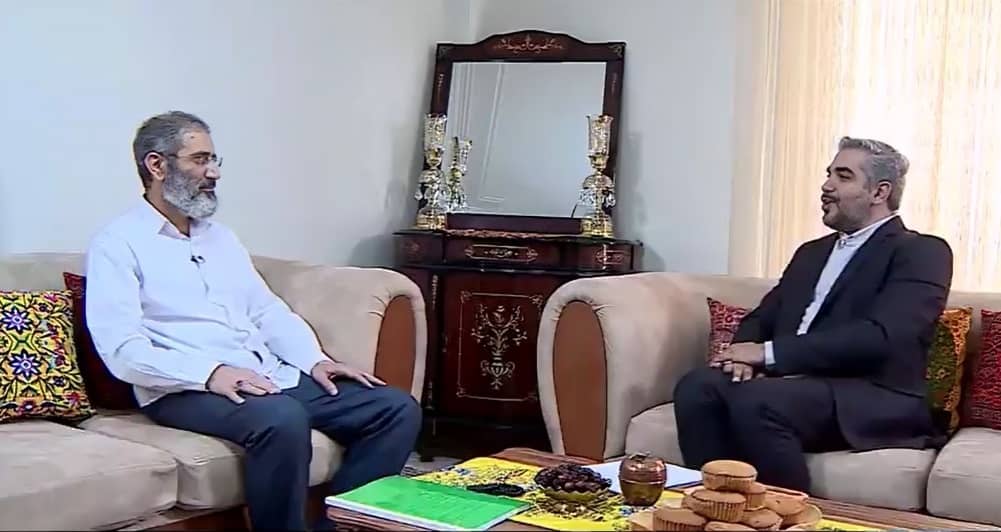
In a brazen display of defiance, the Iranian regime recently aired an interview with its convicted diplomat-terrorist Asadollah Assadi, who had been imprisoned in Belgium for orchestrating a foiled bomb plot in Paris in 2018. This interview, broadcasted on state TV’s network 2 and moderated by Ali Rezvani, a notorious interrogator and intelligence operative posing as a media activist, sought to mock Western governments that succumbed to Tehran’s extortion tactics by releasing Assadi in exchange for a Belgian hostage.
In the interview, Assadi bluntly acknowledges that the regime and its president, Ebrahim Raisi, took measures to take a Belgian hostage for a prisoner swap. He said:
“The government of Ayatollah Dr. Raisi ordered efforts to find Belgian intelligence traces in Iran. They discovered that a Belgian national was engaged in espionage in our country and arrested him. The Ministry of Intelligence arrested him, and the case found its proper course. He had adopted a cover identity as an aid worker. Apparently, he was also a relative of the Belgian Prime Minister. The Belgians came to the negotiating table, wanting to exchange prisoners. However, with the prudence of Mr. Risis and the efforts of our intelligence and counter-intelligence systems, they turned the situation around. This was truly a significant achievement.”
During the staged interview, Assadi portrayed himself as a victim of international politics, claiming that his arrest and conviction were part of a Belgian ploy to free their own so-called spy from Iranian custody. “They falsely claimed that they found a bomb in my car, which caused my family to be shocked and surprised,” Assadi stated, in an attempt to depict his innocence. He asserted that his mission was purely diplomatic and that his arrest was a violation of international law.
Assadi’s narrative aligns seamlessly with the regime’s strategy of painting Western nations as the real perpetrators of injustice. He referred to the case of Ahmadreza Djalali, a Swedish-Iranian academic sentenced to death in Iran on espionage charges, a tactic commonly used by the regime to leverage international negotiations.
THREAD
For more than four decades, the clerical regime in #Iran has consistently blackmailed other nations and considered #extremism as "leverage". 1/9https://t.co/ieaaOkZb6y pic.twitter.com/W9u5BJHXqs— NCRI-FAC (@iran_policy) September 6, 2022
Djalali’s “crime” was visiting Iran for academic purposes, a fate that has befallen many dual nationals and foreigners who become pawns in Iran’s geopolitical games. “I realized that the Europeans, in fact, the governments of France, Belgium, Germany, and Sweden, were trying to free a convict sentenced to death in Iran who had collaborated in the assassination of our nuclear scientists,” Assadi claimed.
In a calculated attempt to dodge responsibility for the 2018 bomb plot, Assadi said, “There is nothing in the file about this. They showed a photo of a man shopping in a store.” This disingenuous remark overlooks the extensive evidence presented during his trial, including the explosive materials found in his possession and the detailed plans to attack a rally organized by the National Council of Resistance of Iran (NCRI) in Paris. The event, attended by high-profile political figures from the U.S. and Europe, was targeted to cause maximum casualties and chaos.
The interview also highlighted the regime’s narrative of the prisoner swap, presenting it as a triumph over Western hostage-taking practices. Assadi declared, “With the prudence of Mr. Raisi and the efforts of our intelligence and counter-espionage systems, they turned the situation around. This was truly a significant achievement.” This statement blatantly inverts the reality that the Iranian regime systematically detains foreign nationals on fabricated charges to use them as bargaining chips, a tactic that the international community has widely condemned.
Secret Deals and Hostage Games: Leaked Documents Unveil Iran’s Attempts to Free Assadihttps://t.co/nJkH2M5RLN
— NCRI-FAC (@iran_policy) May 13, 2023
The prisoner exchange occurred on May 27, 2023, and was heavily criticized by the NCRI, other millions of Iranians, and international dignitaries worldwide. They argued that succumbing to Tehran’s demands only emboldens the regime to continue its double-edged strategy of terrorism and hostage-taking. The NCRI has long warned that appeasement and concessions in the face of the regime’s aggression lead to more instability and threats against global security.
As the interview concluded, it became evident that the regime’s propaganda machine was in full swing, aiming to bolster its image domestically while sending a clear message to the West: Tehran will not hesitate to use any means necessary to achieve its objectives. This stark reminder underscores the peril of appeasing a regime that thrives on exploiting international norms and values.
The Iranian Resistance has tirelessly exposed the regime’s use of terror and hostage-taking as a primary tool in its foreign policy arsenal. As long as Western governments continue to engage in conciliatory tactics, the safety and security of their citizens remain at grave risk. The interview with Assadi serves as a chilling testament to the dangers of yielding to the demands of a state that operates through coercion and violence.
