

On the heels of the winter solstice, traditionally a time of celebration in Iran known as Yalda Night, the country’s deepening economic crisis has sparked a fresh wave of unrest. On Monday, December 22, as citizens grappled with record inflation, a member of the regime’s own parliament issued a stark warning: the majority of the population is sliding into absolute poverty.
During a public session of the Majlis (parliament), MP Hamidreza Azizi Farsani admitted that inflation has surged from 47 percent to 64 percent. He warned that if the current economic trajectory continues, the population living in poverty will exceed 55 million by the end of the Persian year (March 2026), dragging even the middle class—specifically the eighth decile of society—below the poverty line. Concurrently, the Ministry of Health’s nutrition office warned that soaring food prices are forcing families to remove essential items from their tables, posing a direct threat to public health.
Retirees Target Regime’s Economic Empires
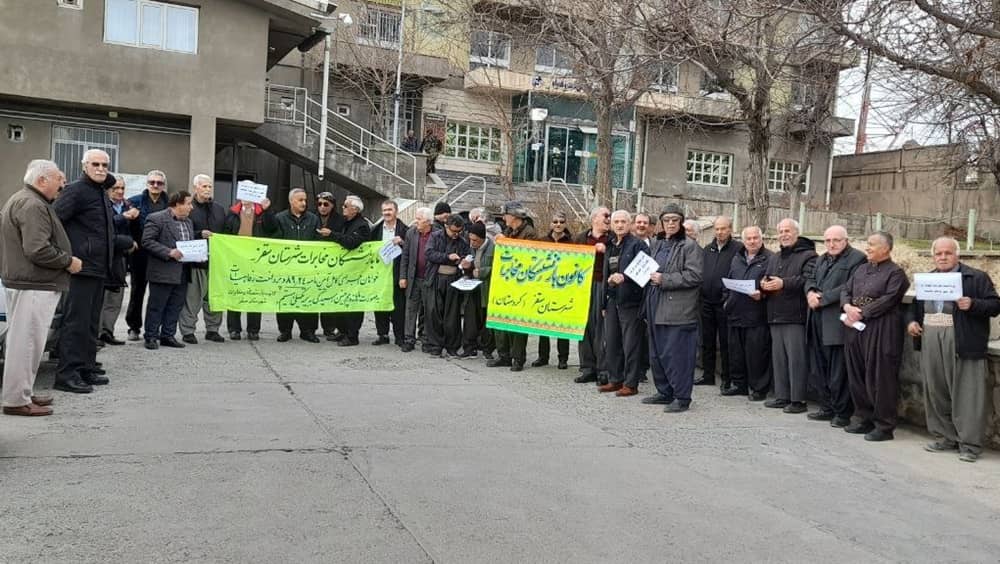
While officials warned of collapse, retirees from the Telecommunications Company of Iran took to the streets in 14 provinces, including Tehran, Isfahan, Kurdistan, Kermanshah, Fars, and Khuzestan. The demonstrators directed their anger specifically at the institutions controlling the company: the Islamic Revolutionary Guard Corps (IRGC) and the Execution of Imam Khomeini’s Order (EIKO or Setad), a massive conglomerate under the direct control of Supreme Leader Ali Khamenei.
December 22—Tehran, Iran
Retirees of the Telecommunications Company of Iran (TCI) rallied outside the Ministry of Communications, protesting plunder and oppression by regime-linked bodies and TCI’s rent-seeking owners, citing EIKO and the IRGC. They decried runaway prices and a… pic.twitter.com/XZUp9T84Em— People's Mojahedin Organization of Iran (PMOI/MEK) (@Mojahedineng) December 22, 2025
In Tehran, protesters gathered outside the Ministry of Communications. One retiree, reflecting the sombre mood of the nation, spoke to the crowd about the stark reality of their holiday season: “This Yalda night was empty for the majority of people. With this destroyed economy and the government’s incompetence, people have nothing left to lose.”
Significantly, the chants on Monday rejected the regime’s traditional scapegoats. “We can no longer say ‘Death to the dollar seller’ or ‘Death to the egg seller’; the culprit is elsewhere,” the retiree declared. “Why should we say Death to America or England? Today, people know exactly where the problem lies.” The crowd responded with chants of “Death to the deceitful government” and “Incompetent Parliament, Unjust Judiciary.”
December 22—Hamedan, western Iran
Retirees of the Telecommunications Company of Iran (TCI) rallied to protest plunder and injustice by regime-linked institutions and TCI’s rent-seeking owners, demanding urgent action on unpaid rights and long-standing claims.#IranProtests pic.twitter.com/EtlC4dZAPH— People's Mojahedin Organization of Iran (PMOI/MEK) (@Mojahedineng) December 22, 2025
“Where Does Our Money Go?”: Labor Suppression
The unrest extended beyond retirees to the industrial workforce. In Lorestan province, 400 to 500 railway maintenance workers in the Dorud area entered their third day of strikes on December 22. Their grievance highlights a systemic form of wage theft: the contractor, Traverse, deducts money from workers’ paychecks for supplementary insurance and store installments but fails to remit these funds to the insurers or shops. As a result, workers seeking medical care are turned away, and those attempting to buy goods on credit are told they have outstanding debts.
When an official was dispatched from Tehran to address the strike, he did not offer a solution or a timeline for repayment. Instead, workers reported that he threatened them with dismissal before leaving. “Where does our money go?” the workers demanded, noting they had not even received their holiday bonuses.
December 22—Kermanshah, western Iran
Retirees of the Telecommunications Company of Iran (TCI) rallied to protest plunder and oppression by regime-linked institutions, accusing EIKO, the IRGC, and TCI’s rent-seeking owners of rights violations and profiteering.#IranProtests pic.twitter.com/Svxa44pNIX— People's Mojahedin Organization of Iran (PMOI/MEK) (@Mojahedineng) December 22, 2025
Meanwhile, in Khuzestan, cement truck drivers were forced to sleep on the street in freezing temperatures outside the terminal to protest unpaid fares. “No one has come to ask what our pain is,” one driver stated, highlighting the total absence of response from local officials or the factory management.
Students and Citizens Defy Intimidation
Despite a crackdown on academic dissent, students at the University of Tehran continued their protests for a second consecutive day regarding housing rights. Facing a wave of summonses to disciplinary committees—a common tactic to silence activism—the students refused to back down. They chanted, “If students are suspended, the university will be shut down,” and “Student dies but accepts no humiliation,” signaling that the university remains a bastion of freedom despite the pressure.
December 22—Tehran, Iran
For a second day, University of Tehran students rallied against the cancellation of housing for some classmates and mass summons to disciplinary committees. “We won’t back down until we get our rights,” they said, chanting: “If students are suspended, the… pic.twitter.com/GD7K3tjpvO— People's Mojahedin Organization of Iran (PMOI/MEK) (@Mojahedineng) December 22, 2025
The breakdown in governance was further underscored in Iranshahr, where shopkeepers gathered at the governor’s office after an armed robbery occurred in broad daylight on Hafez Street. The protest highlighted the regime’s failure to provide basic security for citizens, even as it allocates vast budgets to its security apparatus for political suppression.
The events of December 22 paint a picture of a regime facing crises on every front. From the MP’s admission of 64 percent inflation to the strikes paralyzing railways and factories, the economic mismanagement is palpable. However, the slogans chanted by retirees and students indicate that the public no longer views these hardships as isolated administrative failures but as the direct result of a “plunderous” system managed by the IRGC and ruling clerics.