

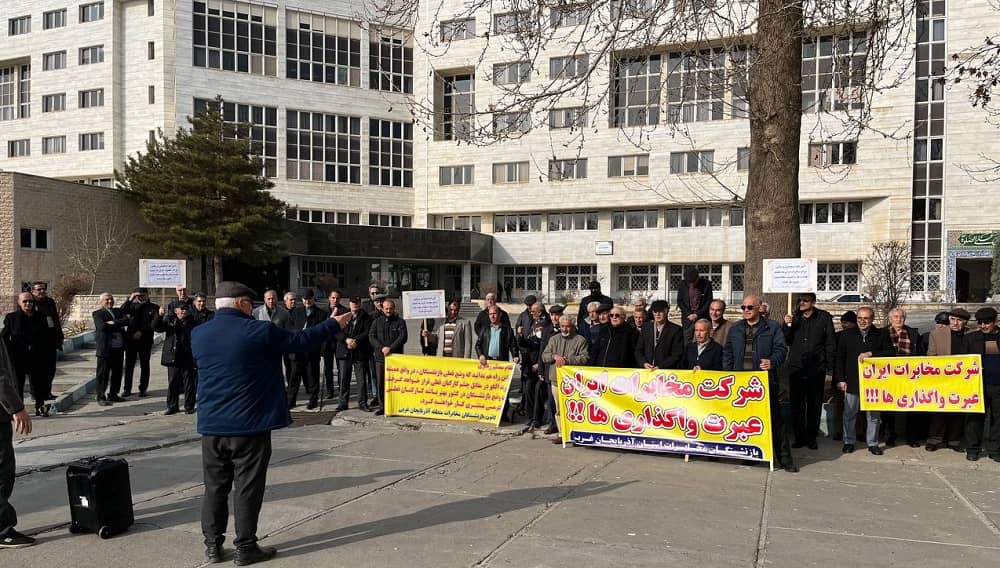
Protests across Iran intensified on December 23 as retirees of the Telecommunication Company of Iran (TCI) and employees of the Iranian Offshore Oil Company staged rallies in multiple cities, demanding better living conditions and fair wages. The protests highlight mounting frustrations with economic mismanagement and systemic injustice under the clerical regime.
Decembe 23—Lavan, southern Iran
Employees of the Iranian Offshore Oil Company resume protests as authorities continue to ignore their demands for changes to the wage determination policies and other basic needs.#IranProtests pic.twitter.com/jxjTPFdR2E— People's Mojahedin Organization of Iran (PMOI/MEK) (@Mojahedineng) December 23, 2024
In Tehran, Zanjan, Isfahan, Ilam, Bijar, Kermanshah, Urmia, and Sanandaj, retirees of the TCI resumed their weekly protests. They called for higher pensions, adherence to contractual obligations, and better healthcare services, denouncing the regime’s failure to address their long-standing demands.
In Sanandaj, western Iran, protesters chanted: “Oppressive shareholders, shame on you!” Meanwhile, in Ilam, demonstrators emphasized the regime’s neglect by declaring: “Implementing regulations is our undeniable right!”
The protests in Ilam also highlighted the role of state entities such as the Execution of Imam Khomeini’s Order (EIKO) and the IRGC-affiliated Cooperative Foundation in controlling TCI assets, exacerbating retirees’ financial struggles.
For months, TCI retirees have been demanding the implementation of laws passed years ago, including Article 24 of the Civil Service Management Act, which obligates the government to provide equitable support. However, the regime’s disregard for these provisions has fueled persistent demonstrations.
December 23—Sanandaj, western Iran
Retirees of Telecommunication Company of Iran (TCI) resume weekly protest rallies, demanding higher pensions and other basic rights.#IranProtestspic.twitter.com/wCc8XAC3Ej— People's Mojahedin Organization of Iran (PMOI/MEK) (@Mojahedineng) December 23, 2024
In Lavan, southern Iran, employees of the Iranian Offshore Oil Company held rallies to protest wage ceilings, the regime’s failure to implement Article 10 of the Public Services Management Act, and discriminatory employment practices. Protesters also condemned inequitable salary structures in operational zones, which have left many workers struggling to make ends meet.
One protester remarked: “The oil sector generates billions in revenue, yet its workers are treated with blatant injustice. We demand fair wages and respect for labor rights.”
The rallies are part of a broader wave of protests that have swept Iran, with workers, retirees, and marginalized communities increasingly voicing their frustrations. Protests have been fueled by soaring inflation, a collapsing currency—now at 78,400 tomans per U.S. dollar—and the regime’s inability to address worsening living conditions.
December 23—Ilam, western Iran
Retirees of Telecommunication Company of Iran resume weekly protest rallies, demanding higher pensions and other basic rights.#IranProtestspic.twitter.com/J7nXyFuQcu— People's Mojahedin Organization of Iran (PMOI/MEK) (@Mojahedineng) December 23, 2024
Workers in various sectors, including telecommunications and oil, have repeatedly criticized the government for mismanagement, corruption, and refusal to engage with their demands. Demonstrators across the country continue to emphasize that meaningful change can only come through systemic change, with many calling for the complete overthrow of the regime.
As economic pressures mount and discontent spreads, the Iranian regime finds itself besieged by both domestic dissent and international isolation, amplifying the challenges to its survival.