

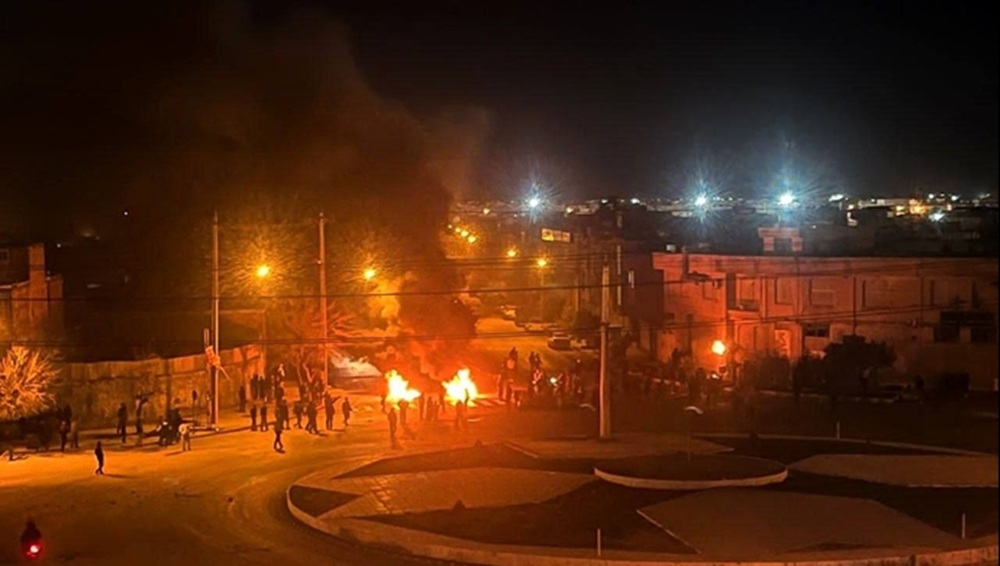
As the nationwide uprising against the religious dictatorship in Iran entered its sixteenth day, the clerical regime found itself battling a dual crisis: an unstoppable insurrection at home and unprecedented isolation on the global stage. Despite a suffocating digital blockade that has kept the country offline for 96 hours, reports from the ground indicate that the protests have not only persisted but escalated in intensity.
On Monday, the true scale of the regime’s crackdown began to emerge from behind the digital iron curtain. While the streets remained volatile, the regime’s response has shifted from police suppression to open warfare against civilians, marked by a staggering death toll and hysterical rhetoric from top officials who appear increasingly cornered.
The Human Cost: A Crime Against Humanity
The People’s Mojahedin Organization of Iran (PMOI/MEK) released a harrowing update on the casualties sustained since the uprising began on December 28. According to the PMOI’s network, which compiles data from local sources, hospitals, and forensic centers, the death toll has now surpassed 3,000 martyrs across 195 cities.
NCRI Statement: @Mojahedineng: More than 3,000 Dead in #Iran’s Nationwide Uprising as of January 11https://t.co/3pnQZ8dYQW
— NCRI-FAC (@iran_policy) January 12, 2026
Mrs. Maryam Rajavi, President-elect of the National Council of Resistance of Iran (NCRI), characterized the unfolding events as a “major crime against humanity.” In a desperate bid to control the narrative, state television has begun displaying bodies of the victims, attempting to attribute the violence to the opposition. Mrs. Rajavi dismissed these theatrics as evidence of the Supreme Leader’s vulnerability. “The bodies of Iran’s freedom fighters have filled hospitals and morgues,” she stated, warning that “Khamenei and the violent forces defending him will be drowned in the sea of blood they have spilled.”
Signs of Desperation: Threats from a Crumbling Regime
The persistence of the protests despite the massacre has triggered visible panic within the highest echelons of the regime. On Monday, Gholamhossein Mohseni Eje’i, the judiciary chief, issued a directive for prosecutors to act with extreme prejudice. Acknowledging the organized nature of the resistance, Eje’i admitted, “The enemy came to the field openly.” He ordered the immediate identification of “main elements” and demanded urgent processing of cases, explicitly stating there would be “no leniency.”
This sentiment was echoed in the regime’s parliament, where Speaker Mohammad Baqer Ghalibaf characterized the popular uprising as a “terrorist war.” Addressing the legislature, Ghalibaf vowed to deal with protesters in the “harshest form,” insisting that the police and the Islamic Revolutionary Guard Corps (IRGC) “will not retreat an iota.”
Defiance on the Ground: The “Year of Blood”
Despite the threats of speedy executions and the heavy presence of security forces, the spirit of the uprising remained unbroken on Monday. In Tehran, the Behesht-e Zahra cemetery became a focal point of defiance. What began as a mourning ceremony for fallen protesters transformed into a political rally. Undeterred by the surrounding repressive forces, mourners chanted a slogan that has come to define this movement: “This is the year of blood, Seyyed Ali [Khamenei] will be overthrown!”
January 12—Tehran, Iran
Large crowd returned to streets for another night of anti-regime protests, chanting "Disgrace!" to the regime's repressive security forces.#IranProtests pic.twitter.com/UGxWmywLPU— People's Mojahedin Organization of Iran (PMOI/MEK) (@Mojahedineng) January 12, 2026
This scene was replicated across the country. In Tehran, Isfahan and in the town of Meshkah in Fars province, video footage obtained despite the internet blackout showed large crowds rallying against the regime. These authentic displays of public anger stood in stark contrast to government-organized rallies held earlier in the day, which attempted to project a false image of stability.
International Isolation
As the regime wages war on its own population, its diplomatic standing is collapsing. On Monday, Roberta Metsola, President of the European Parliament, announced a sweeping ban on the regime’s diplomatic access. Declaring that “it cannot be business as usual,” Metsola barred all diplomatic staff and representatives of the Islamic Republic from entering European Parliament premises, stating the body would not help legitimize a system sustained by “torture, repression and murder.”
It cannot be business as usual.
As the brave people of Iran continue to stand up for their rights and their liberty, today I have taken the decision to ban all diplomatic staff and any other representatives of the Islamic Republic of Iran from all European Parliament premises.…
— Roberta Metsola (@EP_President) January 12, 2026
Alejo Vidal-Quadras, a former EP Vice-President, welcomed the move but urged the European Union to take more substantive action. “It is a good decision, but it hardly tickles the thick skin of the mullahs,” he remarked, calling for the immediate designation of the IRGC as a terrorist organization and the severance of all diplomatic ties. Meanwhile, UN Secretary-General António Guterres expressed shock at the “violence and excessive use of force” employed by state security services.
Sixteen days into the uprising, the situation in Iran has clarified into a stark confrontation. The regime has resorted to its ultimate weapons: a total communications blackout, mass killing, and the promise of summary executions. Yet, with 3,000 dead and the internet severed for 96 hours, the streets remain full. The diplomatic doors of Europe are closing, and the domestic wall of fear has shattered. The clerical regime is no longer fighting to maintain order; it is fighting for its survival against a nation that has decided the “year of blood” will be the year of liberation from the tyrannical rule of the mullahs.