
Three-minute read
A bus crash should not ordinarily become a demand for regime change. In Iran this week, it did.
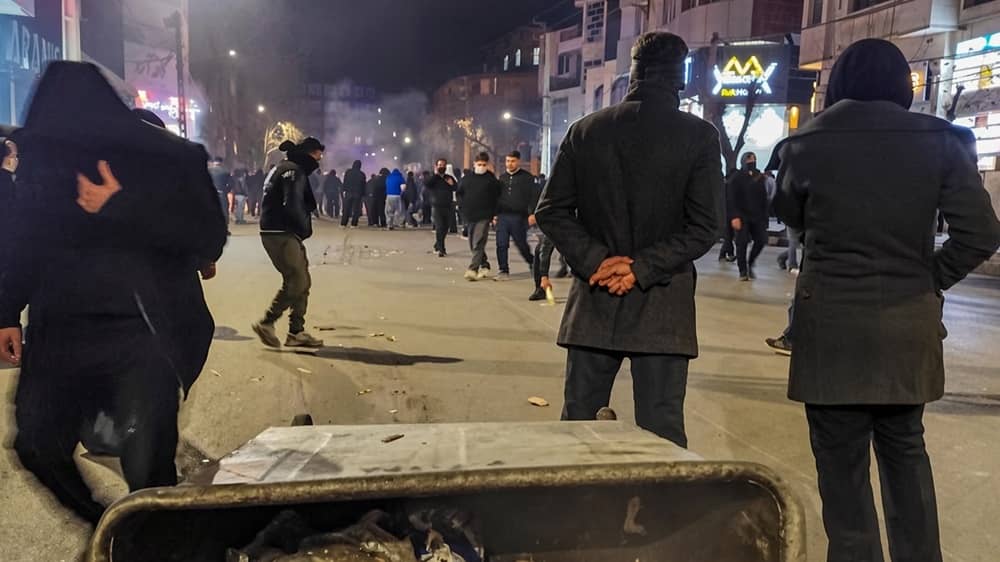
Thirteen employees of the Dehloran petro-refining complex were killed after their company bus overturned on November 14. Three days later, residents of Abdanan gathered demanding accountability and the resignation of officials. The crowd grew to roughly 1,000, according to the IRGC-affiliated Fars news agency, which acknowledged that the slogans subsequently took on a “political” character. Video independently verified by the Associated Press captured protesters chanting “Death to the dictator.”
The progression matters more than the size of the demonstration. A road accident became an indictment of officials, and an indictment of officials became a challenge to the political order. Abdanan therefore offers a glimpse of a larger vulnerability: in a society saturated with unresolved grievances, almost any failure can become the trigger for something much larger.
Iran’s own newspapers on Wednesday offered an extraordinary catalogue of those potential triggers.
"On the morning after the ceasefire, every exhausted and exasperated mind, long numbed by the #IranWar, will turn instinctively toward the search for real change and the practical means to bring this regime to an end." https://t.co/8Tmh0Sl0Kc
— NCRI-FAC (@iran_policy) April 9, 2026
Bread, Fuel, Wages—and Anger
Shargh reported that a new bread-pricing scheme introduced without prior notice in Khuzestan and Zanjan could make purchases above the designated level cost more than five times the subsidized price. The controversy is particularly sensitive because poorer households increasingly depend on bread as other foods become unaffordable. The newspaper noted that the government’s assumed daily bread consumption—266 grams per person—is below the Health Ministry’s estimate of 333 grams.
Meanwhile, Donya-e Eqtesad calculated that food alone now consumes about 74 percent of the minimum income of a four-person household, even after food-credit assistance. The same basic food basket that cost about 10.1 million tomans a year ago now costs roughly 23.5 million. Official food inflation reached 111.2 percent in October.
Government employees are being squeezed as well. Another Donya-e Eqtesad analysis noted that the proposed 35 percent salary increase for next year comes against annual inflation of 76.8 percent and point-to-point inflation of 88.7 percent. If inflation remains near 80 percent, the newspaper estimated, government employees could lose roughly another quarter of their purchasing power.
These are not isolated statistics. They describe millions of households simultaneously confronting food inflation, falling real wages, housing pressure and shrinking access to basic consumption.
Must-Read enlightening analysis of the impact of the MEK @ResistanceUnits inside Iran: "The Illusion of the External Enemy: How Domestic Agency is Redefining Iran's Future"https://t.co/59ZIkRUIwn@realDonaldTrump @SecRubio @mattgaetz @jaketapper
— Ali Safavi (@amsafavi) July 13, 2026
State Media Is Warning About the Trigger Mechanism
The regime’s own media increasingly recognizes the political danger.
In a column on gasoline and social capital, Ebtekar warned that economic decisions can turn manageable problems into “social agitation.” It specifically cautioned that outside adversaries could exploit social divisions and “convert economic dissatisfaction into a crisis of trust.”
Its concern was not abstract. Fuel touches transportation, employment and virtually every commodity price. Ebtekar warned that even limited increases could intensify livelihood anxiety among households already struggling with inflation and declining purchasing power.
Shargh made a similar point in discussing the government’s handling of energy shortages. Before putting additional restrictions on citizens, it argued, people are entitled to ask what authorities have done about fuel smuggling, inefficient vehicles and managerial failures. Its conclusion was blunt: ordinary citizens are being asked to pay from their own household budgets for failures they did not create.

Even the State Is Losing Capacity
The pressures extend beyond household economics.
Jahan-e Sanat highlighted an extraordinary admission by Central Bank Governor Abdolnaser Hemmati: he did not know who controlled some $5 billion in oil revenues supposedly due to the bank. The same report said some $13 billion in export earnings had also not returned, while liquidity was still growing at more than 50 percent annually.
Another Jahan-e Sanat commentary warned that continued isolation, falling oil income, shortages and growing disputes inside the establishment could lead to “increasing instability.” It warned that Iran was moving toward triple-digit inflation and potentially hyperinflation.
Abdanan demonstrates why those warnings carry political significance.
The immediate grievance there was a deadly accident. Tomorrow’s trigger could be bread, gasoline, unpaid wages, another industrial disaster, electricity cuts, pension arrears or another sudden price increase. Iran’s state media is describing a society in which purchasing power is collapsing, trust is eroding and officials themselves fear that economic grievances can mutate into political confrontation.
That is what makes Iran increasingly resemble a power keg: not the existence of one decisive grievance, but the accumulation of dozens—and the evidence from Abdanan that almost any one of them can provide the spark.