

Three-minute read
The clerical dictatorship in Iran is gripped by deep internal conflicts, reflecting a regime increasingly consumed by paranoia and fear of penetration within its own ranks. The factional disputes once kept within closed-door power circles, are now erupting into public confrontations, exposing the cracks in the regime’s foundations. Meanwhile, the looming shadow of the People’s Mojahedin Organization (PMOI/MEK) continues to haunt the regime, as officials openly acknowledge their persistent fear of infiltration and ideological subversion.
Infighting Among the Regime’s Clerics and Loyalists
A striking example of this internal discord is the conflict between Mohammad Ashrafi Esfahani, son of a former Friday prayer leader in Kermanshah, and cleric Alireza Panahian, a close associate of the regime’s Supreme Leader Ali Khamenei. Ashrafi Esfahani recently wrote a letter to Alireza Arafi, head of the religious seminaries, exposing a violent attack by a group of clerics on his religious institution. In his letter, published on February 23, he questioned whether these attackers were truly religious students or mere “thugs and hoodlums.”
The power struggle stems from a dispute over the control of a highly lucrative religious complex, the Amir al-Momenin Institute, which manages significant financial resources, including a loan fund that disburses billions of tomans annually. Panahian, backed by the Endowments Organization, has attempted to wrest control of this religious site, leading to a prolonged five-year confrontation. This internal strife is emblematic of the broader rift within the ruling elite, where personal interests and factional rivalries override any semblance of unity.
Key Infighting Events in Iran’s Regime (2024)
July: Raisi’s death and Pezeshkian’s appointment as president ignited factional rivalries
Aug-Dec: Cabinet vetting and budget debates became battlegrounds
Dec: Mandatory hijab enforcement divided factions, with clerics demanding… pic.twitter.com/zD2czqJblP— NCRI-FAC (@iran_policy) January 1, 2025
The Regime’s Obsession with Controlling Its Own Ranks
The Iranian regime’s deep-rooted fear of internal dissent is not limited to clerical circles. High-ranking officials within the Islamic Revolutionary Guard Corps (IRGC) have repeatedly warned against “infiltrators” seeking to create divisions within their ranks. IRGC commander-in-chief advisor Ebrahim Jabari, in a speech on February 22 in Birjand, issued a stark warning against internal dissent, stating: “We must remain vigilant that no one builds false idols before us and distances us from the Supreme Leader. No one should infiltrate Hezbollah and harm our faithful commanders.”
Jabari’s plea underscores the regime’s heightened paranoia, as officials scramble to prevent fragmentation within their security apparatus. The reference to “false idols” suggests an ongoing power struggle, where rival factions seek to consolidate influence over military and political institutions.
#Iranian Supreme Leader’s Speech Was A Desperate Attempt to Mask Weakness, Justify Crimes, and Warn of Infiltrationhttps://t.co/pZIhpwcg3f
— NCRI-FAC (@iran_policy) September 26, 2024
The MEK: The Unrelenting Fear
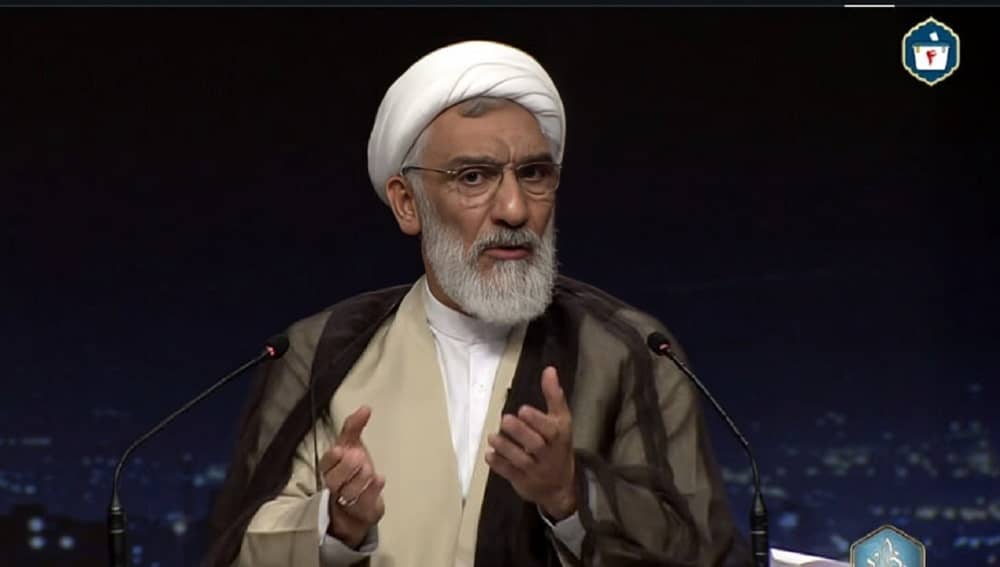
Among the myriad threats the regime perceives, none seem to instill more fear than the People’s Mojahedin Organization of Iran (PMOI/MEK). The MEK, with its commitment to overthrowing the clerical establishment, remains a central concern for Tehran’s leadership. Most tellingly, former Minister of Interior Mostafa Pourmohammadi, infamous for his role in the 1988 massacre of political prisoners, recently admitted in an interview that Iran has never had a moment of stability in the past 45 years due to opposition forces, especially the MEK.
Pourmohammadi candidly acknowledged the regime’s ongoing battle against anti-regime forces, stating: “The Islamic Republic has never had a moment of peace. We have always been entangled in dealing with bombings, assassinations, and other security threats. The opposition groups, especially the MEK, continuously attempt to operate within Iran. What are we supposed to do—just sit back and let them act?”
His remarks reveal the regime’s deep-seated anxiety about the MEK’s persistent efforts to destabilize it from within. While the regime attempts to project an image of control, its senior officials’ admissions suggest otherwise. The fear of MEK infiltration has led to a crackdown on dissent, with mass arrests, purges, and increased surveillance targeting both military and civilian sectors.
Mostafa Pourmohammadi's staged interview reveals the regime's desperation to rewrite history on the #1988Massacre and counter MEK's influence on a restless society—an organization #Tehran has tried hard to eliminate and defame while claiming it has no significant following. pic.twitter.com/dbxo2jjZGa
— NCRI-FAC (@iran_policy) June 25, 2024
The Rising Tide of Repression
The growing factional disputes and paranoia within Iran’s ruling elite are accompanied by an intensification of state repression. The recent violent suppression of protests, the silencing of dissidents, and the execution of political prisoners all point to a regime that sees brute force as its only means of survival. However, history has shown that the more a dictatorship resorts to repression, the closer it gets to its own downfall.
The growing dissent, escalating factional battles, and deep-seated fear of opposition forces, particularly the MEK, have pushed the regime to the brink. However, a cornered dictatorship is at its most dangerous. If left unchecked, the mullahs will attempt to regroup, intensify repression, and export terror beyond Iran’s borders to buy themselves more time.
The time for complacency is over. The Iranian people have made it clear that they reject this regime, but their struggle must not be theirs alone. The international community must maintain and intensify pressure—through sanctions, diplomatic isolation, and full support for the Iranian people’s resistance. Every moment of delay allows the regime to regroup and unleash further atrocities. Now is the time to stand firm, ensure that Tehran is not given breathing room, and help bring an end to one of the world’s most oppressive and destabilizing regimes.