

Three-minute read
On the morning of March 31, 2026, as Iranian courts, prisons, safe houses and every branch of the security apparatus stood in full wartime alert, the clerical dictatorship chose to kill two more of its most determined enemies. Two members of the PMOI-led Resistance Units Babak Alipour, 34, law graduate and Pouya Ghobadi, 32, an electrical engineer were hanged. The day before, the same machinery of death had claimed Ali Akbar Daneshvar Kar and Mohammad Taghavi. Four lives, extinguished in 48 hours, in a country already braced for external attack.
To the casual eye, these executions might look like the reflex of a cornered dictatorship lashing out in revenge. They are not. They are something rarer and more revealing: an admission of ideological and political defeat.
The story begins not with the gallows but with an operation the regime has tried desperately to pretend never happened. On Feb. 23, more than 250 fighters from the People’s Mojahedin Organization of Iran (PMOI/MEK) penetrated the most protected complex in the country. They reached the inner security ring surrounding Supreme Leader Ali Khamenei’s compound, the Guardian Council, the judiciary and key power institutions. The assault was bloody. Besides regime casualties, 100 attackers were killed, wounded or captured. Yet they had done the impossible: Iranian hands, acting on Iranian soil, had touched the sanctum of power.
“We are standing till the end.”
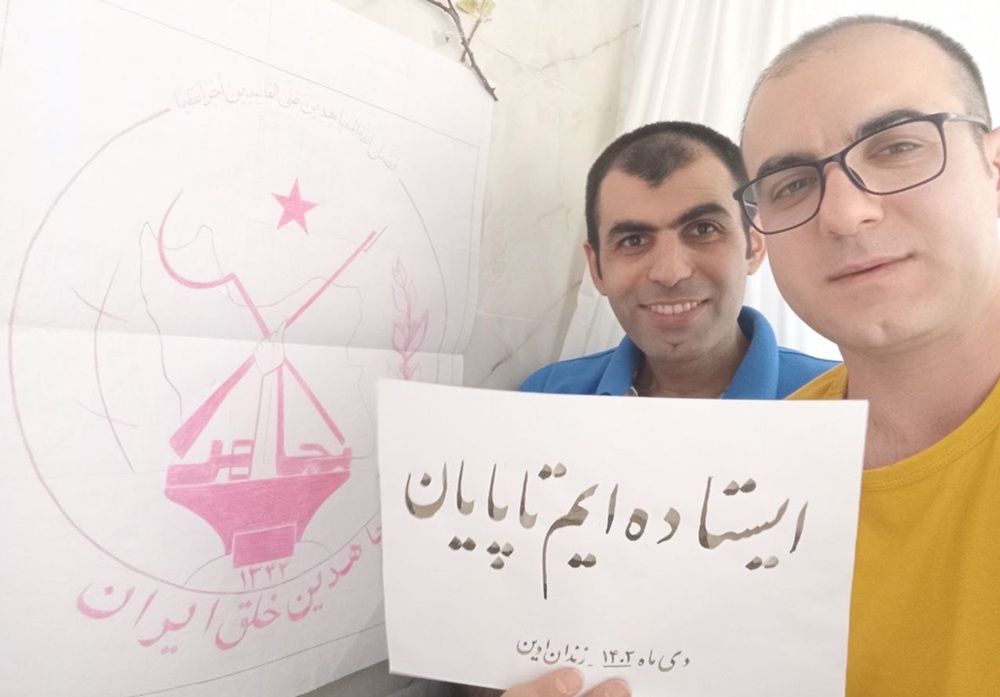
A memorable picture of two PMOI martyrs, Pouya Ghobadi and Babak Alipour, inside prison. Iran's genocidal regime executed them today. https://t.co/tId5FrEJSY pic.twitter.com/PvZKVl5K08— SIMAY AZADI TV (@en_simayazadi) March 31, 2026
The regime’s response was deafening; It said nothing. No victory bulletins, no televised confessions, no triumphal footage of “foreign-backed terrorists” crushed by heroic guards. Even scattered videos of local residents reacting on social media were suppressed. Why? Because this was not a raid by outsiders. It was an Iranian Resistance operation, carried out by men and women whose families, friends and sympathizers live inside Iran itself. To publicize it would have been to admit that the regime’s most sacred spaces are no longer untouchable — and that the enemy is not at the gates but already inside the walls.
For decades the clerical regime has invested enormous resources in destroying the MEK: mass executions, televised forced confessions, lavish propaganda campaigns, armies of paid influencers. It has tried to portray the organization as irrelevant to Iran’s society. Yet the February operation as well as the January 2026 uprising demonstrated what the regime has long feared: that the PMOI’s model of organized, disciplined resistance has taken root in Iranian society. No amount of state media spin can erase that reality when the attackers’ names and faces are known to thousands of ordinary Iranians.
Hence, the regime turned to the only weapon left that it trusts: the noose. The four men executed this week had been arrested years earlier. None were involved in the February raid. Their deaths were not battlefield justice; they were political theater meant to send a single message to a restless population: Any organized link to the PMOI remains a red line. The regime that boasts of rounding up foreign spies is, in truth, far more terrified of homegrown, structured opposition than of either spontaneous street protests or foreign bombs.
BREAKING: Iran’s regime executed PMOI members Pouya Ghobadi and Babak Alipour today.
📷 Memorable images of the two martyrs
🎥 Pouya playing the santur
Another act of repression against political prisoners in Iran. pic.twitter.com/4Il1tO1JJo— SIMAY AZADI TV (@en_simayazadi) March 31, 2026
This is why the executions were not a show of strength but a grudging confession of weakness. The clerical state’s preferred outcome would have been different. It wanted these men broken — paraded on television, repentant, begging forgiveness, returning to their families as cautionary tales for the next generation.
That is how tyrants usually win: by turning resistance into regret. But Babak, Pouya, Ali Akbar and Mohammad refused the script. Like the 30,000 political prisoners massacred in 1988, they went to the gallows unbowed. Their interrogators, who craved only a single “yes” of submission, received instead a final, unbreakable “no.”
Message by PMOI member Mohammad Taghavi to a gathering of Iranian experts and specialists supporting the NCRI.
Taghavi, a Graphic Design graduate from the University of Tehran, was executed on March 30, 2026, alongside fellow PMOI member Akbar (Shahrokh) Daneshvar Kar. https://t.co/jUFK3ncvbi pic.twitter.com/GLMrwtmT6Q
— SIMAY AZADI TV (@en_simayazadi) March 30, 2026
In that refusal lies the regime’s deeper failure. Every execution was meant to prove that resistance is futile. Instead, these four men proved the opposite: that even in the shadow of the scaffold, the idea of a free, democratic Iran remains alive and contagious. They did not merely die. They defeated the regime’s last, best hope of convincing Iranians that fighting for dignity is pointless.
The clerical regime has long presented itself as eternal, divinely ordained, invincible. Yet in the quiet hours after these hangings, the message that echoed across Iran’s prisons and living rooms was the one the regime least wanted to send: that a determined, organized opposition can still reach the heart of power, and that ordinary Iranians can still choose defiance over despair.