

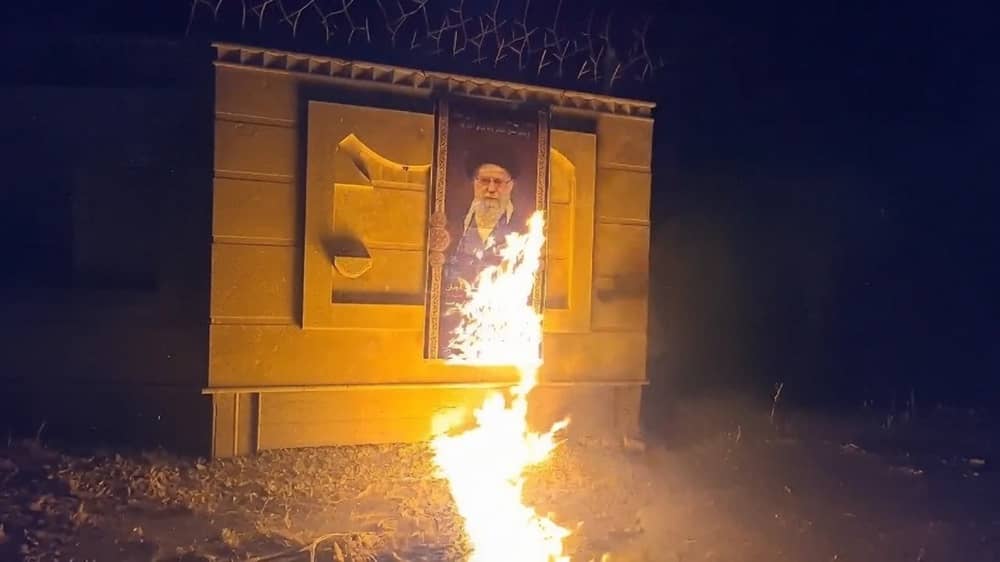
Following the death of Ali Khamenei, the clerical regime ruling Iran has plunged into a severe succession crisis, triggering an unprecedented wave of highly coordinated underground resistance operations that systematically shattered the clerical regime’s facade of absolute control between July 4 and July 11, 2026. Across dozens of cities, the Resistance Units affiliated with the People’s Mojahedin Organization of Iran (PMOI/MEK) launched synchronized arson strikes against Islamic Revolutionary Guard Corps installations, disrupted state-mandated funeral proceedings, and carried out extensive anti-propaganda campaigns. This surge of domestic defiance comes at a moment of deep institutional fracture, as the ruling elite desperately attempts to force through the hereditary succession of Mojtaba Khamenei amid a severe economic collapse. By transforming compounding public grievances into organized political revolt, the Iranian Resistance is actively exposing the structural deadlock at the heart of the theocracy and proving that the state’s apparatus of repression can no longer contain the momentum for democratic change.
July 11, 2026
On July 11, 2026, the Resistance Units escalated its nationwide campaign through forty distinct revolutionary practices aimed at confronting the clerical dictatorship. In Zahedan, Resistance Units displayed visible placards rejecting the dynastic succession of Mojtaba Khamenei, labeling him a bloodthirsty tyrant. The activists explicitly characterized the recent state-mandated funeral ceremonies as a desperate security farce, noting that Mojtaba Khamenei remained absent due to profound fear of assassination, while nearly half of the Assembly of Experts refused to support his sudden elevation. The coordinated operations also deployed the emblems of the National Liberation Army of Iran and posters of resistance leadership across major metropolitan hubs, including Tehran, Shahin Shahr, Sari, Gorgan, Rasht, Arak, Hamedan, Kermanshah, Borujerd, Mashhad, and Shiraz. The streets of these cities became battlegrounds of visual defiance, as activists painted slogans condemning a century of combined crimes by both the monarchy and the clerical system.
On July 6, in defiance of massive security deployments during the funeral ceremonies for Ali Khamenei, PMOI/MEK Resistance Units launched daring operations against the symbols of the Iranian regime across major cities, including Tehran, Mashhad, Isfahan, and Shiraz. pic.twitter.com/pWuPslLXQ8
— People's Mojahedin Organization of Iran (PMOI/MEK) (@Mojahedineng) July 11, 2026
July 10, 2026
On July 10, 2026, the Resistance Units executed twenty-five synchronized fire operations as an outcry against the state’s decision to bury the late dictator in the Imam Reza shrine. In Tehran, specialized teams torched massive billboards carrying the images of Ruhollah Khomeini, Ali Khamenei, and Mojtaba Khamenei. In Isfahan, operatives reduced major state banners to ashes, including a prominent display honoring Qassem Soleimani. Similar arson campaigns targeted state propaganda in Yazd, Babol, Aligoodarz, Azna, Arak, and Saveh, while activists in Sonqor burned security stencils directly off public walls. The offensive rapidly shifted toward repressive infrastructure, resulting in the torching of an IRGC Basij base in Karaj, an anti-student Basij center in Yazd, and another in Zahedan. Government administrative infrastructure used for municipal plundering was set ablaze in Aligoodarz. Specialized teams in Khorramabad, Doroud, and Rezvanshahr targeted the domestic espionage network, torching Ministry of Intelligence surveillance signposts. In Chabahar, a strike set fire to the State Security Force command headquarters within the Pishin district.
July 9, 2026
On July 9, 2026, the Resistance Units successfully breached the regime’s suffocating security cordons in Mashhad during the highly militarized coffin procession. In the late afternoon, specialized units deployed public audio systems and broadcasted loud opposition slogans directly into the state-organized crowds. The auditory interventions occurred near the heavily guarded Bazaar-e Reza and at the intersection of 15 Khordad Square and Khorramshahr Street, projecting messages that condemned the dictatorship and cheered the organized alternative, stunning security forces who were otherwise on maximum alert.
As Iran's regime staged elaborate state funeral ceremonies for Ali Khamenei, PMOI Resistance Units carried out a widespread wave of daring operations, echoing the true desire of the people: an end to the religious dictatorship and the establishment of a democratic republic. pic.twitter.com/mcASgrLX51
— People's Mojahedin Organization of Iran (PMOI/MEK) (@Mojahedineng) July 9, 2026
July 6, 2026
On July 6, 2026, as the regime attempted to execute its primary state funeral maneuvers, a nationwide wave of thirty coordinated arson operations by the Resistance Units shattered the state’s projection of control. Operatives in Mashhad torched an institutional emblem of the Revolutionary Guards alongside multiple leadership billboards. Similar strikes reduced state banners to ashes across Isfahan, Zahedan, Shiraz, Ardabil, Shahrekord, Najafabad, Birjand, Dehloran, Azna, Kermanshah, and Fasa. In Rezvanshahr, dual fire operations destroyed large portraits of Mojtaba Khamenei, while operatives in Aleshtar systematically torched public monuments dedicated to Ebrahim Raisi.
Shattering the illusion: Resistance units defy regime’s security maneuvers during Khamenei’s funeral https://t.co/zjbzLqCFZI
— People's Mojahedin Organization of Iran (PMOI/MEK) (@Mojahedineng) July 8, 2026
July 5, 2026
On July 5, 2026, the Resistance Units deployed a multi-city political campaign to harness societal fury over the catastrophic economic collapse. Activists flooded public spaces across Tehran, Shiraz, Sanandaj, Bandar Abbas, Sari, Hamedan, Kashan, Azna, Sardasht, and Rudsar with placards and anti-regime graffiti. The messaging directly connected the regime’s structural corruption to the desperate bread crisis, noting that the legal wage covers less than thirty-seven percent of a family’s primary needs. In Behshahr, operatives displayed public declarations reinforcing the organized resistance as the sole viable path to liberation. Teams in Bushehr, Zanjan, and Karaj held prominent displays rejecting all historical models of tyranny, emphasizing that the Iranian people will accept neither the clerical turban nor the monarchical crown.
July 4, 2026
On July 4, 2026, the operational window opened with a highly synchronized wave of asymmetric strikes targeting the frontline apparatus of domestic repression. The Resistance Units launched targeted arson attacks against multiple IRGC Basij bases, successfully striking installations in Sari, Neyshabur, Torbat-e Heydariyeh, Torbat-e Jam, and Zahedan. The Resistance Units set fire to municipal buildings used for public plundering in Mahshahr and Esmaeelabad. Massive propaganda billboards and murals of the deceased dictator were systematically torched across high-traffic zones in Tehran, Mashhad, Isfahan, Karaj, Chabahar, Ardabil, and Saveh. To disrupt the succession mechanism, operatives in Nowshahr and Lahijan executed targeted strikes that reduced massive portraits of Mojtaba Khamenei to ashes. The scale of this offensive forced State Security Forces chief Ahmad-Reza Radan to publicly admit that the ruling establishment was navigating its hardest days.
July 6—Iran
As Iran's regime continues state funeral ceremonies for eliminated supreme leader Ali Khamenei, PMOI/MEK Resistance Units target regime centers of repression and corruption, echoing the real desire of the Iranian people, which is the overthrow of the mullahs' rule and… pic.twitter.com/HpkmfWo3R6— People's Mojahedin Organization of Iran (PMOI/MEK) (@Mojahedineng) July 8, 2026
The rapid acceleration and tactical sophistication of these nationwide operations reveal a profound structural deadlock inside the Iranian state following the death of its supreme leader. The regime’s long-standing strategy of terror and executions has fundamentally backfired, serving not as a deterrent but as a catalyst for organized domestic revolt. By launching synchronized strikes against fortified security bases, and burning the regime’s ideological symbols amid a security lockdown, the Iranian Resistance exposes the terminal vulnerability behind the state’s projection of invincibility. The absolute refusal of the population to accept a forced hereditary succession, combined with the explicit rejection of both the current theocracy and the remnants of past monarchical autocracy, demonstrates that the domestic crisis has bypassed the possibility of internal reform. These underground actions prove that the state’s apparatus of terror is no longer capable of freezing a volatile society, exposing its internal deadlock despite its desperate attempts to project an image of power.