

Nine-minute read
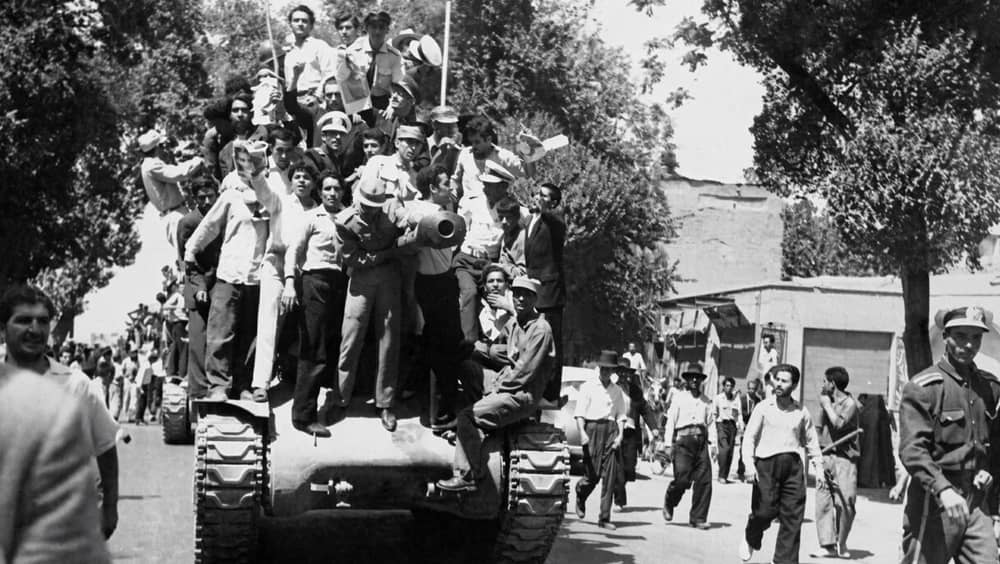
Today, 19 August 2026, marks the seventy-third anniversary of the 1953 coup against the national government of Dr. Mohammad Mossadegh in Iran. The overthrow removed a prime minister whose political strength had grown through parliament and a powerful popular movement centered on the nationalization of Iran’s oil industry. It also returned Mohammad Reza Shah Pahlavi to power after he had fled the country during the failed first stage of the coup. The CIA’s own retrospective record states that Dr. Mossadegh’s removal was successfully accomplished on 19 August 1953.
For Iran, 19 August was therefore far more than the day one government replaced another. It opened a new political chapter in which the Shah returned with decisive foreign assistance and later presided over an increasingly authoritarian system. A December 1954 U.S. National Intelligence Estimate recorded that political power had largely reverted to the Shah and the traditional conservative ruling group, accompanied by martial law, censorship and repression of opponents.
The declassified American record of the 1953 overthrow of Dr. Mohammad Mossadegh contains a remarkable moment that goes directly to the heart of that question. It is not a CIA officer speaking, nor a later historian interpreting events. It is the Shah himself, as his words were reported by close associates to U.S. Ambassador Loy Henderson in Washington, May 21, 1953.
“The British threw out the Qajar dynasty; they brought in my father; they threw out my father.”
The Shah went further. He said that Britain could remove him or keep him as it saw fit and wanted to be told whether London wished him to remain or leave quietly. Days later, he sent an emissary to Henderson seeking a secret and unequivocal answer about the British attitude towards his throne. Winston Churchill subsequently sent reassurance that Britain did not wish to see him lose his powers or his position.
It is difficult to find a clearer window into Mohammad Reza Shah’s own conception of his political security. He was not merely concerned with domestic opinion, parliament or constitutional legitimacy. He understood the fate of his dynasty through the decisions of a foreign power.
And that is precisely why his words still matter today. The central question raised by 1953 was never simply who governed Iran, but who had the right to decide who governed Iran.
The man who would shortly return to the throne with foreign assistance was himself describing his family’s political fortunes in terms of decisions made beyond Iran’s borders.
What followed would show just how consequential that belief was.
Revisiting the Legacy of Mohammad Mossadegh: A Blueprint for Democratic Governance in #Iran https://t.co/RyeT8s4ISt
— NCRI-FAC (@iran_policy) July 30, 2025
A Government Washington Itself Knew Had Popular Roots
The U.S. intelligence record did not portray Dr. Mossadegh or the National Front as flawless. American assessments criticized political disorder, elements of the electoral process and the worsening economic crisis. Yet this makes other parts of the same record particularly important.
In July 1952, the CIA’s Office of National Estimates concluded that National Front leaders had come to power neither through traditional political bargaining nor through the Shah’s support, but because of “widespread popular support” for their position towards Britain and the oil dispute.
A separate CIA memorandum in March 1952 considered the possibility of authoritarian rule and stated: “Nor is there any indication that the National Front regime is considering the adoption of authoritarian methods.”
The next sentence noted that Dr. Mossadegh relied heavily on support in the Majlis.
These records establish a narrower point: Washington’s own intelligence service recognized the National Front’s popular roots and parliamentary dependence before the decision was taken to remove its government.
By April 1953, the language of an internal CIA planning paper had become brutally simple: “Mossadegh must go.”
The very next paragraph stated that appropriate U.S. covert assets would be directed towards his overthrow and that American policy and financial assistance would support his successor.
As #IranRevolution persists, some speak of the return of the deposed Pahlavi dictatorship in Iran. Although this is a historical impossibility, it is worth knowing who was Mohammad Reza Pahlavi, the last Pahlavi dictator. https://t.co/dFcu03vgxF
— NCRI-FAC (@iran_policy) February 10, 2023
Manufacturing the Myth of a “Spontaneous Uprising”
The declassified documents make it difficult to portray the Shah as merely a passive beneficiary of events.
On 19 May 1953, an emissary communicated the Shah’s views to the U.S. embassy. According to the memorandum, the Shah believed Dr. Mossadegh should be removed through the Majlis but that “covert means must be employed” to make parliament act. The proposed underground measures included American material assistance and encouragement to General Fazlollah Zahedi and Mozaffar Baqai.
On 30 May, Henderson directly asked the Shah whether Zahedi was acceptable as prime minister. One of the Shah’s conditions was that Zahedi be acceptable to the United States and Britain and that substantial financial and economic assistance be made available to the new government almost immediately. Henderson told him that Britain would welcome a Zahedi government and that he was confident Washington would also welcome one if the Shah supported it.
On 17 August, with the Shah in Baghdad, the American ambassador recorded that when the Shah had been approached roughly a fortnight earlier about sponsoring a military coup: “he accepted the idea.”
The ambassador also reported that the Shah displayed no bitterness towards the Americans who had “urged and planned action.” More strikingly, he advised the Shah never to disclose foreign involvement because doing so would damage his prestige in Iran. The Shah agreed.
Two days later, the operation succeeded. Washington then instructed that the Shah should publicly thank the Iranian people for a “spontaneous uprising” in his support and announce his rapid return.
The private record and the public narrative were therefore not the same thing.
On the anniversary of the demise of Dr. Mohammad #Mosaddegh, leader of Iran’s Nationalist Movement, we salute his exalted soul and renew our pledge to continue and advance his path for the happiness of the Iranian nation.#Iranhttps://t.co/UpNFzRe36I pic.twitter.com/2NyFpxgLcN
— Maryam Rajavi (@Maryam_Rajavi) March 4, 2018
Kashani, the Clergy and the Road Back to the Throne
The role played by the clerical establishment in 1953 is equally important. The history of Iran over the past 120 years shows that, in every major political crisis, the monarchy and the clerical establishment have stood together when their shared interests and hold on power were threatened. The declassified record of 1953 provides one of the clearest documented examples of this pattern: influential clerical figures, royalist forces and those working to remove Dr. Mossadegh converged around the same political objective, the overthrow of his government and the restoration of the Shah’s authority.
On 15 April 1953, according to a CIA information report, a representative of the royal court approached Ayatollah Abol-Ghasem Kashani seeking his support for a plan, one towards which the Shah was reported to be favorably disposed, “to oust Prime Minister Mossadeq and replace him by General Fazullah Zahedi.”
Kashani’s proposed role was concrete. He would write to the Shah alleging that disorder and threats against deputies had rendered the Majlis unable to function. The Shah could then use the letter in connection with removing Dr. Mossadegh and advancing Zahedi. Kashani preferred a version supported by members of parliament and believed he might obtain around forty signatures.
Another CIA document stated that Kashani intended to act as the power behind Dr. Mossadegh’s successor and reported that he had been associated with Zahedi as a potential replacement for Dr. Mossadegh as early as September 1952.
How #Iran’s Clerical Regime Rebuilt SAVAK into a Global Repression Machinehttps://t.co/s3FhvmxhzA
— NCRI-FAC (@iran_policy) February 7, 2025
On 17 April, another intelligence report recorded that Borujerdi, Kashani and Behbehani, described as leading clerical figures, were reaching an understanding: “on the need to bolster the Shah in his resistance to Mossadegh.”
These clerical networks were not peripheral to later CIA descriptions of the operation. A March 1954 CIA retrospective stated that one of the operation’s four principal phases had been to coordinate political factions hostile to Dr. Mossadegh, explicitly including the: “powerfully influential clergy” and secure their backing for action by the Shah to remove him.
Kermit Roosevelt’s own post-operation briefing shows that clerical mobilization remained part of operational thinking in the crucial days. Discussing the timing of street action, he recalled: “if the Mullahs can’t act until Friday…” the planners could not afford simply to wait and would need a demonstration earlier.
A later intelligence report records that Zahedi gave Ayatollah Behbehani 10,000 tomans on 26 September and another 5,000 on 3 October. The stated purpose was to: “maintain the goodwill of Behbehani” and keep him politically aligned with the Zahedi government.
The #Iranian Regime’s Calculated Use of Monarchists: A Political Decoyhttps://t.co/yBZ1QJSnHd
— NCRI-FAC (@iran_policy) February 2, 2025
Seventy-Three Years Later: The Question Returns
The coup of 1953 was not an isolated collision of personalities. It exposed a political pattern that has repeatedly resurfaced throughout Iran’s modern history.
Over the past 120 years, whenever the foundations of political power have been seriously threatened, the monarchy and the clerical establishment have repeatedly found themselves standing on the same side against forces seeking to break the existing authoritarian order. In 1953, the declassified documents allow us to see that convergence in extraordinary detail: the Shah, royalist forces, influential clerics and foreign powers moved towards the same political objective: the removal of Dr. Mohammad Mossadegh and the restoration of monarchical authority.
Seventy-three years later, Iran is ruled not by a Shah but by a clerical dictatorship. Yet the political usefulness of monarchy to the clerical establishment has not necessarily disappeared with the monarchy itself.
That is what makes the sudden elevation of Reza Pahlavi so important to examine.
For decades, the son of the deposed Shah remained politically marginal, with no meaningful organizational machinery inside Iran capable of directing a national uprising. Yet as successive waves of protest shook the Iranian regime, the Pahlavi name was increasingly projected in the West into the debate over Iran’s future.
The question is who benefits when the struggle against clerical dictatorship is reframed as a choice between the Iranian regime and the restoration of the monarchy?
For the regime, that is an extraordinarily useful choice. It transforms a struggle between dictatorship and democracy into a quarrel between two forms of authoritarian memory: the turban and the crown.
#Iran News: State-Run Newspaper Says Reza Pahlavi and Monarchists Have Served Clerical Regimehttps://t.co/iey2VpMKXU
— NCRI-FAC (@iran_policy) April 8, 2025
The Third Side of the Triangle: Foreign Power and the Manufacture of an Alternative
The declassified record of 1953 reveals a political triangle whose three sides converged against Mohammad Mossadegh: foreign power, the monarchy and influential clerical forces.
The CIA and MI-6 provided external machinery. The Shah provided the monarchical instrument. Kashani, Behbehani and other clerical figures helped create the domestic political environment in which Mossadegh could be removed and the Shah restored.
But the operation required more than intelligence networks, money and street mobilisation. It also required control of the political narrative.
Historian Ervand Abrahamian, drawing on British Foreign Office documents, has described official efforts to feed hostile material into the press. One Foreign Office memorandum referred to supplying American journalists with: “suitable poison too venomous for the BBC.”
The language appearing in sections of the British press was extraordinary. The Times described Mossadegh as “nervously unstable.” The Observer called him an “incorruptible fanatic”, compared him to Robespierre and described him as a “tragic Frankenstein.”
The technique was politically effective because it changed the subject. The dispute was fundamentally about Iran’s sovereignty and control over its natural resources. But once Mossadegh himself could be portrayed as irrational, unstable or fanatical, the man became the problem rather than the foreign pressure being exerted against his government. The battlefield was therefore not only Tehran. It was also Western public opinion.
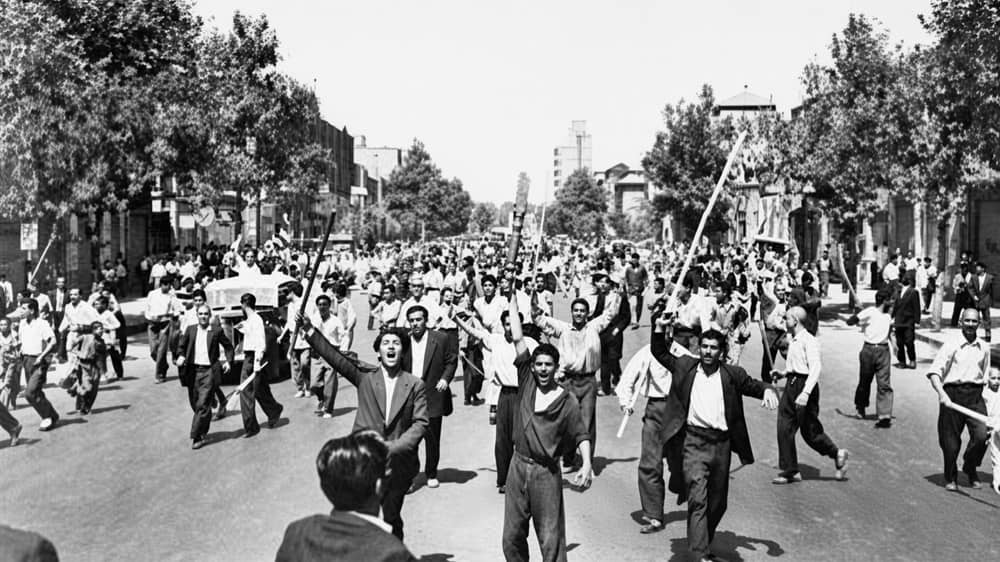
Street politics formed another part of the operation. During the 1953 coup, Shaban Jafari and groups of street toughs associated with him were mobilized alongside forces connected to clerical networks. They appeared in the streets carrying portraits of the Shah, intimidating opponents and helping create the impression that popular momentum favored the monarchy’s restoration. Propaganda, organized street pressure and political violence reinforced one another.
Today, the Method Works in Reverse
Seventy-three years later, the mechanism is different, but the danger of manufactured political perception remains.
Some political, financial and media circles outside Iran appear to believe that promoting Reza Pahlavi can provide leverage against the clerical regime. In practice, however, this has produced the opposite result.
For years, the regime has had an obvious interest in presenting Iranians with a false binary: either continued clerical dictatorship or a return to the Pahlavi dictatorship. By elevating monarchy as though it were the only alternative, people can be encouraged to conclude that political change merely means replacing one dictatorship with another.
A vast Persian-language media environment outside Iran has simultaneously helped promote selective nostalgia for the pre-1979 period while also circulating manipulated and fabricated footage from protests inside Iran. In many cases, authentic protest videos have been overdubbed with pro-Pahlavi slogans, creating the impression that demonstrators across the country are chanting Reza Pahlavi’s name. Hundreds of such misleading or fabricated clips have been produced and then repeatedly amplified—sometimes thousands of times, across satellite television channels and social-media platforms, reinforcing the perception that support for the restoration of the Pahlavi monarchy is far more widespread inside Iran than the available evidence necessarily demonstrates.
There is also an unsettling historical echo in the behaviour of some aggressive monarchist activists in London and other European cities. Their conduct is strikingly reminiscent of the tactics associated with Shaban Jafari and his street gangs during the 1953 coup: the same political culture of intimidation, the same abusive and threatening language, and the same methods of confronting and harassing rival political groups. By using verbal abuse, threats and, in some cases, physical aggression while prominently displaying royal symbols, they recreate a form of street politics that closely resembles the methods used in 1953 to manufacture an image of popular support for the monarchy and to intimidate those who opposed it.

Presenting this manufactured choice internationally not only fails to weaken the Iranian regime; it directly serves the regime’s interests. The clerical establishment benefits enormously from promoting this false binary because it discourages the Iranian people and creates the impression that their only choices are either the current religious dictatorship or a return to a monarchical dictatorship.
When a Royalist Slogan Appears Under Police Protection
One of the most revealing clues appeared during the protests that followed the nationwide uprisings of 2017 and 2018.
The state-run daily Jomhouri Eslami reported in June 2018 that groups near parliament were chanting “Reza Shah, rohat shad” (“Reza Shah, may your soul be blessed”) while moving “with police escort,” and reportedly described them as the same kinds of individuals seen at official Friday prayers and regime-organized demonstrations. This was striking because, until then, the dominant slogans in Iran’s protests had overwhelmingly targeted the ruling system, its corruption, poverty, repression and clerical dictatorship, while calling for regime change and the establishment of a free republic; only from 2018 did pro-monarchy slogans begin to appear sporadically in protest settings.
The implication is difficult to ignore. In a state where slogans challenging the ruling order can lead to arrest, imprisonment or worse, a supposedly monarchist group could be allowed to move through a protest environment under police protection.
Why? Because those chanting this slogan were themselves members of the regime’s security forces.
By the following morning, the story is no longer that Iranians protested poverty, repression or clerical rule. The story becomes: Iran wants the Shah back: a narrative that not only distorts the nature of the protest, but also discourages the public by creating the impression that the alternative to the clerical dictatorship is a return to monarchical dictatorship.
66 years ago today #Iran's nation rose in support of then Prime Minister Mohammad Mosaddegh.
This also marks the founding anniversary of the NCRI opposition coalition (@iran_policy), providing an alternative for Tehran's mullahs in the past 37 years. pic.twitter.com/IdTn42BE4A— People's Mojahedin Organization of Iran (PMOI/MEK) (@Mojahedineng) July 21, 2018
The Regime Knows Which Opposition It Can Use
The Iranian regime does not need to fear every force that calls itself opposition. On the contrary, its own media environment has repeatedly articulated a much more cynical logic: an opposition that is weak, rootless, divided and incapable of threatening the foundations of the state can be politically useful.
That is precisely where the monarchist project becomes valuable to the regime. The more the public debate is reduced to “the Islamic Republic or the Pahlavis,” the easier it becomes to erase every other possibility from view.
To Iranians, the regime can say: “This is not a democratic uprising. They want to bring back the Shah. “and “If the Islamic Republic falls, Iran will simply return to another authoritarian system backed from abroad.”
The logic has been expressed with unusual candor inside the regime’s own media ecosystem. Vatan-e Emrooz, a regime-aligned outlet, has been cited as arguing that: “a weak and rootless movement like monarchism can actually help the survival of the Islamic Republic.”
A similar formulation has appeared in Tasnim, widely identified with the Revolutionary Guards, stating that monarchism can help the Islamic Republic survive. And Khabar Online has carried the proposition that presenting Reza Pahlavi as a monarchist alternative may itself be: “a project manufactured by the Islamic Republic.”

The Western Amplification Loop
The artificial elevation of Reza Pahlavi is completed through a media and lobbying loop that begins inside the regime’s own theatre of manipulation and ends in Western policy circles. When regime-linked actors inject pro-monarchy slogans into protests, stage or amplify short clips, and push them through coordinated online networks, certain Persian-language satellite channels and pro-monarchy elements outside Iran amplify these narratives further, presenting fragmented footage as evidence of a nationwide demand for the restoration of the monarchy.
From there, the image travels into mainstream Western coverage, where journalists and policymakers searching for a simple, recognizable “face” of the Iranian opposition often mistake visibility for legitimacy.
At the same time, powerful foreign-linked lobbying networks, and media campaigns help organize high-profile meetings, rallies, and photo opportunities for Pahlavi abroad, giving the impression of a government-in-waiting rather than an exile figure with no proven domestic organization.
This layered amplification, cyber, satellite, media, lobbying, and diplomatic, completes the construction of a manufactured alternative: Tehran benefits because the democratic uprising is recast as a foreign-backed monarchist project, while external actors gain a convenient and marketable figure around whom to organize regime-change narratives. The real loser is the Iranian people’s own democratic movement, whose pluralistic and anti-dictatorial message is drowned out by a spectacle built around one inherited name.

The Echo of 1953
This is where the story returns to 19 August 1953. The actors are different. The circumstances are different. The political system is different. But the underlying danger is disturbingly familiar.
In 1953, foreign capitals believed they could help determine who should govern Iran. The Shah himself asked what Britain wanted. Clerical figures and royalist forces converged against Dr. Mossadegh. A government was removed. A monarch was restored. And the Iranian people lived with the consequences for another quarter of a century.
Today, the danger is not that history will reproduce the same coup with the same participants. History rarely repeats itself so neatly. The danger is that the same political logic survives: that Iran’s future can once again be reduced to a figure promoted by the mullahs themselves and from outside the country and; that visibility can be mistaken for legitimacy; that an inherited name can be used to discourage the public by creating the fear that their protests could ultimately lead to the return of a monarchical dictatorship.
The clerical regime and the monarchy may present themselves as mortal enemies. But the history of the past 120 years points to a recurring pattern: monarchy and clerical reaction have repeatedly reinforced one another.
Today, the Iranian regime knows that a restoration of the monarchy is virtually impossible and that the monarchist project poses no genuine threat to its survival. That is precisely what makes it useful. By elevating the monarchy and presenting the Pahlavis as the principal alternative to clerical rule, the regime can use an inherited name to discourage the public by creating the fear that their protests could ultimately lead to the return of a monarchical dictatorship, thereby making its own continued existence appear either preferable or inevitable.