

THIS PAGE WILL BE UPDATED WITH THE LATEST NEWS
UPDATE: 8:30 PM CEST
Iranian American Muslim Warns of Islamic Fundamentalism, Recounts Life Under Iran’s Regime

An Iranian American Muslim and former political prisoner who lived through the aftermath of Iran’s 1979 revolution sat down with The Dallas Express to discuss the rise of the Islamic Republic, the impact of Sharia-based governance on Iranians, and why she believes Islamic fundamentalism has developed into a threat extending far beyond the Middle East.
Homeira Hesami, chairwoman of the Iranian-American Community of North Texas, was barely a teenager when the revolution toppled Shah Mohammad Reza Pahlavi. IACNT describes itself as an independent nonprofit that has served North Texas’ Iranian community for more than three decades, with a focus on Iranian culture, human rights, civic participation and educating Americans about conditions in Iran.
Hesami’s connection to the subject is personal. Born in Iran in 1966, she graduated from high school with honors at 16, according to a biography published by the U.S. Foundation for Liberty. Hesami said Iranian universities vetted applicants based on political beliefs after the revolution and would not allow her to attend.
UPDATE: 11:30 AM CEST
US Warns Siemens Devices Can Be Hacked Amid Fears Iran Is Breaching Water Plants
Aug 19 (Reuters) – Several U.S. government agencies warned that unidentified hackers are trying to breach devices made by Siemens that are used to monitor and operate water facilities and other critical infrastructure systems, according to a cybersecurity advisory published on Wednesday.
The warning comes amid widespread cyber incidents targeting local water systems in multiple states in recent weeks in attacks cybersecurity experts suspect are linked to Iran.
The advisory, opens new tab describes an “active threat” to all Siemens S7 Series programmable logic controllers across multiple critical infrastructure sectors, including manufacturing, energy, water and wastewater, chemical, food and agriculture facilities, according to the warning issued by the National Security Agency, FBI, Department of Energy, Environmental Protection Agency and the Department of Homeland Security’s Cybersecurity and Infrastructure Security Agency (CISA).
Depending on specific circumstances, compromises of these devices could lead to the disruption of critical processes, safety incidents, downtime or equipment damage, the compromise of sensitive data, compliance violations and cascading impacts across interconnected systems, the government warned.
UPDATE: 9:00 AM CEST
Message to the Conference at the Parliament of Australia
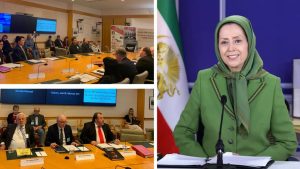 Mrs. Maryam Rajavi’s speech: “This conference is held to mark the 38th anniversary of the massacre of political prisoners in Iran. In July 1988, Khomeini, the founder of religious dictatorship in Iran, issued the decree for the execution of members of the People’s Mojahedin Organization of Iran in prisons across the country. He ordered that PMOI prisoners who remained steadfast in their positions be executed immediately. This referred to those who, despite years of torture and abuse, refused to abandon the struggle for the freedom of the Iranian people. Subsequently, 30,000 people, 90 percent of whom were members of the PMOI, were hanged. This book contains the names of five thousand PMOI members who were massacred.
“Why did the regime commit this horrible crime? Because it saw, and still sees, the PMOI as the main threat to its existence. Because it was afraid of being overthrown, and this is a fear that continues to this day. Throughout the past thirty-eight years, the regime has maintained the pattern of the 1988 massacre.”
Resistance Units Champion ‘No to Executions Tuesdays’ Campaign Across Iran
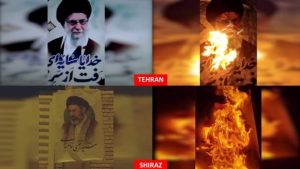
Following the 134th week of the “No to Executions Tuesdays” campaign on August 18, PMOI/MEK Resistance Units carried out a widespread wave of anti-regime activities across Iran carried out activities in support of the campaign, unintimidated by the state machinery of death.
In their activities, the Resistance Units paid tribute to the victims of the regime’s executions. In Kashan, activists laid a flower wreath honoring PMOI martyr Mohammad (Nima) Massoum Shahi, accompanied by the message: “Dear Nima, your memory and name is alive and lights the path to the future.” Nima Massoum Shahi, a 38-year-old technical worker and PMOI member, was brutally executed on April 20, 2026, as the regime sought to eliminate dissidents amid recent uprisings.
Similarly, in Shiraz, Resistance Units displayed placards condemning the recent execution of Shahram Sadeghi. Sadeghi was a brave protester arrested on February 5, 2026, shortly after the peak of the nationwide uprisings, and was hastily hanged on August 16, 2026, in a desperate display of state weakness.
Iran Healthcare Workers Protest Against Severe Livelihood and Structural Crises

In the summer of 2026, an Iran healthcare workers protest wave highlights how the country’s health system faces chronic financial backlogs, severe staffing shortages, and widespread labor discontent.
Reports from state-run media show that this crisis extends far beyond hospitals and specialized wards, engulfing primary care networks and healthcare personnel across the nation—a situation directly jeopardizing human capital retention and the quality of medical services provided to the public.
On Monday, August 17, 2026, a group of primary healthcare staff gathered outside the Ministry of Health building in Tehran. This Iran healthcare workers protest centered on severe economic hardship and unfair wage structures.
Female healthcare workers—who form the backbone of primary care, vaccination drives, and preventative health services—had a prominent presence at the rally. Carrying placards and handwritten banners, demonstrators voiced sharp criticism over low base salaries and an hourly overtime pay rate of approximately 30,000 Tomans (under 50 cents USD). Protesters emphasized that such meager compensation bears no proportion to their heavy responsibilities in safeguarding public health, demanding an immediate overhaul of their living conditions and job security.
Nasrin Shahrabi: A Lifetime Dedicated to Fighting Religious Fascism in Iran
 Nasrin Shahrabi Farahani, a prominent member of the Central Council of the People’s Mojahedin Organization of Iran (PMOI/MEK), a former commander in the National Liberation Army of Iran (NLA), and a longtime member of the National Council of Resistance of Iran (NCRI), passed away on Tuesday, August 18, 2026, in London following a period of illness. Her death marks the end of a 47-year commitment to opposing religious extremism and advocating for freedom in Iran.
Nasrin Shahrabi was born in Tehran in 1958 and held a bachelor’s degree in Persian literature. She first joined the pro-democracy movement during the 1979 anti-monarchical revolution, eventually dedicating herself full-time to the PMOI following the fall of the Shah.
In the summer of 1981, as the regime intensified its crackdown on political dissent, Shahrabi took on leadership roles within the resistance movement.
Iran’s Unregulated Drug Trade: How Some Pharmacies of Pseudo-Science Are Putting Young Lives at Risk

Iran’s herbal medicine shops, traditionally associated with medicinal plants, spices and herbal remedies, are increasingly being accused of serving a very different purpose: the retail distribution of narcotics and psychoactive drugs.
Behind displays of herbal teas, spices and bottles of herbal extracts, some shops reportedly sell substances ranging from methadone and tramadol to buprenorphine, opium syrup, hallucinogenic pills and unknown mixtures marketed as treatments for addiction, weight loss or other ailments.
The most disturbing aspect of these reports is the alleged accessibility of such substances to young people and even teenagers. According to accounts from addiction-treatment professionals and civil activists cited in Iranian reports, some of these shops have effectively become part of a street-level drug distribution network.
One observer described the situation bluntly: “They hand methadone and tramadol to people’s children like candy, and there is no one to stop them.”
Iran’s Fuel Crisis Deepens as Officials Warn of New Wave of Social Unrest

Iran’s worsening fuel crisis is generating growing public frustration as motorists face kilometers-long queues at gas stations while regime officials openly debate further gasoline price increases. Reports and videos from several provinces show people waiting for hours to obtain limited quantities of fuel, while regime-affiliated media and lawmakers warn that another price shock could trigger widespread unrest.
On August 18, 2026, reports from Iranshahr described extremely long gasoline lines, with motorists reportedly waiting from overnight until the morning to obtain as little as 15 liters of fuel. A local account expressed anger that a country possessing enormous oil and gas resources has left its population struggling to obtain basic fuel.
Similar scenes were reported in Javanrud, South Khorasan, and Hormozgan. In Hormozgan, a frustrated resident described having to wait in lengthy queues before going to work, while also facing electricity outages and other hardships. The comments reflected mounting exhaustion with what residents described as a succession of crises affecting daily life.
The fuel shortages are emerging as the government prepares the ground for higher gasoline prices and reduced subsidized fuel allocations.
Tensions Rise Between France and Iran’s Regime
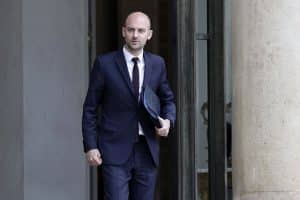
In response to the Iranian regime’s decision to declare two former employees of the French Embassy in Tehran “persona non grata,” France announced the expulsion of two Iranian diplomats from Paris.
Jean-Noël Barrot, France’s foreign minister, announced that the country will soon expel two Iranian diplomats from France in a reciprocal move.
The decision came after the Iranian regime’s Foreign Ministry declared two former employees of the French Embassy in Tehran “persona non grata” over what it described as “activities contrary to international law, particularly the 1961 Vienna Convention on Diplomatic Relations,” and said they would not be allowed to return to Iran.
The Iranian regime’s Foreign Ministry had previously protested what it called the “unconventional conduct of two French diplomats” without disclosing their names or positions, and said they had been expelled from Iran.
The French Embassy responded by stating that the two employees’ assignments had ended and that they had already been preparing to leave Iran.
Cost of Living Basket Several Times Higher Than Iranian Workers’ Wages
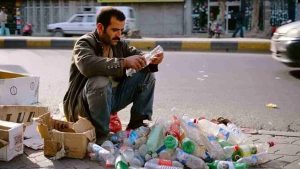
Workers’ cost of living has come under pressure from inflation and low wages. July inflation data point to intensifying financial pressure on working-class households. Prices of essential goods have risen rapidly. Among these, food has placed the greatest strain on household budgets. Housing, healthcare, and education have also become more difficult to afford for many wage-earning families.
According to official data from the Statistical Center of Iran, the Iranian regime’s official statistics agency, point-to-point food inflation reached 128.1% in July. This means the price of the specified food basket has become 2.8 times higher than it was in July last year. The prices of at least eight food items have increased by more than 100% over the past year. These figures reflect only average price increases. The food basket used in the official calculations is itself very limited and minimal.
Working-class households are mainly concentrated in the fourth and fifth income deciles. According to the calculations presented, food accounts for 38.05% of living expenses in these deciles. Faramarz Tofighi, a labor activist, calculated the cost of the food basket for an average 3.3-person family based on official data. He also used the Nutrition Institute’s food basket in his calculations. According to these estimates, the cost of a working-class household’s living basket reached about 900 million rials (approximately $479) in July. This amount creates an enormous gap with workers’ monthly income. Meanwhile, a worker’s minimum monthly income is about $133. This figure represents the total official earnings of a worker with one child and one year of work experience.
Iran: Zahra Shahbaz Tabari, 68-Year-Old Engineer, at Risk of Execution
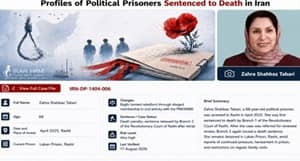 Zahra Shahbaz Tabari is an electrical engineer and mother of two. She studied at Isfahan University of Technology and received a Master’s degree in Sustainable Energy from the University of Borås in Sweden. Her son, Sorush Samak, 35, lives in Sweden. She was previously arrested in June 2022 and sentenced to 18 months’ imprisonment.
Security forces arrested Zahra Tabari at her home on 17 April 2025 without presenting a judicial warrant. She was interrogated for about one month in solitary confinement and, according to credible information, was pressured to confess to membership in an opposition group and to “taking up arms against the government”, allegations she has denied.
The first trial was held by video conference and lasted less than ten minutes. She saw the court-appointed lawyer for the first time on the screen during that hearing and has said that she could not even hear the lawyer’s voice. On 25 October 2025, Branch One of the Rasht Revolutionary Court sentenced her to death for baghi. The two principal items cited against her were a piece of cloth bearing the slogan “Woman, Resistance, Freedom” and an unpublished voice message.
After the case was referred to Branch Two of the Rasht Revolutionary Court, a new hearing was held on 27 April 2026 and lasted about half an hour. According to the available information, Mohammad Ali Darvish-Goftar, the judge in the case, left the courtroom during the hearing. Branch Two subsequently reissued the death sentence.
Criminalizing Communication with Foreign Media and Entities in Iran: A Legal and Human Rights Assessment

This report examines a bill whose general outlines have been passed by the Iranian Parliament, with the declared objective of “countering the influence of foreign intelligence services, foreign governments, or foreign entities.” Based on information published in domestic media, the bill encompasses the criminalization of contact with foreign media, restrictions on academic and scientific cooperation with overseas institutions, and severe penalties for various forms of communication and collaboration with foreign entities.
Focusing on the impact of this bill on freedom of expression, freedom of the media, freedom of association, and other fundamental rights, this report aims to provide a clear analysis of its potential consequences and evaluates it in light of Iran’s international obligations.
On August 16, 2026, the Islamic Consultative Assembly (Iranian Parliament) approved the general outlines of the “Foreign Influence Counteraction Bill” with 183 votes in favor. Although the bill must still go through procedural article-by-article reviews and Guardian Council approval, the rapid passage of its general principles reflects the regime’s definitive commitment to institutionalizing structural repression and completely severing information flows. Highlighting this legislative stage is not intended to appeal to a regime that systematically dismisses public opinion and escalates violence, but rather to urgently alert the international community, impose immediate diplomatic costs, and counter any normalization of a government that officially criminalizes freedom of expression.
Iran-U.S. 60-Day Negotiation Period Ends Without Deal as Divisions Emerge in Tehran Over Diplomacy
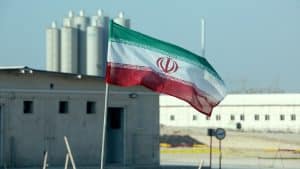
Sixty days after Iran and the United States agreed to use a limited diplomatic window to pursue a broader agreement, there is still no final deal, no clear extension has been announced, and the two sides have no shared understanding of what comes next.
The disagreement is no longer confined to Tehran and Washington. Inside Iran, the failure to turn the postwar pause into a political settlement has exposed a widening divide: should the government continue trying to revive diplomacy, or should the existing framework effectively be regarded as over?
Iranian Foreign Minister Abbas Araghchi has rejected the description of the arrangement as a “60-day ceasefire,” saying: “There was no 60-day ceasefire. What was referred to as 60 days was a 60-day opportunity for negotiations aimed at reaching a final agreement.”
The distinction matters because, according to Tehran’s account, the broader negotiations that were supposed to take place during that period never actually began.
Judy Sgro Joins Iranian-Canadian Community at Queen’s Park to Mark 38th Anniversary of 1988 Massacre
Toronto – Canadian Member of Parliament and former minister Judy Sgro joined members of the Iranian-Canadian community at Queen’s Park for a gathering and photo exhibition commemorating the 38th anniversary of the 1988 massacre of political prisoners in Iran. They also condemned the continuing wave of executions targeting protesters and political opponents in the country.

The event, organized by supporters of the People’s Mojahedin Organization of Iran (PMOI/MEK), remembered the mass executions ordered by Ruhollah Khomeini that claimed the lives of more than 30,000 political prisoners. Participants also called for an end to ongoing executions in Iran.
In a Facebook post following the event, Sgro wrote: “I’m proud to stand alongside members of the Iranian-Canadian community at Queen’s Park as they gathered to mark the 38th Anniversary of the 1988 Massacre and to raise their voice to demand an end to executions in Iran. Thank you to everyone who continues to advocate for freedom, democracy, and human rights.”
Iranian Resistance Supporters in Oslo Condemn Execution, Call for Closure of Iran Regime’s Embassy
Oslo, Norway – August 16, 2026 – Supporters of the Iranian Resistance gathered outside the Iranian regime’s embassy in Oslo to condemn the execution of Shahram Sadeghi, one of the protesters involved in the January 2026 uprising. He was executed in Iran on the same day. The demonstrators also called for an end to the executions of PMOI political prisoners and other activists detained during the January 2026 uprising.
Mr. Parviz Khazaei, the representative of the National Council of Resistance of Iran in the Nordic countries, also attended the gathering and addressed the demonstrators.

Participants paid tribute to the victims by holding their photographs and reaffirmed their commitment to continuing their struggle until the overthrow of the regime and the establishment of peace, freedom, and justice in a democratic republic. They also called for regime change and urged the Norwegian government to adopt a firm policy against the regime’s ongoing human rights violations. They further called for the closure of the Iranian regime’s embassy in Norway, describing it as a center for espionage and terrorism.
Irvine, California: Iranian-Americans Rally in Support of the “No to Execution Tuesdays” Campaign
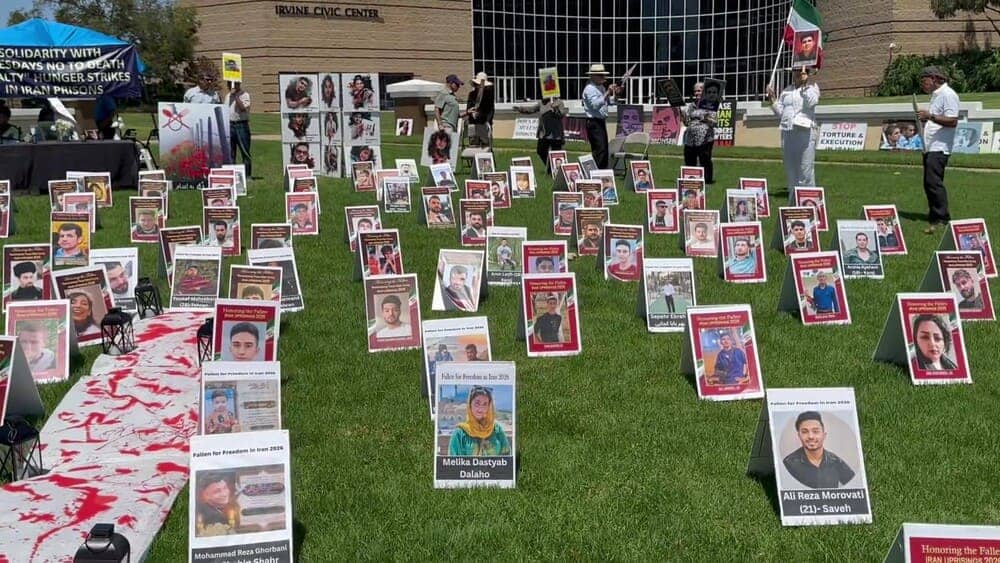
Irvine, California – August 18, 2026: Members of the Iranian-American community, including supporters of the People’s Mojahedin Organization of Iran (PMOI/MEK), held a rally in support of the “No to Execution Tuesdays” campaign. They condemned the Iranian regime’s use of executions and called for an end to repression, regime change, and the establishment of a democratic republic in Iran. Participants highlighted the ongoing campaign against executions and expressed solidarity with political prisoners and those facing the threat of execution.

Alongside the rally, supporters organized a photo exhibition honoring victims of Iran’s uprisings, political prisoners, and protesters executed by the Iranian regime. The exhibition featured images and stories of those who lost their lives in the struggle for freedom and human rights, drawing attention to the continued impact of executions and repression in Iran.