

Three-minute read
On the weekend of June 20, 2026, tens of thousands of Iranians converged on Paris for the largest annual gathering of the democratic opposition. A French court blocked them — citing intelligence that both the regime and the Shah’s monarchist heirs had threatened to bomb the demonstration.
Theocrats and monarchists, for all their mutual loathing, have always been allies when it comes to waging war on the people and silencing the popular forces that threaten them both.
That convergence is the skeleton key to the Iranian crisis. Until Western capitals grasp it, every sanctions package and back-channel deal will produce the same result: a regime that grows more dangerous while those capable of changing it are undermined.
Where Western Assumptions Fell Short
Western Iran policy has rested on three propositions. Each has failed.
The theory of internal moderation collapsed once again when Khamenei’s own son assumed the Supreme Leadership. The so-called moderates differ from the hardliners not in kind but in tone.
NCRI Editorial: Appeasement with #Iranian Regime Cannot Change its Fate, Only Extend the Sufferinghttps://t.co/LkEJxCXVBN
— NCRI-FAC (@iran_policy) October 1, 2025
The regime will not be overthrown by aerial bombardment. You cannot bomb a theocracy into democracy.
And appeasement dressed as diplomacy has purchased nothing. Nuclear ambitions, proxy wars, and the export of revolution are structural necessities for the regime’s survival. Asking it to abandon them is asking it to dismantle itself.
What remains is the possibility that Western policy has spent the most energy avoiding: that the Iranian people themselves, through organized resistance, are the only viable agents of change.
Why Organization Matters
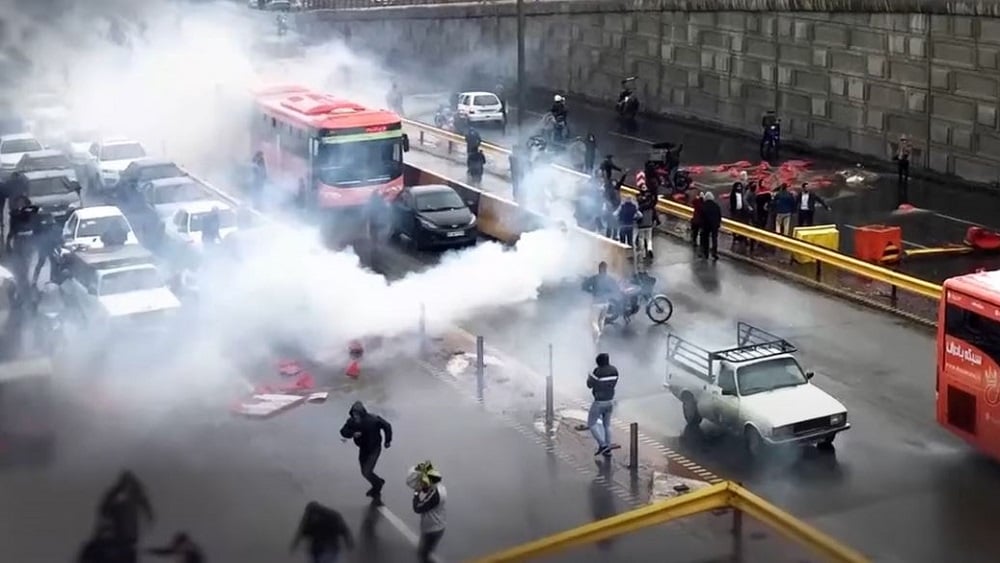
The romantic image of a spontaneous Tahrir Square uprising is, in Iran, dangerous — because it provides an alibi for inaction. The Revolutionary Guards are not merely a military force; they are an economic empire, a surveillance state, and an ideological enforcement machine. Leaderless protests cannot dismantle this architecture alone. The uprisings of 2017, 2019, 2022, and January 2026 proved the point: each erupted with extraordinary force, each was crushed, each left the regime battered but standing with more hopes crushed than before.
Again and again, Western governments chose #appeasement over firmness, illusion over evidence, short-term bargains over strategic clarity. The result is the world we now inhabit: a region repeatedly set ablaze by Iran’s proxies, a nuclear crisis that never truly left, and a…
— NCRI-FAC (@iran_policy) March 26, 2026
What changes the calculus is a resistance capable of operating under the harshest repression. In February 2026, 250 fighters struck the regime’s headquarters in Tehran. During the January uprising, MEK-led Resistance Units carried out 630 operations. More than one hundred thousand members of this movement have been killed over four decades; thirty thousand in the 1988 massacre alone. When told a word of recantation would save their lives, they answered: We do not bargain with you over our ideals. And then they were hanged.
Neither Shah nor Mullah
Monarchism is not merely unviable — it is symbiotic with the regime it claims to oppose. A newspaper affiliated with the ruling clerics called the monarchists a “blessing”: “By creating divisions within the opposition, they have rendered a service to the Islamic Republic that no other group has been capable of providing.” The Shah’s heir openly advocates change with the assistance of the Revolutionary Guards — the very forces that massacred protesters.
A framework for what comes after exists: a provisional government whose sole mandate is transferring sovereignty through free elections within six months; separation of religion and state; minority autonomy; gender equality as structural principle; and a non-nuclear Iran — backed by 133 intelligence disclosures that did more to expose the regime’s clandestine program than any inspectorate in history.
If the appeasement of #Iran continues, the evil of Islamic fundamentalism will become the prime global danger pic.twitter.com/QsrobfaxDa
— Maryam Rajavi (@Maryam_Rajavi) April 12, 2015
The Reckoning
The regime is weaker than at any point in its history — its founder dead, his successor repudiated, its proxies degraded, its economy in ruins, its streets seething with a generation that has nothing to lose. For four decades, Western capitals bet on every alternative to the democratic resistance. Each bet was lost.
The people of Iran have held up their end. They have bled for forty-five years, built the institutions, and demonstrated the will. The question is no longer whether they are ready. The question is whether the West is ready to stop standing in their way.