

Two-minute read
The Iranian regime, reeling from the aftermath of its 12-day war with Israel, is increasingly relying on theatrical displays of defiance and hostile rhetoric to conceal deepening vulnerabilities. Despite bold declarations, the clerical leadership’s own admissions expose significant internal strain, heavy military losses, and rising fear of instability.
Clerics and officials continue to dismiss any notion of peace as defeat. Ahmad Alamolhoda, the Supreme Leader’s representative in Mashhad, insisted, “We have not been defeated. We have not retreated… There is no peace. What was announced as a ceasefire is not peace—it’s a hudna [temporary truce].” He doubled down: “Compulsory peace will never be accepted. The Supreme Leader does not accept compulsory peace.”
This aggressive posture, however, belies an anxious regime scrambling to control the narrative and reassert dominance after suffering heavy blows. Gholam-Hossein Mohseni-Eje’i, the regime’s judiciary chief, called for suspending cooperation with the International Atomic Energy Agency, labeling the move “natural.”
#Iran’s Regime Responds to Military Losses with Repression and Belligerencehttps://t.co/xZNoIoYUWi
— NCRI-FAC (@iran_policy) June 25, 2025
Simultaneously, Ghorbanali Dorri-Najafabadi, Friday prayer leader in Arak, launched an angry diatribe against IAEA chief Rafael Grossi: “Grossi came, drank our tea, ate our rice and chicken, took our souvenirs, looted everything—and still betrayed us. This cannot continue.”
Dorri-Najafabadi then made a rare admission: “More than 30 [regime forces] were killed in Markazi province alone, with some bodies still missing.” Interior Minister Eskandar Momeni revealed even graver losses: “In the enemy’s attacks, nearly 150 police forces were killed.”
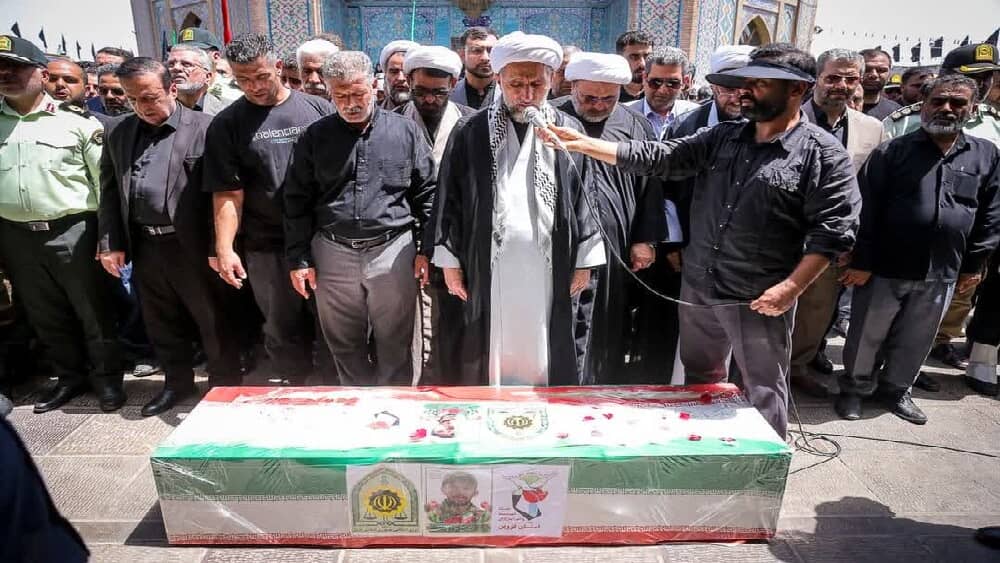
Amidst this turmoil, the regime launched massive funeral ceremonies for slain commanders, urging the public to mourn its “martyrs of strength.” In a highly publicized show on Saturday, June 28, Afghan fighters from the Fatemiyoun Division were bused in to participate. Crowds were led in state-sponsored chants of “Death to America,” while Tehran’s metro system offered free service to facilitate turnout.
#Iran’s Regime Scrambles to Mask Defeat, Control Fallout After Ceasefirehttps://t.co/qC7wxMACAf
— NCRI-FAC (@iran_policy) June 26, 2025
In parallel, officials struck an increasingly militant tone. Hassan Kazemi Qomi, a senior regime diplomat, dismissed border security as obsolete and declared the capital under threat from “cyber, cognitive, and narrative warfare.” He framed the war as part of a broader U.S.-Israeli plan to overthrow the regime, describing it as “a full-scale hybrid war… not just drones and F-35s, but assassinations, social unrest, and economic sabotage.”
Even so, Kazemi Qomi inadvertently exposed the regime’s fears: “They believed that if a powerful military blow was delivered, the system would collapse… That was their miscalculation.” He acknowledged that Tehran’s own internal conditions had created the perception that *“one strong strike” might bring the regime down.
#Iran News: Regime FM Defiant After Blocking @iaeaorg, Warns Europe Against "Snapback" Sanctionshttps://t.co/rT3fiPTFwa
— NCRI-FAC (@iran_policy) June 28, 2025
What emerges is a portrait of a leadership desperately asserting that it has not lost—because acknowledging defeat could fracture its already fragile hold on power. State affiliated media commentator Ahmad Zaidabadi noted “unprecedented realignments” are forming within the ruling elite, warning that “excruciating decisions” now lie ahead.
The regime’s post-war posture reveals a leadership both defiant and cornered. Its overt aggression conceals a strategic retreat on multiple fronts: militarily weakened, diplomatically marginalized, and institutionally shaken. The bellicose rhetoric is not the product of calculated deception or strategic mastery, but the desperate reflex of a regime fractured from within, economically paralyzed, and facing a population seething with anger and disillusionment.