

Three-minute read
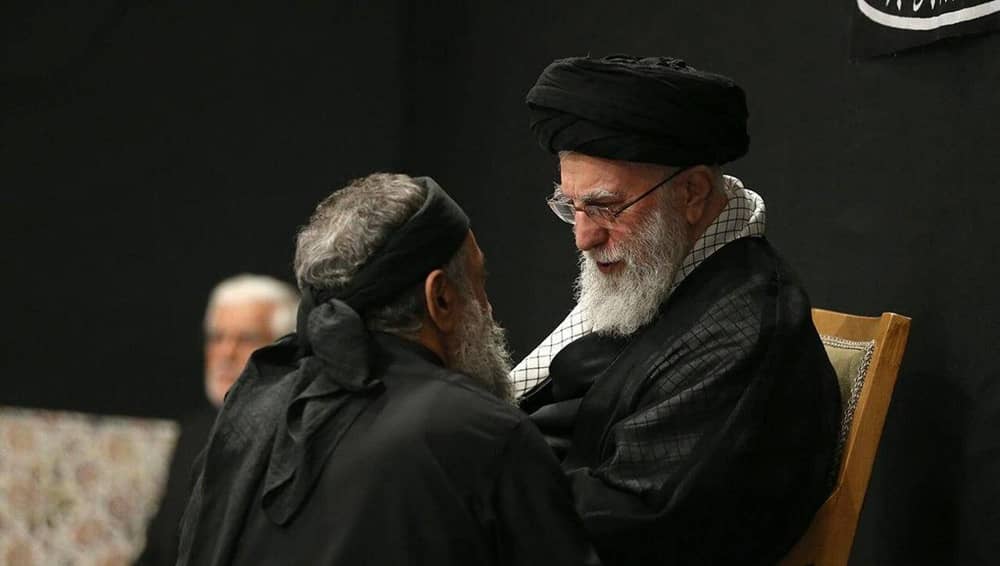
After twelve days of silence during the 12-day war, Iran regime’s Supreme Leader Ali Khamenei finally emerged from hiding. But instead of his usual ideological language, he adopted a strikingly nationalist tone, speaking of the “Iranian nation” and “national dignity.” This sudden shift in rhetoric, amplified by the regime’s promotion of a once-censored patriotic anthem, reveals not a change of heart, but a desperate public relations stunt aimed at salvaging legitimacy amid deepening crises.
The regime had previously banned the song “Ey Iran” as “un-Islamic” and overly nationalistic. Now, it is being sung—distorted and co-opted—by regime-affiliated religious chanters in a grotesque spectacle meant to rebrand a theocratic regime as a national protector. This rebranding, however, is not only unconvincing—it is fundamentally contradictory.
For over four decades, the Iranian regime has waged a deliberate war against Iranian identity. From the outset of the 1979 revolution, the regime sought to dissolve the very idea of a nation-state. Ruhollah Khomeini, the regime’s founder, explicitly rejected nationalism. In speeches and writings (e.g., Sahifeh-ye Nour, vol. 1, p. 123; vol. 3, p. 275; speeches on August 6 & 9, 1980), he declared that “nationalism is against Islam” and called for the abolition of borders to create a single global “Islamic ummah.” Patriotism, national identity, and historical pride were systematically attacked and dismissed as un-Islamic heresy.
#Khamenei Breaks Silence in Bid to Shore Up a Fractured Base After 12-Day Warhttps://t.co/DB9Rw7kNJn
— NCRI-FAC (@iran_policy) July 17, 2025
This worldview shaped decades of state policy. Iranian culture was systematically stripped from textbooks, institutions, and national symbols. The very name “Islamic Revolutionary Guard Corps” contains no reference to Iran—emphasizing its role as a defender of the regime’s dreams of a so-called Islamic empire, not a sovereign nation. The parliament’s name was changed from the National Consultative Assembly to the Islamic Consultative Assembly, marking yet another symbolic erasure of national identity.
Khamenei, continuing Khomeini’s legacy, has always viewed appeals to Iranian heritage as un-Islamic. Protesters emphasizing Iranian identity were condemned as secularists or infidels. And yet today, the same leader suddenly resorts to nationalist rhetoric. What does this sudden change signify if not panic?
What we are witnessing is not an ideological evolution—it is a tactical maneuver born out of fear. Faced with mounting public outrage, international isolation, and a crisis of legitimacy at home, the regime is reaching for the very cultural symbols it once tried to destroy.
Khamenei Orders Parliament to Fall in Line Amid Crises Facing #Iran’s Theocracyhttps://t.co/TzzdhXnSdc
— NCRI-FAC (@iran_policy) June 12, 2025
This cynical appropriation is most visible in the regime’s assault on pre-Islamic history and national customs. The Ministry of Culture was renamed the Ministry of Islamic Guidance. National holidays like Nowruz and Mehregan were censored or downplayed. The use of Persian language was diluted with Arabic imports. Celebrations of Cyrus the Great were banned. Historical monuments were left to decay. These weren’t isolated decisions—they were part of a systematic project to erase Iran from its own cultural memory.
Now, in a moment of political desperation, the regime clumsily tries to invoke “national unity.” But unity cannot be forged by a regime that labels its own people as rioters, foreign agents, and traitors. How can one speak of preserving Iran when the same regime has spent billions exporting revolution and militarizing conflicts in Lebanon, Syria, Iraq, Yemen, and Gaza—while shooting unarmed protesters in Khuzestan, Tehran, and Zahedan?
The name “Iran” only passes the lips of these rulers when their survival depends on it. This is not patriotism—it is exploitation. It is a last-ditch attempt to neutralize a society that increasingly sees through the regime’s lies.
Khamenei Ally Warns #Iran’s Regime is Losing its Social Capitalhttps://t.co/tBiSXyrTY6
— NCRI-FAC (@iran_policy) June 6, 2025
But the Iranian people—especially the younger generation—are not deceived. They know the difference between genuine patriotism and the manipulative nationalism of monarchists and mullahs alike. They understand that love for Iran is not expressed through flag-waving or hollow slogans, but through truth, integrity, and resistance against the forces that have tried to erase their history.
Even if the regime were to raise the Lion and Sun flag tomorrow, it would not absolve four decades of betrayal. Iran does not belong to opportunistic religious rulers or nostalgic royalists. It belongs to its people—those who have preserved its language, its memory, and its soul.
The Supreme Leader’s sudden embrace of nationalism is not a sign of ideological awakening. It is a coward’s cry for survival.