

Three-minute read
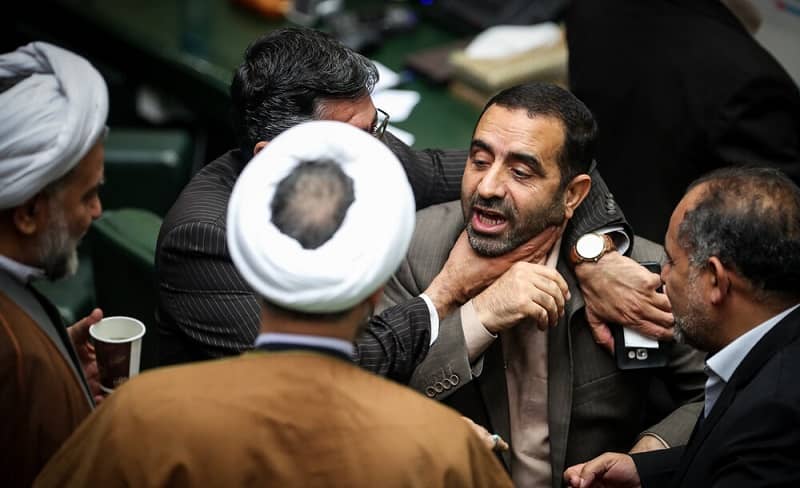
The clerical regime in Tehran has been thrown into one of its sharpest internal clashes in years, as Foreign Minister Abbas Araghchi comes under heavy fire from rival factions over his secretive Cairo agreement with the International Atomic Energy Agency (IAEA). The controversy has pitted parliament against the government, exposed rifts between factions either loyal to or opposed to Supreme Leader Ali Khamenei and even forced his close aides to deny publicly that he is losing control.
Secrecy Sparks a Firestorm
The spark was the disclosure that the Cairo agreement would remain secret. On September 14, 2025, cleric and MP Hamid Rasaee complained: “If this agreement is so beneficial, why should it be secret? Why should the people not know?” He dismissed Araghchi’s claim that publishing the text would put IAEA Director Rafael Grossi under pressure: “If this is such a good agreement, we should put it on our shoulders and parade it before the people, not hide it.”
Ninety MPs signed a request for an emergency parliamentary session to summon Araghchi, but Speaker Mohammad Bagher Qalibaf resisted. The refusal fueled suspicions of collusion. MP Mojtaba Zarei went so far as to accuse Araghchi of bribing Qalibaf: “What did you give Qalibaf so that parliament was shut down and you and Pezeshkian could hand over Iran?”
#Iran's Economic Strain and Unrest Fears Drive Khamenei’s Push for Narrative Controlhttps://t.co/F51d8EVrf4
— NCRI-FAC (@iran_policy) September 8, 2025
The JCPOA’s Shadow Returns
During a three-hour closed-door session of the Majlis’ National Security and Foreign Policy Committee on September 22, Araghchi faced harsh questioning. He portrayed the discussion as constructive: “Representatives had questions and concerns… we brainstormed on how to move forward and counter the tricks of our enemies.”
But lawmakers were unconvinced. Rasaee wrote afterwards: “The stages are like the JCPOA. They are being repeated. That is all.” Veteran MP Mehdi Kuchakzadeh, also present, said the session had revealed little new.
Cleric and MP Mahmoud Nabavian accused the government of forcing the system into “retreat” and granting “various concessions” to the enemy, echoing the bitter debates of the 2015 nuclear deal.
#Iran’s Power Structure Buckles Under Political, Economic, and Nuclear Pressurehttps://t.co/abvkCn5vAj
— NCRI-FAC (@iran_policy) September 9, 2025
MPs Call for NPT Exit
The regime’s propaganda outlets aligned with Khamenei seized on the dispute to push their own agenda. On September 14, Kayhan warned: “Europe will not lift sanctions. Do not be deceived by the IAEA. The best effective answer is withdrawal from the NPT.” The IRGC-run Javan Daily called the Cairo text “invalid,” stressing that it had not been shown to Iranians while being “in the hands of America and Israel.”
The Parliament’s National Security Committee chairman Ebrahim Azizi confirmed that exit from the NPT was among the options being considered if Europe moved forward with the snapback mechanism.
Khamenei’s Office on the Defensive
The ferocity of the attacks forced intervention from the Supreme Leader’s own circle. On September 14, Mehdi Fazaeli, a member of Khamenei’s Office for the Preservation of Works, denied that decisions were being imposed on the Leader: “Anyone who presents the Leader as passive does not know him. He is the most important pillar of power.” Fazaeli then derided revisionist suggestions of compromise as “naïve.”
The need for such a statement revealed concern within Khamenei’s office that he is being portrayed as a figure who can be overruled or bypassed.
#Tehran’s Nuclear Standoff Deepens as Regime Faces International Rejection and Domestic Discordhttps://t.co/gbCnug4tZe
— NCRI-FAC (@iran_policy) September 11, 2025
Crisis at the Core of the System
The dispute over the Cairo agreement is not simply a contest between so-called “hardliners” and “pragmatists.” It is a sign that the regime as a whole has weakened to the point that Khamenei can no longer hold its factions together. The Majlis accuses the government of betrayal, the government pleads for secrecy, Khamenei’s office is forced to deny his passivity, and state media escalate threats of NPT withdrawal. Each of these contradictions underscores the erosion of central authority.
What is unfolding is not the vitality of debate, but the collapse of discipline inside a system that long depended on Khamenei’s word as the final arbiter. As insiders admit failure and expose each other’s maneuvering, the regime’s fragility becomes plain.
At the same time, outside the ruling elite, Iranian society is searching for a spark. Inflation, unemployment, and repression have primed the country for unrest. In such conditions, every misstep at the top — a secret deal, a broken promise, an incoherent message — risks becoming the trigger for a new eruption.