

Three-minute read
As the world marks International Workers’ Day, Iranian workers stand not only as contributors to the economy but as victims of a system that has failed to protect their most basic rights. The statistics tell a grim story: at least 2,079 workers lost their lives in Iran over the past year—an average of nearly six deaths every day..
Alongside the fatalities, 16,273 workplace injuries were recorded from May 2024 to April 2025. Behind every number is a name, a family, a breadwinner who never came home.
A Wage That Doesn’t Cover Half the Month
In 2025, the Iranian government raised the minimum wage to 10 million tomans—roughly $118 USD at the current open-market exchange rate of 850,000 IRR/USD. But official figures show that the minimum cost of living for a family is at least 35 million tomans ($412 USD). This leaves a 72% gap between wages and basic expenses.
It’s a wage that runs out halfway through the month. It’s a gap that forces millions of workers into second and third jobs, debt, and deprivation.
#IranProtests: Retirees and Workers Rise Up Across Dozens of Cities Over Economic Injusticehttps://t.co/4Ot5ST9SGO
— NCRI-FAC (@iran_policy) April 21, 2025
96% of Workers: Disposable Contracts, Disposable Lives
Government figures acknowledge that 96% of Iranian workers are employed on temporary or short-term contracts, stripped of job security, pensions, and protections. This precariousness is compounded by the fact that 95% of workers do not even hold a copy of their contract, leaving them defenseless in disputes.
Under this system, workers can be fired overnight without severance, without explanation, without recourse.
Workplaces That Kill
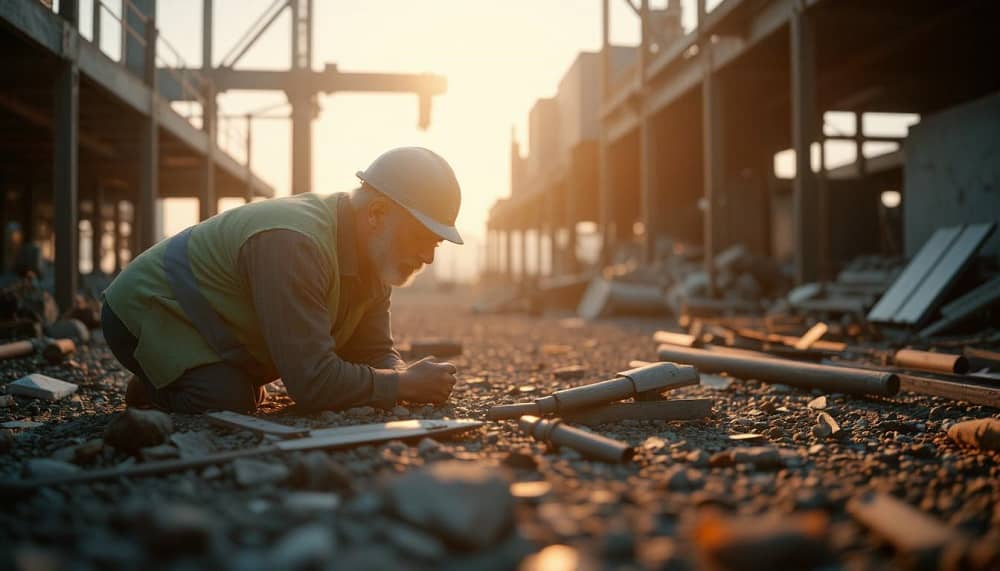
Iran ranks 102nd globally in workplace safety. Every week, an average of 40 workers die on the job. They fall from scaffolding, are crushed in mines, electrocuted on construction sites, suffocated by gas leaks, or burned in factory fires.
In the past year alone, 22.6% of deaths were caused by falls, 14.2% by traffic accidents, 10.5% by fires, and 7.6% by mining incidents.
Even in death, the truth is obscured. After the massive explosion at Rajaei Port in Bandar Abbas on April 26—an explosion that shook buildings for miles—the government delayed releasing casualty figures. It took days before officials claimed at least 70 workers were killed and over 1,200 were injured. Eyewitnesses believe the toll is higher.
Protests spread across #Iran: Oil & gas workers in Gachsaran, telecom workers in Shiraz, municipal employees in Tehran, and retirees in 15+ cities rise against poverty and oppression.
Slogans:
"Today is mourning; workers’ community is in ruin!"
"Under inflation’s weight, the… pic.twitter.com/hhDHz7nv3v— Mohammad Mohaddessin (@Mohaddessin) December 23, 2024
“Most of the dead were workers,” reported ILNA, a state news agency. Yet access to the site was restricted; the Ministry of Health was ordered not to disclose further statistics.
For those who survived, life has not returned to normal. Fires burned for days. The air remained thick with toxic smoke. Hospitals overflowed. Families searched in vain among the injured, the missing, the dead.
A Place to Live, a Place to Work—Beyond Reach
The struggle extends beyond wages and safety. More than 65% of workers do not own their homes, trapped in a rental market where even a small apartment often costs 10 million tomans per month—equal to the entire minimum wage.
Government housing programs like “Mehr Housing” and “National Housing Movement” have failed to provide affordable solutions. A recent plan to purchase 75,000 homes for workers is a drop in the ocean for a population of millions.
Meanwhile, the Social Security Investment Company (Shasta)—tasked with safeguarding workers’ retirement funds—faced a 19% decline in profits in 2024, according to its latest financial report. Earlier reports had cited a net loss of 2.268 trillion tomans, raising alarms over mismanagement and corruption.
Retired civil servants in Kermanshah and telecom workers in Sistan and Baluchestan protested over unpaid pensions and delayed wages. In Isfahan, Meymeh residents demanded law enforcement, while petrochemical workers in Bandar Mahshahr rallied against worsening work conditions. pic.twitter.com/MU2FcAjxOj
— NCRI-FAC (@iran_policy) September 24, 2024
Women Workers Left Behind
The crisis hits women harder. Between 2018 and 2021, 20% of Iran’s female workforce lost their jobs. Those who remain earn less, face discrimination, and endure harassment with little recourse.
In Iran, International Workers’ Day is not a holiday. It is a day of mourning, a day of protest, a day when workers demand what has long been denied:
-
Wages that meet the cost of living
-
Permanent contracts and job security
-
Safer workplaces
-
Affordable housing
-
Independent unions
-
Accountability for corruption and negligence
Yet peaceful labor protests are often met with arrests, intimidation, and dismissal.
A factory worker in Tehran summed up the feeling: “We don’t want to be slaves anymore. We want to live with dignity.”
Message on #InternationalWorkersDay
The protests and strikes by workers across the year are sparks of a nationwide uprising in the making—an insurrection against the brutal ruler of Iran.
Khamenei is the foremost exploiter and plunderer in Iran. He is the largest employer, the… pic.twitter.com/ij995yT6Mq— Maryam Rajavi (@Maryam_Rajavi) April 30, 2025
Numbers That Should Not Be Normal
The figures—**2,079 deaths, 16,273 injuries, 96% on temporary contracts, 72% wage gap—**are not just economic indicators. They are markers of injustice, of lives cut short, of futures stolen.
Each statistic is a family left grieving, a child left fatherless, a mother forced into deeper poverty.
As May Day arrives, Iran’s workers are not asking for handouts. They are demanding the right to live, to work, to be safe, to be heard.
And that is a demand no number can silence.