

Read more
Deadly floods, a collapsing currency, and deepening social strain have converged across Iran this week, exposing the regime’s mounting vulnerability. At least seven people died as flash floods swept through multiple provinces, even as economic reports ranked Iran among the world’s fastest-declining economies. Meanwhile, political infighting over the regime’s missile program underscored Tehran’s growing reliance on militarized rhetoric to mask systemic decay.
Floods Leave Casualties and Blackouts
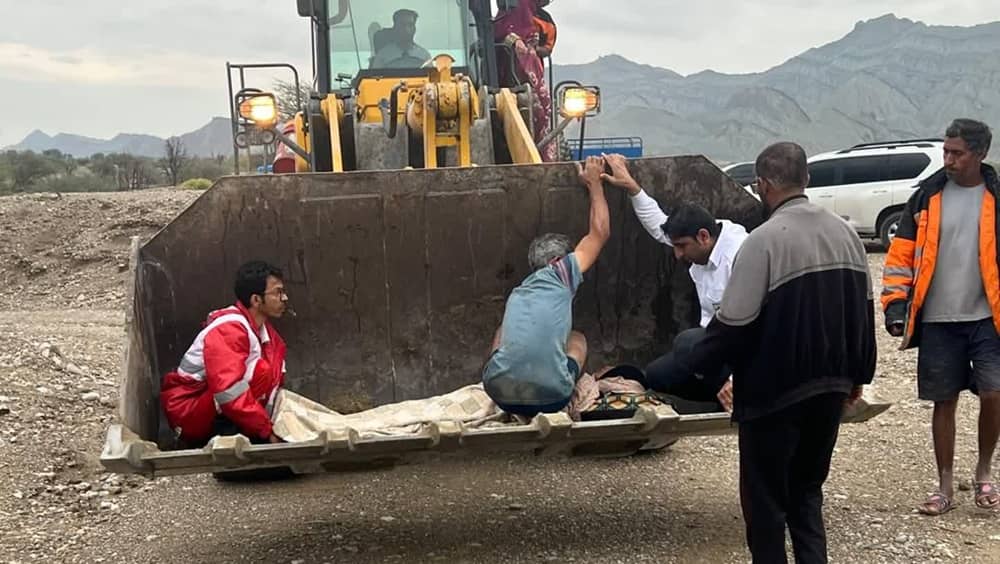
State media reported on Saturday that at least seven people were killed in Fars, Khuzestan, and Hormozgan provinces after heavy rains triggered flash floods. Among the victims were two children, a woman in Jahrom, and a Red Crescent volunteer who died during rescue efforts. Dozens of villages were cut off, with roads washed out and bridges destroyed.
In Kerman province, authorities said 139 villages were flooded and water and electricity were cut in 70. Officials ordered evacuations in Faryab amid fears of further surges. The Bashagard–Minab and Jask roads were closed.
Schools and universities across several provinces—including Gilan, Isfahan, Hamedan, Kerman, Qom, and Razavi Khorasan—were shut or shifted to online classes due to a combination of flooding, cold weather, and a spike in influenza cases.
The Sinking State: #Iran’s Winter of Converging Criseshttps://t.co/B7d40XIcxo
— NCRI-FAC (@iran_policy) December 18, 2025
Inflation and Sanctions Tighten the Squeeze
The floods came as economic freefall continued to erode living standards. The government-linked outlet Ruydad24, citing an IMF report released this week, said Iran ranks among the three countries with the steepest currency collapse in 2025, alongside Sudan and Yemen. The report described the plunge in the rial as “systematic theft” of citizens’ savings through inflation and money printing.
Analysts warned that the collapse has wiped out nearly a third of household wealth. The report said more than 80 percent of Iranian families now live below the global poverty line, with about 7 million people in “absolute hunger.” For a minimal existence in Tehran, a family of three reportedly needs $520 to $650 per month, while a worker’s minimum wage barely reaches $150.
Bloomberg confirmed the decline on December 19, noting that the rial hit an all-time low against the dollar amid renewed U.S. sanctions, regional tensions, and rampant inflation. Since 2018, when the U.S. withdrew from the nuclear deal, the rial has lost over 95 percent of its value.
#Iran’s Crises Converge as Inflation, Shortages and Safety Failures Deepen https://t.co/QDa3Cc0NCz
— NCRI-FAC (@iran_policy) December 17, 2025
Sanctions and Inequality Deepen the Divide
Tehran’s daily Donyaye Eqtesad reported that 29 percent of national wealth is now held by one percent of the population, warning of accelerating inequality. The report followed the U.S. Treasury’s December 18 sanctions on 29 Iranian oil tankers and companies tied to the regime’s “shadow fleet,” accused of illicitly exporting oil and petrochemicals to evade sanctions.
The paper said the move could “choke off foreign exchange” and further destabilize the economy. Prices of food and gold have surged again, with basic staples climbing 66 percent in the past year. Economists warned that by early 2026, Iran could face negative 2.8 percent growth, signaling deepening recession and unemployment.
Economy Minister Ali Madani-Zadeh tried to reassure the public on Saturday, claiming the government “has not abandoned the economy.” He said authorities were “working day and night” and urged citizens not to believe “negative media atmospherics” that could “harm the market.”
Why #Iran Is Running Out of Water, Power — and Patiencehttps://t.co/9ZghlJCNpO
— NCRI-FAC (@iran_policy) August 13, 2025
Workers Lose Protection
Social indicators showed further deterioration. A representative from a government-affiliated construction workers’ union said on December 19 that the regime had removed insurance coverage for 300,000 construction workers in two years. He accused the Social Security Organization of using false promises to “deceive” workers while workplace deaths continued to rise.
He described construction work as “one of the most dangerous jobs in Iran,” citing more than 100 deaths annually among scaffold workers and widespread lack of safety protections. On May 14, 2025, Alireza Raisi, Deputy Minister of Health of the clerical regime said that “annually, 10,000 workers lose their lives due to work-related accidents.”
#Iran’s Unraveling Promises Amid Escalating Economic and Public-Health Criseshttps://t.co/agGNVSAvy7
— NCRI-FAC (@iran_policy) December 9, 2025
Environmental Strain Adds to Hardship
Despite widespread flooding, Energy Minister Abbas Aliabadi warned on December 19 that rainfall would not fix Iran’s chronic water crisis. He said the country faces a 50 billion cubic meter water debt, with groundwater reserves dangerously depleted. “Even normal rainfall cannot make up for years of shortage,” he said.
In Tehran, water officials reported that storage across five major dams stands at 165 million cubic meters, less than half of last year’s level and only one-third of the long-term average.
Meanwhile, air pollution returned to dangerous levels. The Tehran Air Quality Control Company recorded an index of 116 on December 19, categorized as “unhealthy for sensitive groups.” State media urged children, pregnant women, and the elderly to stay indoors. Tehran has logged only six days of clean air this year, while the industrial cities of Ahvaz, Isfahan, and Mashhad remain in near-permanent smog.
#Iran’s Three Tier Gasoline Plan Collides with Food Inflation and Health Strainhttps://t.co/6hQVa2aNv7
— NCRI-FAC (@iran_policy) December 13, 2025
Internal feud continues
Amid cascading crises, the regime continued to project strength through its missile rhetoric. On December 20, Parliament’s National Security Commission chair Ebrahim Azizi rebuked the regime’s president Masoud Pezeshkian for calling Iran’s missile program weaker than Israel’s, labeling the remarks “non-expert” and warning against “undermining national defense.”
Azizi said, “If Israel’s missiles were superior, why were they the first to seek a ceasefire?”—a claim echoing Tehran’s repeated efforts to cast the recent 12-day war as an Iranian success despite heavy losses.
The debate reflects how the ruling elite has turned to militarized nationalism as the economy unravels and public morale plummets. While floods expose failing infrastructure and inflation erodes livelihoods, Tehran’s leadership clings to its missile program as proof of control.
Analysts note that the louder the regime’s talk of deterrence, the more it reveals its internal weakness. Behind the displays of defiance lies a state strained by economic collapse, social unrest, and environmental breakdown—with no credible path to relief.