

Two-minute read
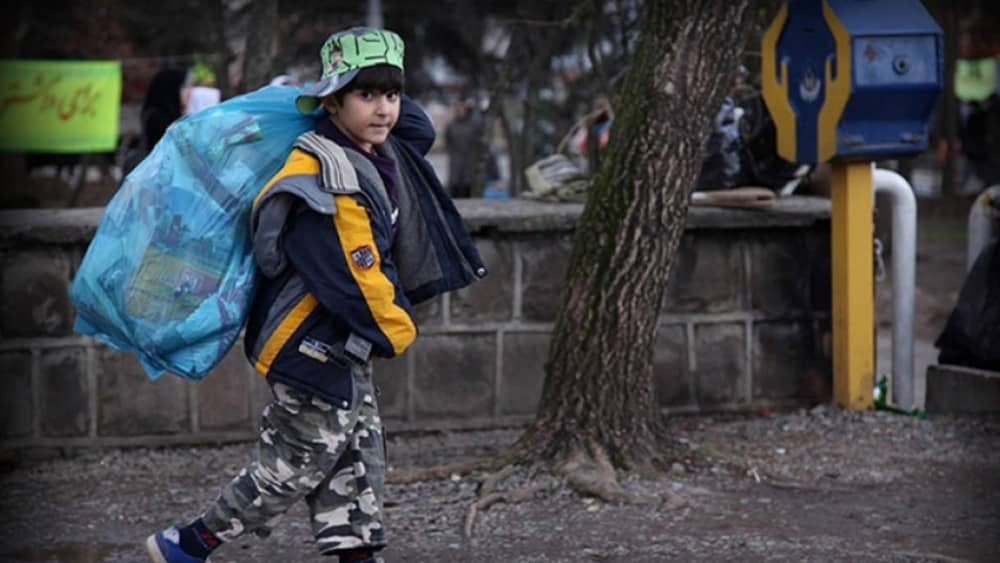
School dropouts in Iran under the rule of the mullahs has reached catastrophic proportions. According to the regime’s own heavily censored statistics (Mashregh News, February 3, 2025), in the 2023–2024 school year more than 992,321 students were excluded from education, including over 150,000 children of elementary school age who never entered a classroom.
This is not merely a social problem—it is a national tragedy created by the regime’s deliberate policies. The deprivation of nearly one million children from education reveals how the regime undermines Iran’s future to preserve its own grip on power.
Education as a Tool of Repression
Since its inception, the regime has never regarded schools as places to nurture talent and prepare future generations. Instead, it has turned classrooms into indoctrination centers, imposing its medieval ideology on the youth.
While schools in rural areas collapse for lack of teachers and facilities, vast sums are diverted to propaganda institutions and organs of repression. Even regime officials admit the scale of the crisis. Education Minister Alireza Kazemi acknowledged in August 2025 that nearly 950,000 children are either dropouts or excluded from education—an admission that reflects systemic failure, not isolated shortcomings.
#Iran’s Education System in Crisis as Schools Reopenhttps://t.co/D0FdTeZjU1
— NCRI-FAC (@iran_policy) September 23, 2024
Poverty Manufactured by the Regime
Although poverty is one of the main reasons families cannot keep their children in school, this poverty is not accidental. It is the direct outcome of systematic corruption, economic collapse, and the diversion of national wealth to finance repression at home and terrorism abroad.
The cost of textbooks alone has increased by more than 60 percent, making basic education unaffordable for countless families (Bahar News, September 13, 2025). Far from being the result of poor planning, this is the price of a system that prioritizes survival of the regime over the welfare of the people.
Widening Discrimination and Social Exclusion
The dropout crisis has expanded to affect nearly every sector of society. In the 2022–2023 school year, 52 percent of out-of-school children were boys, demonstrating that the scope of deprivation has broadened, not that gender discrimination has been alleviated.
Among the most vulnerable are child laborers, undocumented children, migrants, and those living in poverty on the margins of cities. By pushing nearly one million children out of school, the regime has condemned a generation to illiteracy, child labor, addiction, and exploitation.
#Iran News in Brief
MP Jalal Mahmoudzadeh disclosed today that the new education minister of Ebrahim Raisi has removed around 15,000 to 20,000 school principals from their positions due to political and ideological reasons.https://t.co/41fs0X18Mz pic.twitter.com/QKjGdrYoSf— NCRI-FAC (@iran_policy) October 29, 2023
Silent Victims of an Anti-Iranian Regime
The clerical regime sees education not as a right, but as a threat. Temporary measures—such as distributing aid packages or sending a few teachers to rural areas—cannot address a crisis whose roots lie in the ideological and anti-development nature of the regime.
As long as this regime remains in power, Iran’s children will remain its silent victims. The only solution lies in overthrowing this regime and establishing a democratic and popular government—a system that treats education as an investment in the future, not a tool for indoctrination and control.
If today more than 900,000 Iranian children are excluded from schools, tomorrow Iran itself will be excluded from global development. This is the devastating cost of a regime that wages war not only on its people, but on the very future of the nation.