

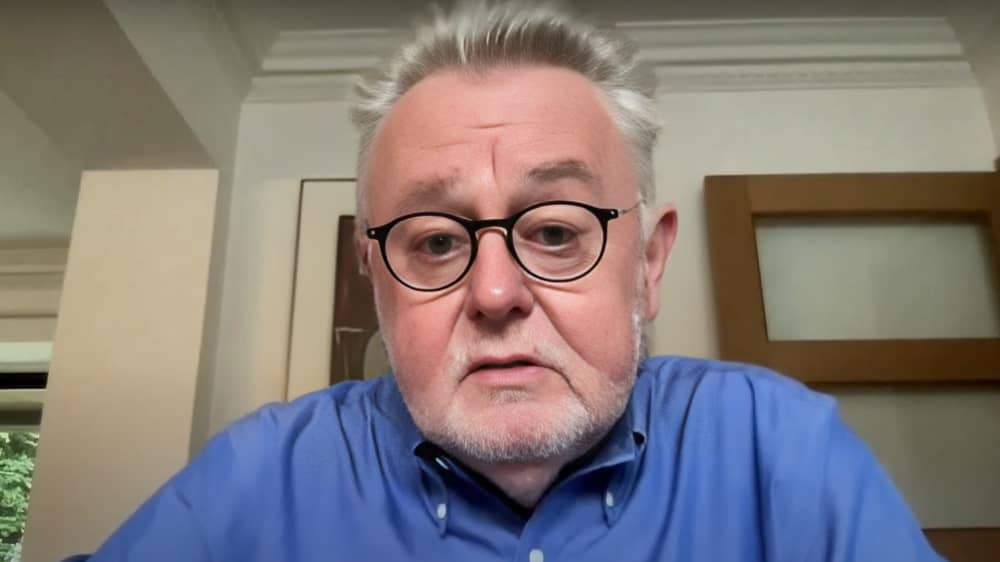
At a recent international conference, Prof. William A. Schabas, Chair of the UN Independent Commission of Inquiry on the 2014 Gaza Conflict, shared his insights on the pursuit of justice for human rights abuses. Addressing the conference from London, Prof. Schabas highlighted the limitations of universal jurisdiction, which allows countries to prosecute individuals for serious crimes like genocide regardless of where they occurred. While acknowledging its potential, he argued that it often results in political manipulation and limited outcomes.
Instead, the former President of the International Association of Genocide Scholars advocated for the creation of commissions of inquiry under the Human Rights Council’s auspices, similar to the one he chaired for Gaza. He emphasized that these commissions, composed of independent and impartial experts, have proven to be credible and influential, particularly in advancing legal actions in international courts. “In my humble opinion, the best way forward is to attempt to establish a commission of inquiry,” he stated.
In closing, Professor of International Law at Middlesex University in London welcomed the appointment of Mai Sato as the new Special Rapporteur, expressing confidence in her ability to contribute significantly to the ongoing efforts to address human rights abuses and promote justice.
The full text of Prof. William A. Schabas’ speech follows:
I’m very sorry that I can’t be with you today. I’m coming to you from London. I was preparing to leave for the train station yesterday afternoon, and I tested positive for COVID, I’ve been sick in bed ever since. I want, nevertheless, to share a few of my thoughts on this subject.
Before I begin, I want to congratulate Javaid Rehman on his very successful mandate and Special Reporter. I think he’s done a great job, and I would only add that I think it’s unfortunate that his final report appears to have been buried in the UN computer somewhere. It is accessible, but it doesn’t have a UN document number. At least the last time I looked; I gather this is a result of pressure from the government.
There are two ideas that are floating around or that are being proposed as ways to move forward on this issue. The first is through universal jurisdiction.
Universal jurisdiction has attracted a great deal of attention for many years as a way to deal with impunity. I think that in general, it has tended to generate more heat than light. The results have not been very substantial and the pathway to international justice has been much more effective with international tribunals, like the Yugoslavia and Rwanda tribunals and the International Criminal Court.
5) -Professor Wolfgang Schomburg: Former Judge of the International Criminal Tribunal for Yugoslavia and the International Criminal Tribunal for Rwanda.
-Professor William Schabas: President of the United Nations Independent Comittee of Inquiry on the Gaza Strip (2015) pic.twitter.com/0Ozrv5VI8R— Iran Freedom (@4FreedominIran) August 22, 2023
Of course, they have limited jurisdiction, and so they’re not able to get at all, examples of atrocity crimes that we have in the world in recent years and in recent decades.
The Swedish government has been a bit of a poster child for universal jurisdiction, and I think that it’s been very disgraceful that we see that it has been abused and manipulated for political purposes as what amounts to a form of prisoner exchange, a very cynical gesture by the Swedish government, that I think underscores the politicized nature also of the exercise of universal jurisdiction.
So while, of course, I’m not opposed to it being used effectively, and I think that its results have been thin in practice, and the recent, decision by Sweden shows that it can be manipulated politically in the most cynical of ways.
The other, I think, more positive, way forward is through commissions of inquiry under the auspices of the Human Rights Council of the United Nations. Of course, this requires a considerable amount of political support, within the Human Rights Council to do this, but there have been a long series now of commissions of inquiry, fact-finding commissions with different names set up by the Human Rights Council.
A decade ago, I was a chair of one of these dealing with an earlier conflict in Gaza. And, they are composed usually of three independent and impartial experts. There’s a large pool of people who can be drawn upon to do this job, and they issue reports that have a very high degree of credibility and that have also been shown to be extremely influential even before bodies like the International Court of Justice when there is litigation that concerns the same issue.
So, in my, humble opinion, the best way forward is to attempt to establish a commission of inquiry.
I just want to conclude by welcoming the new Special Rapporteur Mai Sato, someone with whom I’ve worked for many, many years, really confined to issues relating to the global abolition of capital punishment. She’s a very fine, and energetic scholar, and I’m sure that she’s going to deliver a great deal to the mandate.
Thank you.
