

On February 22, 2025, protests erupted across Iran as nurses, oil workers, housing applicants, poultry farmers, and activists took to the streets in various cities to demand economic justice, political freedoms, and an end to government corruption. Demonstrators denounced the regime’s failure to address their grievances, highlighting the country’s worsening economic crisis and human rights abuses.
In Ahvaz, Khuzestan Province (southwest Iran), oil workers from the South Oil Region staged a protest to demand fair wages and improved working conditions. Employees, who have been struggling with low pay and job insecurity, decried the regime’s mismanagement of the oil sector—a lifeline of Iran’s economy.
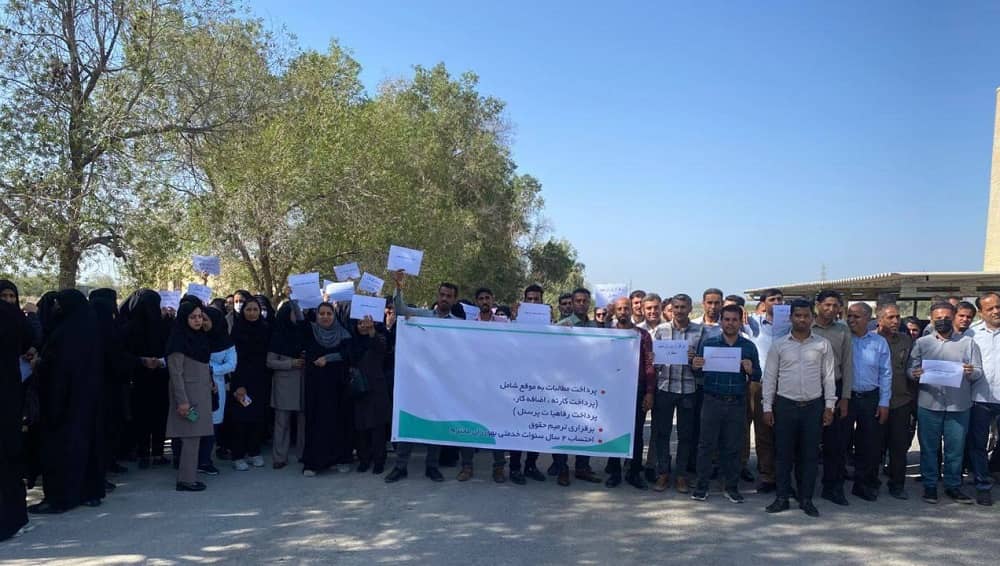
In Minab, Hormozgan Province (southern Iran), health workers gathered to demand timely payment of salaries, better benefits, and recognition of their service years. Despite their crucial role in providing healthcare, these workers face chronic delays in wages and deteriorating working conditions.
In Zanjan (northwest Iran), nurses rallied outside the provincial governor’s office to protest delayed salaries and government indifference toward their worsening conditions. Demonstrators held banners denouncing the regime’s failure to support healthcare professionals, despite the increasing demands on hospitals and medical staff.
February 22—Zanjan, northwest Iran
Nurses rally in front of the governorate, protesting unpaid arrears and lack of response from regime officials to their demands.#IranProtestspic.twitter.com/NqA8R6Qi07— People's Mojahedin Organization of Iran (PMOI/MEK) (@Mojahedineng) February 22, 2025
In Yazd (central Iran), applicants for the National Housing Project staged a protest in front of the governor’s office, condemning high costs, long delays, and government corruption in the allocation of homes. The protesters, many of whom paid hefty sums for promised housing units, accused officials of embezzling public funds while leaving them without homes.
In Arak, Markazi Province (central Iran), poultry farmers demonstrated outside the governor’s office, chanting against the regime’s mismanagement of the agricultural sector. Holding banners with slogans like “The farmer produces, but the minister betrays”, they accused the government of collapsing the poultry industry through corruption, price manipulation, and lack of support.
In Shazand, Markazi Province (central Iran), residents gathered in support of a political prisoner serving his sixth year in prison for exposing regime injustices. Protesters demanded his release, highlighting his worsening health conditions and the regime’s systematic denial of medical care to political detainees.
In Qeshm Island (southern Iran), residents protested against the regime’s sale of public beaches to state-affiliated profiteers. Demonstrators chanted “Let the beach remain free” and accused government officials of handing coastal lands to corrupt insiders while depriving locals of access. Protesters also criticized the lack of basic infrastructure, including roads and electricity, in their communities.
As nationwide protests escalated, the regime intensified its brutal crackdowns. In Bam, Kerman Province (southeast Iran), security forces chased and killed a Baluch fuel porter after his vehicle burst into flames during a high-speed pursuit on February 18. The trader perished inside the burning vehicle, marking another deadly case of regime brutality against impoverished Baluch workers.
February 22—Yazd, central Iran
Customers of the state-run Maskan Melli housing company (project 192 of Azadshahr) rally in front of the provincial governorate, protesting price hikes and delays in the delivery of their homes.#IranProtests pic.twitter.com/RdZHY6mT7H— People's Mojahedin Organization of Iran (PMOI/MEK) (@Mojahedineng) February 22, 2025
In Nowsud, Kermanshah Province (western Iran), security forces shot and wounded a 17-year-old Kurdish border porter (kulbar) on February 19. Kulbars, who carry goods across Iran’s western borders due to severe unemployment, are routinely targeted by regime forces.
In Zahedan, Sistan and Baluchestan Province (southeast Iran), security forces launched a violent raid on a Baluch family’s home, arresting all male family members and brutally assaulting a woman, breaking her arm. The attack, which took place on February 21, was carried out by a large contingent of security forces, highlighting the regime’s ongoing persecution of Baluch civilians.
Even state officials are admitting to the deepening crisis. In Sari, Mazandaran Province (northern Iran), Khamenei’s representative, Hossein Shafiee, acknowledged that unemployment and economic hardship have reached breaking points. He lamented that once-thriving industries, like textile manufacturing, have collapsed, leaving thousands jobless.
The latest wave of protests underscores the regime’s failure to address economic hardship, corruption, and repression. As inflation skyrockets, essential services deteriorate, and political prisoners face brutal conditions, public anger continues to grow, posing an increasingly severe challenge to the clerical dictatorship.