


THIS PAGE WILL BE UPDATED WITH THE LATEST NEWS
UPDATE: 10:30 PM CEST
Amnesty International Slams Tehran’s Brutal Repression, Soaring Executions in 2024–2025

Amnesty International has issued a searing indictment of the Iranian regime’s human rights record in its latest report, documenting a surge in executions, systemic torture, and violent repression of dissent during 2024 and early 2025. The report states that Iranian authorities executed hundreds, including juvenile offenders, political dissidents, and members of ethnic minorities, with the death penalty increasingly used as a tool of political control.
Amnesty also highlights the widespread use of torture to extract forced confessions, particularly from protesters, and the judiciary’s failure to uphold even basic standards of due process. Women’s rights activists, ethnic Baluch and Kurdish minorities, and Afghan migrants faced intensified discrimination, arbitrary detention, and, in some cases, lethal violence. The report notes that impunity remains entrenched, with no accountability for past atrocities such as the 1988 prison massacre or the killings during the 2022–2023 uprising.
In a stark warning to the international community, Amnesty accuses Iranian authorities of weaponizing the death penalty to crush opposition and instill fear, urging governments to hold Tehran accountable and halt any engagement that overlooks these abuses.
UPDATE: 9:00 PM CEST
The End Of Iran’s Theocracy: Seizing The Moment For Freedom

The Iranian regime stands at the precipice of collapse, battered by a cascade of crises that have exposed its fragility and inflamed a society poised for revolutionary upheaval. The depth of Iran’s internal maladies — economic ruin, social unrest, and political illegitimacy — reveals a theocracy teetering on the edge, ripe for transformative change led by a resilient resistance.
The period of 2024–2025 has delivered devastating blows to the ruling clerics. The death of President Ebrahim Raisi derailed Supreme Leader Ali Khamenei’s vision of consolidating power through a so-called purification project. The regime’s legitimacy crumbled as 92% of Iranians boycotted its sham elections, a resounding rejection of its authority.
Tehran’s regional influence imploded with the collapse of key proxies: Hezbollah, shattered after Hassan Nasrallah’s death, lost its grip on Lebanon as the country appointed a new president and prime minister, while the fall of Bashar al-Assad’s regime in Syria obliterated Iran’s strategic depth. The regime’s warmongering facade, cynically propped up after October 7, proved futile.
Treasury Targets Network Procuring Missile Propellant Ingredients for Iran
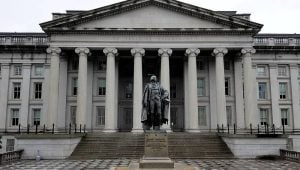
WASHINGTON — Today, the U.S. Department of the Treasury’s Office of Foreign Assets Control (OFAC) is designating six entities and six individuals based in Iran and the People’s Republic of China (PRC) for their role in a network procuring ballistic missile propellant ingredients on behalf of Iran’s Islamic Revolutionary Guard Corps (IRGC). This network has facilitated the procurement of sodium perchlorate and dioctyl sebacate from the PRC to Iran. Sodium perchlorate is used to produce ammonium perchlorate, which is controlled by the Missile Technology Control Regime (MTCR), a multilateral political understanding among states that seek to limit the proliferation of missiles and missile technology. Both ammonium perchlorate and dioctyl sebacate are chemicals usable in solid propellant rocket motors, which are commonly used for ballistic missiles.
UPDATE: 7:00 PM CEST
Why the UK Should Proscribe the IRGC
One year ago, the UK and our allies defended Israel from an unprecedented direct attack on the Jewish state by Iran and its terrorist proxies – with the Islamic Revolutionary Guards Corps (IRGC) playing a lead role in choreographing this onslaught of missiles.
But, as well as being an ongoing threat to Israel, the IRGC poses a real and growing threat to Britain’s national security. The IRGC is an ideological, professionalised paramilitary Iranian organisation whose destabilising activities stretch far beyond the Middle East. In the UK, the IRGC is stoking discord in society, silencing Iranian opposition voices, nurturing homegrown extremism, and hiring criminal gangs to target British nationals, primarily in the Iranian opposition and the Jewish community.
Labour MPs Call for Iranian Revolutionary Guards to Be Proscribed as Terrorists

Labour MPs are leading renewed calls for the government to proscribe the Iranian Revolutionary Guards (IRGC) as a terrorist organisation.
Labour Friends of Israel (LFI) has urged ministers to step up their response to the IRGC, warning that it is “propagating antisemitism” and “plotting to murder dissidents and journalists” on British soil.
In a new paper published on Monday, LFI said the government should proscribe the organisation while it is conducting its review of terrorism legislation. Prime Minister Keir Starmer in January confirmed the government was reviewing its “counter-extremist system”.
EU Urged to Make Move Against IRGC as Iran Behind Assassination Plots in Europe’

Iran‘s regime has been formally accused of orchestrating assassination attempts on European soil, in a revelation that has triggered renewed calls for the Islamic Revolutionary Guard Corps (IRGC) to be designated a terrorist organisation. The Dutch General Intelligence and Security Service (AIVD) announced in a recent annual report on Thursday that Iran was “likely responsible” for two separate attempts to assassinate Iranian dissidents in Europe. The findings have prompted the Netherlands to summon Tehran’s ambassador for an official reprimand.
In June 2024, Dutch police arrested two suspects in Haarlem in connection with a failed plot to kill an Iranian dissident residing there. One of the men is also linked to the near-fatal shooting of Professor Alejo Vidal-Quadras, a Spanish politician and nuclear physicist, in Madrid last November. Vidal-Quadras, a former Vice President of the European Parliament and a longstanding critic of Iran’s clerical regime, was shot at point-blank range near his home in Madrid.
UPDATE: 1:00 PM CEST
France Warns of Sanctions on Iran if Nuclear Deal Not Reached

France, Germany, and the United Kingdom will not hesitate to reimpose sanctions against Tehran if European security is threatened by Iran’s nuclear program, the French foreign minister said at the United Nations on Monday.
“Iran has crossed all the boundaries it had committed to respect,” and the country” is on the verge of acquiring nuclear weapons,” Jean-Noël Barrot told reporters after a closed-door meeting of the Security Council on non-proliferation, which he had convened.
“There is no military solution to the Iranian nuclear problem. There is a diplomatic path to achieve it, but it is a narrow road,” he added.
Barrot voiced hope that the ongoing negotiations between Tehran and Washington on the issue would bear fruit, adding that France, Germany, and the United Kingdom were in “close contact” with US Secretary of State Marco Rubio.
Missile Fuel from China ‘Caused Iran Port Explosion’

A deadly explosion at Iran’s largest port is believed to have been caused by missile fuel ingredients sent by China.
At least 40 people were killed and more than 1,000 were injured in the blast in Shahid Rajaei port on Saturday, which the state-run Islamic Republic News Agency said was likely triggered by containers of chemicals.
The agency did not specify which chemicals they were but it was reported in January that China was to ship sodium perchlorate, a common missile fuel component, to Iran after its supplies ran low following attacks on Israel.
UPDATE: 7:00 AM CEST
Life of Iranian Political Activist at Risk after Anti-Regime Demonstration

Iranian security forces have arrested political activist and former futsal referee Hamid Haj Jafar Kashani, 43, after a demonstration on North Karegar Street in Tehran on Sunday, 27 April 2025. Videos from the scene show the regime’s security forces in plain clothes agents surrounding Kashani, violently arresting him, and forcing him into an unmarked vehicle.
Moments earlier, Kashani had raised a handwritten placard reading “Death to the principle of the Supreme Leader” and chanted “Death to Khamenei.” A second slogan on the sign declared, “Until the mullah is shrouded, this homeland will not be free.”
Counter Terrorism Designations and Designation Update; Iran-related Designation Update
BAGSAK SHIPPING INC, Mauritius; Secondary sanctions risk: section 1(b) of Executive Order 13224, as amended by Executive Order 13886; Organization Established Date 01 Dec 2024; Identification Number IMO 6474784 [SDGT] (Linked To: ANSARALLAH).
GREAT SUCCESS SHIPPING CO, Jounieh, Lebanon; Secondary sanctions risk: section 1(b) of Executive Order 13224, as amended by Executive Order 13886; Organization Established Date 2023; Identification Number IMO 0093360 [SDGT] (Linked To: ANSARALLAH).
ZAAS SHIPPING & TRADING CO, Jounieh, Lebanon; Majuro, Marshall Islands; Secondary sanctions risk: section 1(b) of Executive Order 13224, as amended by Executive Order 13886; Organization Established Date 2023; Identification Number IMO 6392790 [SDGT] (Linked To: ANSARALLAH).
New Evidence of Iran’s 1988 Massacre Demands Global Action

The release of a newly surfaced audio recording has once again thrust Iran’s 1988 massacre of political prisoners into the global spotlight, exposing chilling details of one of the most heinous crimes of the 20th century. According to Justice for the Victims of the 1988 Massacre in Iran, this recording — capturing a second meeting between Ayatollah Hossein-Ali Montazeri, then-deputy to the regime’s Supreme Leader Ayatollah Khomeini, and members of the notorious “Death Commission” — offers irrefutable evidence of the systematic execution of thousands, primarily supporters of the People’s Mojahedin Organization of Iran (PMOI/MEK).
In the summer of 1988, under a fatwa from Ayatollah Khomeini, Iran’s regime orchestrated the extrajudicial killing of as many as 30,000 political prisoners. The new audio, though incomplete, reveals Montazeri’s anguish as he confronted Death Commission members — Hosseinali Nayyeri, Morteza Eshraqi and Ebrahim Raisi — on Dec. 30, 1988, just months before he was ousted for opposing the killings.
Iran’s Bandar Abbas Catastrophic Explosions: Simay Azadi’s Exclusive Eyewitness Reports- Part 1

A Massive explosion at Iran’s Bandar Abbas Rajaei Port on April 26, followed by another one on April 27, has left the city in ruins, with exclusive eyewitness reports obtained by Simay Azadi revealing a far graver humanitarian disaster than official sources admit.
The inferno began when a fire broke out among poorly stored containers holding everything from flammable chemicals and solid rocket fuel to baby formula, clothing, technical parts, and plastic waste. According to on-site witnesses, the heat rapidly triggered massive explosions across the port.
Hidden Sufferings and Modern Slavery: A Look at the Situation of Female Workers in Iran

Marking the International Labor Day 2025 – Female workers in Iran, with calloused hands and exhausted bodies, carry the burden of the gender and social inequalities imposed by the clerical regime.
While in the legal system of the clerical regime, women are not recognized as household breadwinners, these women are forced to work long hours beyond the standard working hours in production workshops. In the late evening, they return home to care for their children and ailing family members, carrying out household duties despite their exhaustion.
There are no accurate statistics on the number of female workers in Iran, and the available incomplete data is based on the number of workers under the coverage of government agencies.
Marjan Sabzi Executed in Dastgerd Prison of Isfahan
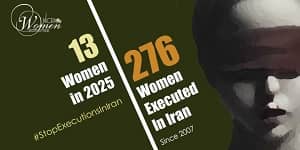
The death sentence of Marjan Sabzi, a prisoner from Khorramabad, was carried out in Dastgerd Prison of Isfahan on Monday morning, April 28, 2025.
Approximately five years ago, Marjan Sabzi was arrested on charges related to drug offenses and subsequently sentenced to death.
As of the time of this report’s publication, officials from Dastgerd Prison and other official institutions of the Iranian regime have not released any statements regarding the execution. With the execution of Marjan Sabzi, the number of women executed in Iran in 2025 has risen to thirteen.
Iran holds the grim record for the highest number of women executed globally. According to data compiled by the Women’s Committee of the National Council of Resistance of Iran (NCRI), at least 276 women have been executed in Iran since 2007.
Iran’s Aviation Industry: A Symbol of Systemic Collapse

Iran’s aviation industry has grappled with restrictions and structural challenges for decades, but the events of March 21, 2025, serve as a stark symbol of its accelerating collapse.
According to a recent report by Cann News, a leading Iranian aviation website, Iran Aseman Airlines—once one of the country’s most active domestic carriers—was forced to cancel 10 scheduled flights on March 21 due to a technical malfunction in its sole remaining active aircraft.
The airline’s only operational plane, a Fokker 100 registered as EP-ASR, experienced a sudden deployment of oxygen masks during a flight from Shiraz to Tehran, forcing it to return to the origin airport. Following this incident, all subsequent flights planned for that day, including routes to Tehran, Ilam, Rasht, Ahvaz, and Sari, were canceled. Disturbingly, the same malfunction had occurred just 10 days earlier on the Mashhad-Ramsar route.
Explosion at Iran’s Largest Commercial Port and Its Impact on the Economy
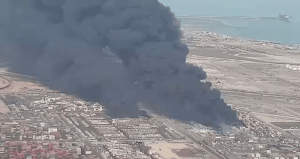
With the explosion on April 26, 2025, at Rajaei Port and the subsequent halt of operations there, approximately 57 percent of Iran’s nominal cargo handling capacity has been taken out of service. This port does not play a major role in the trade of essential goods but holds a special position in the oil products sector.
The Marine Affairs Department of the Ports and Maritime Organization of Hormozgan Province, located in southern Iran, announced after the explosion that maritime and port operations at Rajaei Wharf in Bandar Abbas have been temporarily suspended.
Despite claims by the Iranian regime’s Minister of Roads and Urban Development and some regime-aligned media outlets about the resumption of operations at Rajaei Port, the port is still burning.
Hamid Haj Jafar Kashani Re-Arrested in Tehran for Public Dissent

Hamid Haj Jafar Kashani, a former political prisoner and supporter of the People’s Mojahedin Organization of Iran (PMOI/MEK), was arrested by security forces on Sunday, April 27, 2025, in North Kargar Street, Tehran. Reports indicate that following his arrest, Kashani was transferred to a security facility, where he is currently subjected to interrogation and torture.
The reason for his re-arrest was his active presence in the streets and chanting of protest slogans such as “Death to Khamenei the criminal” and “Death to the principle of Velayat-e Faqih (Supreme Leadership).” He was also carrying a placard reading “This homeland will not be free until the mullahs are buried.” This protest action took place amid heightened security measures in Tehran.
Execution of Saeed Amirizadeh: A Silent Cry Against Injustice

At dawn on Thursday, April 17, 2025, Saeed Amirizadeh, a political prisoner and one of those arrested during the nationwide protests of 2022, was executed in Sabzevar Prison. He was only 34 years old, married, and the father of a young child. Over the past months, he had been subjected to intense security and judicial pressure.
Saeed Amirizadeh was arrested during the popular protests of 2022 by agents of the Sabzevar Intelligence Office and Criminal Investigation Police. He was accused of “killing a Basij force member” and “setting fire to a picture of Ali Khamenei.” However, independent human rights sources emphasized that there was no credible evidence or documentation to substantiate these charges against him.
Execution of Four Prisoners in the Prisons of Nishapur, Nahavand, Qazvin, and Zanjan

According to received reports, four prisoners have been executed in various prisons across Iran in recent days. These executions have taken place amid ongoing concerns about the increasing issuance and implementation of death sentences in Iran.
On the morning of Saturday, April 26, 2025, Ghadir Samimi, a 34-year-old prisoner from Mashhad, was executed in Nishapur Prison. Before his arrest, he worked as a scaffolding laborer. He had been arrested five years ago on charges of murder and was later sentenced to death.
At dawn on Wednesday, April 23, 2025, Nezam Sadeghi, a 40-year-old married man and father of two, was hanged in Zanjan Prison. He had been arrested three years ago on charges related to drug offenses and was sentenced to death. Before his arrest, Nezam Sadeghi worked as a bus driver.
Geneva Rally Condemns Iran’s Regime and Demands Abolition of Death Sentences for Behrouz Ehsani and Mehdi Hassani

Geneva, Switzerland — April 26, 2025 — A rally held in Nations Square outside the United Nations headquarters in Geneva drew public attention to the alarming human rights situation in Iran, particularly the plight of political prisoners facing execution.
Stuttgart Rally Condemns Iran’s Regime and Demands Abolition of Death Sentences for Behrouz Ehsani and Mehdi Hassani

Stuttgart, Germany — April 26, 2025 — A rally held in Stuttgart drew public attention to the alarming human rights situation in Iran, particularly the plight of political prisoners facing execution.
Hamburg Rally Condemns Iran’s Regime and Demands Abolition of Death Sentences for Behrouz Ehsani and Mehdi Hassani
Hamburg, Germany — April 26, 2025 — A rally and exhibition held in Hamburg drew public attention to the alarming human rights situation in Iran, particularly the plight of political prisoners facing execution.
#Hamburg Rally Condemns #Iran’s Regime and Demands Abolition of Death Sentences for #BehrouzEhsani and #MehdiHassani.#StopExecutionsInIran #FreePoliticalPrisoners #SaveBehrouzEhsani #SaveMehdiHassandi https://t.co/UbTPlFwO4S
— Iran Freedom (@4FreedominIran) April 28, 2025
Supporters of the People’s Mojahedin Organization of Iran (PMOI/MEK) organized the event to highlight ongoing human rights violations in the country. The exhibition focused especially on the cases of Behrouz Ehsani and Mehdi Hassani, two political prisoners reportedly at imminent risk of execution.
Cologne Rally Condemns Iran’s Regime and Demands Abolition of Death Sentences for Behrouz Ehsani and Mehdi Hassani

Cologne, Germany — April 26, 2025 — A rally held in Cologne drew public attention to the alarming human rights situation in Iran, particularly the plight of political prisoners facing execution.
Supporters of the People’s Mojahedin Organization of Iran (PMOI/MEK) organized the event to highlight ongoing human rights violations in the country. The exhibition focused especially on the cases of Behrouz Ehsani and Mehdi Hassani, two political prisoners reportedly at imminent risk of execution.