

THIS PAGE WILL BE UPDATED WITH THE LATEST NEWS
UPDATE: 10:00 PM CEST
US Freezes $344 Million in Cryptocurrency Said to Be Linked to Iran

The Trump administration has frozen $344 million in cryptocurrency it says was linked to Iran as the United States ratchets up pressure on Tehran.
The move, first reported by CNN, comes as shaky diplomatic efforts to reach a deal to end the war continue to stall and the global economy reels from its impact. The administration has sought to increase economic pressure on Iran during the tenuous ceasefire. It’s unclear if the large sum of money seized will have an impact on Tehran or its approach to the war and negotiations.
Treasury Secretary Scott Bessent said Friday that the agency “is sanctioning multiple wallets tied to Iran.”
“We will follow the money that Tehran is desperately attempting to move outside of the country and target all financial lifelines tied to the regime,” he said in a statement.
Iranian National Charged for Smuggling Illegal Aliens into United States

An indictment was unsealed today in the Western District of Texas charging Jafar Tafakori, 57, an Iranian national, for his role in coordinating the smuggling of illegal aliens into the United States. Tafakori was arrested in Colombia at the request of the United States.
According to the indictment, from at least Dec. 1, 2022, through on or about May 15, 2024, Tafakori illegally brought large numbers of aliens, primarily Iranian nationals, into the United States. In exchange for payment, Tafakori coordinated with others to provide shelter, transportation, and occasionally airline tickets for the aliens to travel through South and Central America and Mexico. Tafakori charged some aliens as much as $30,000 for his services. Once at the U.S./Mexico border, the aliens were directed to illegally enter the United States.
“Securing our borders and stopping alien smuggling is a top priority for the Department of Justice,” said Acting Attorney General Todd Blanche. “This defendant allegedly transported many illegal aliens into the United States, exploiting our nation’s immigration laws and depriving our immigration officials the ability to vet and review the individuals entering our communities. Thanks to the hard work of our prosecutors and investigative partners, this individual was arrested in Colombia and will be brought to justice in the United States for his crimes.”
UPDATE: 07:30 AM CEST
Resistance Units Across Iran Commemorate PMOI Martyrs Defy Regime’s Executions

In the face of the Iranian regime’s systematic attempts to use executions to instill fear and paralyze the opposition, the people of Iran continue to show unwavering defiance. Instead of forcing the Iranian population into submission, the regime’s brutality has been met with immediate and visible resistance by the People’s Mojahedin Organization of Iran (PMOI/MEK) Resistance Units, proving that the mullahs’ intimidation tactics have utterly failed.
On April 21, 2026, just one day after the brutal execution of two PMOI members, Resistance Units mobilized across Iran. Activists installed posters and held banners featuring images of the martyrs alongside powerful messages of resistance. In Zahedan, Resistance Units directly challenged the regime’s terror tactics, holding banners that declared, “Our response to executions is fiery uprisings.”
The activities in Zahedan sent a clear message that the regime’s desperate motives are transparent to the public. This was highlighted by another banner in the city stating, “By executing the bravest children of Iran, the desperate mullahs’ regime it futilely trying to delay the explosion of the wrath of the people.”
PMOI Resistance Units Strike Regime Targets in Response to Brutal Executions

On April 21, in direct response to the criminal execution of PMOI members Hamed Validi and Mohammad (Nima) Massoum-Shahi, the PMOI Resistance Units launched a wave of daring operations across Iran. These valiant acts targeted regime centers and symbols of repression, sending a clear message that the regime’s brutality will not deter the Iranian people from overthrowing the dictatorship and establishing a democratic republic. In Rasht and Parand, Resistance Units targeted vehicles belonging to the repressive State Security Forces. In Qahdarijan, a regime building associated with corruption and the looting of national wealth was targeted.
Across several cities, symbols of the regime’s decaying leadership were destroyed. Resistance Units set fire to posters, banners, and billboards featuring eliminated former supreme leader Ali Khamenei in Ramhormoz, Semirom, and Talesh. In Shahrekord and Shiraz, a large poster and a monument honoring regime founder Ruhollah Khomeini were torched.
Demonstrating their unwavering resolve, Resistance Units in Dehdasht recorded themselves holding the National Liberation Army (NLA) emblem while chanting, “Viva the National Liberation Army of Iran,” before targeting a regime building.
Forced Confessions Lead to 25-Year Sentence for Mother Over Iran Protests
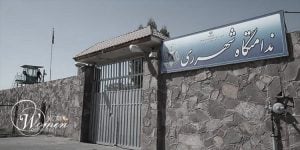
Fatemeh Abbasi, a 34-year-old mother and one of the thousands detained during the January 2026 Iran protests, has been transferred to Evin Prison. After being arrested alongside her father, she has now been sentenced to a heavy 25-year prison term after extraction of forced confessions under torture. Her father, Mohammad Abbasi faces a death sentence related to the same case. Disturbing reports regarding the detention of Fatemeh Abbasi indicate that she was subjected to severe physical and psychological pressure to extract forced confessions. Based on these coerced statements, obtained under torture and lacking any legal merit, the judiciary has sentenced her to 25 years in prison following a summary trial that bypassed the most fundamental principles of due process.
According to informed sources, the proceedings were marred by significant judicial irregularities, with no credible evidence presented to substantiate the charges. Abbasi’s family maintains that the case is built on a fabricated narrative orchestrated by security agencies. They emphasize that there is no evidence placing her at the scene of the incident; furthermore, available video evidence presented in court fails to show their presence at the location.
How the Regime Used Pahlavi as Cover to Divert the 2026 Uprising
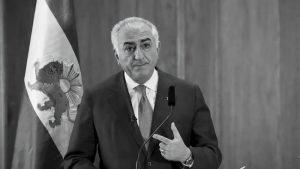
In the early weeks of January 2026, the streets of Tehran and Mashhad were thick with more than just winter smog; they were heavy with the scent of a regime in its final throes. The protests were unlike those of previous years. They were disciplined, driven by organized “Resistance Units” and networks that had spent years preparing for this specific moment of systemic collapse. By mid-month, the chants were no longer merely expressions of grief, but tactical demands for a democratic republic. Yet, by January 19, the atmosphere shifted. Suddenly, social media feeds and certain international broadcasts were flooded with images of the son of the deposed Shah, Reza Pahlavi, claiming leadership of a movement he had not built. The question that now haunts the aftermath of that suppressed revolt is a chilling one: How did a movement aimed at a liberated future become entangled in the ghosts of a discarded past, and who truly benefited from that entanglement?
Iran Regime Expands Street Mobilization from “Distant Shrines” to Tehran

In the aftermath of the recent conflict and subsequent ceasefire, the Iran regime has sharply intensified its street mobilization campaigns across major cities, particularly in Tehran. While the country faces mounting economic hardship—ranging from inflation and unemployment to deepening poverty—the ruling establishment continues to prioritize repression, executions, and intimidation over addressing the population’s urgent needs.
This widespread street mobilization, presented as a show of strength, reflects a deeper reality: the regime increasingly views the Iranian people themselves as its primary adversary. This perception aligns with long-standing public sentiment expressed in protests over the years, where demonstrators have rejected official narratives about foreign enemies and instead pointed directly at domestic governance as the root of their grievances.
700,000 Jobs Lost in Iran as A Result of War
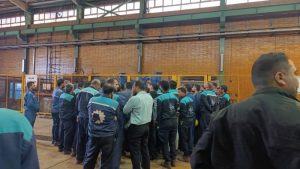
While the fate of the war in the region remains uncertain, reports from Iran indicate a suffocating livelihood crisis for the population. Alireza Mahjoub, secretary-general of the Workers’ House (a regime-affiliated labor organization) in Iran, announced on Wednesday, April 22, that during the recent war between the Iranian regime and the United States and Israel, more than 700,000 jobs have been lost. He said in a press conference that 130,000 people became unemployed directly due to the bombing of workplaces, and 600,000 job opportunities were lost indirectly.
He also warned that the consequences of unemployment caused by the post-war economic crisis will be far greater than these figures.
During the recent war, some of the country’s largest steel and petrochemical production facilities suffered serious damage due to airstrikes, and their production lines were halted. Other commercial and industrial units were also damaged.
One Political Execution Every 48 Hours: Judiciary’s War Footing to Physically Eliminate dissidents
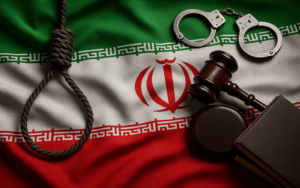
During this past week, not a single day has passed without Mohseni-Eje’i, the Head of the Judiciary of the Islamic Republic, emphasizing the acceleration of issuing and implementing death sentences. Unfortunately, these threats have been largely ignored by the international community and global human rights bodies. As a result, from March 19 to this very day (April 22), 17 individuals have been executed on purely political grounds.
This means 17 political executions within a span of 35 days—one execution every 48 hours. This figure represents more than half of the total political executions recorded in the entire year of 2025. Such a staggering escalation should have provoked a global outcry and triggered immediate international action to compel the Islamic Republic to halt all executions, particularly those of political prisoners and participants of the December 2025/January 2026 nationwide protests.
Special Report: Ward 35, Qezel Hesar; Decoding Torture and the “Cycle of Systematic Elimination”

This report is based on the firsthand experiences of individuals detained during the January 2026 nationwide protests. These documents demonstrate that in Ward 35 of Qezel Hesar Prison, not only are the legal rights of prisoners ignored, but human dignity is severely trampled. This location has transformed into a site for systematic torture and a direct corridor to the gallows; a structure specifically engineered to break the will of protesters and facilitate their physical elimination through an extrajudicial process.
According to precise observations, this ward—managed by an individual named Mohammadzadeh—is designed with a specific structure for maximum control:
- Physical Structure: Two parallel U-shaped hallways consisting of 30 solitary cells. In each 12-square-meter cell, instead of one person, 8 to 10 prisoners are held in foul-smelling conditions without ventilation (with toilets located inside the cells).
- Sub-units and Direct Transfer: In addition to the main ward, at least two sub-units have been identified within this complex. Shocking reports indicate that prisoners are transferred from these lateral units directly to execution, bypassing the usual administrative and judicial procedures. This structure reduces the distance between detention and execution to a minimum, inflicting extraordinary psychological torture on the detainees.
Trump’s Ceasefire Extension: Pause for Peace or Prelude to a Strike?

A handful of ships was enough to shake global markets.
But the real shock came from Washington: Trump’s ceasefire extension—announced without any clear end date.
In Tehran, that doesn’t read as peace. It looks like a move that could signal something far more unpredictable.
On paper, the fighting has paused. At sea, it hasn’t.
Shipping data cited by Reuters (April 20) shows traffic through the Strait of Hormuz nearly stalled, with only a few vessels passing over a 12-hour period. War-risk insurance has climbed to around 3% of a ship’s value—a sharp signal of rising danger.
At the same time, Iran seized two vessels, while senior Iranian figures warned that full reopening of the strait isn’t realistic under what they describe as continued “violations” of the ceasefire.
Markets reacted immediately. Reuters (April 23) reported Brent crude climbing back above $100 a barrel.
Iranian Resistance Supporters in Brussels Condemn Executions, Urge EU to Back a Democratic Republic

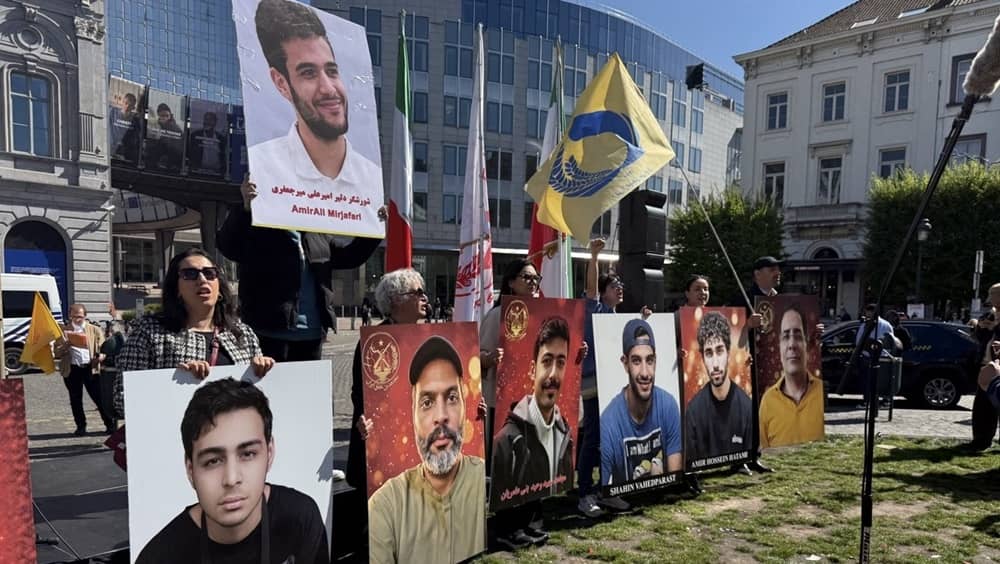
Brussels, April 22, 2026: Supporters of the Iranian Resistance gathered outside the European Parliament in Brussels to condemn recent executions in Iran and call for international support for a democratic alternative to the current regime.