

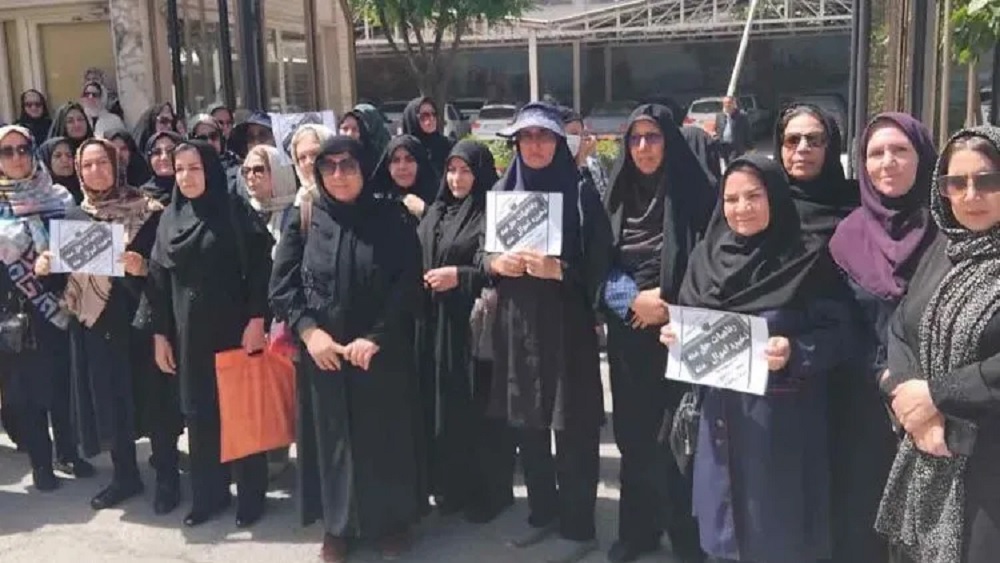
On May 20, 2025, Iranian cities witnessed an unprecedented wave of protests, reflecting widespread public frustration over deteriorating living conditions and a worsening economic crisis. From Mahshahr in the south to Tabriz in the north, and across Qaemshahr, Shiraz, Khorramabad, Kermanshah, and Tehran, citizens—including laborers, bakers, retirees, and families of prisoners—raised their voices, demanding basic rights and protesting against what they describe as “catastrophic” government policies. These diverse protests point to the profound depth of the crisis afflicting the country and impacting various segments of society.
The reasons behind the protests across Iran were varied, yet all stem from economic decline and government mismanagement:
Workers at the Thamin Salman Farsi Petrochemical Company in Mahshahr, southwest Iran, gathered to protest the lack of salary and benefit increases for 2025. Amid soaring prices for essential goods and a rampant cost of living, their wages remained stagnant, eroding their purchasing power and causing severe economic hardship.
May 20—Qaemshahr, northern Iran
Bakers rally to protest economic grievances such as bread prices or reduced subsidies.#IranProtestspic.twitter.com/V3yvCuMt2p— People's Mojahedin Organization of Iran (PMOI/MEK) (@Mojahedineng) May 20, 2025
Bakers in Qaemshahr, northern Iran, protested two main issues: frequent power outages, which cause significant losses by stopping ovens and spoiling dough, and the “Nanino” project, a new electronic system for bread distribution, which they found complex, impractical, and a source of increased administrative burden.
Workers and industrialists in the industrial zone of Shiraz, southern Iran, blocked a main road to protest persistent power cuts. These electricity shortages brought production lines to a halt, inflicting severe losses on their factories and workshops and threatening their livelihoods.
Bakers from various cities in Lorestan Province, western Iran, gathered in front of the provincial governorate in Khorramabad, protesting the low price of bread in their province compared to neighboring ones, as well as the lack of government subsidies, making it impossible for them to cover rising production costs.
May 20—Khorramabad, western Iran
Bakers rally outside the governor's office, protesting bread prices and lack of subsidies.#IranProtests pic.twitter.com/vxskvDHG4U— People's Mojahedin Organization of Iran (PMOI/MEK) (@Mojahedineng) May 20, 2025
Retirees from civil service, social security, telecommunications, and health sectors gathered outside the National Retirement Fund building in Kermanshah, western Iran. They expressed their anger over deteriorating living conditions and unmet demands, accusing officials of corruption and mismanagement, and chanting slogans reflecting their frustration with unfulfilled promises.
A significant number of bakeries in Tabriz, northwest Iran, closed their doors to protest the doubled price of flour. They described government policies as “catastrophic” and criticized officials’ incompetence in addressing the crisis, which directly impacted their ability to continue operating.
These continuous and widespread protests paint a bleak picture of Iran’s economic situation, which faces immense challenges that have led to a dead end for both the government and the people. The root causes of these crises can be summarized as follows:
May 20—Kermanshah, western Iran
Protest by retirees from various sectors (government, social security, telecommunications, healthcare), highlighting ongoing dissatisfaction with pension policies and economic conditions.#IranProtestspic.twitter.com/PoQShoPLO7— People's Mojahedin Organization of Iran (PMOI/MEK) (@Mojahedineng) May 20, 2025
- Rampant Government Corruption: Corruption is a major factor undermining the Iranian economy. The misappropriation and mismanagement of resources by officials reduce efficiency and deprive vital sectors of necessary investments, negatively impacting citizens’ livelihoods.
- Resource Drain in Regional Conflicts: Instead of directing resources towards internal development and improving citizens’ lives, the Iranian regime spends vast sums supporting its proxies in regional conflicts and exporting what is termed “terrorism.” These policies drain the national treasury and weaken the country’s infrastructure.
- Nuclear Ambitions: The Iranian regime’s nuclear ambitions have led to severe international sanctions, isolating Iran’s economy from global markets, cutting off foreign investment channels, and restricting international trade, further exacerbating domestic economic crises.
- Energy and Water Crises: Iran faces escalating crises in electricity and water sectors. Frequent power outages, as seen in the bakers’ and industrial workers’ protests, negatively affect production, industry, and daily life. Additionally, unsustainable water management has led to drought and scarcity in many regions, threatening food and social security.
- Inflation and Recession: The country suffers from high inflation rates that erode salaries and reduce citizens’ purchasing power, while the economy experiences a recession that limits job opportunities and increases unemployment rates.
These protests serve as a stark warning to the Iranian regime that public patience has run out. It has become clear to the people that this regime neither wants nor is able to solve their accumulated problems. The complex economic challenges, exacerbated by corruption and costly foreign policies, can only be resolved through the establishment of a popular government that addresses these crises fundamentally and comprehensively.