


THIS PAGE WILL BE UPDATED WITH THE LATEST NEWS
UPDATE: 4:00 PM CEST
Iran Leans on Hacktivist Proxies in Wake of Israeli, U.S. Strikes

Iranian state-backed hackers are borrowing from the Russian cyber playbook and sharing tools with ideologically aligned hacktivist groups in the wake of a series of military strikes, experts tell Axios.
Why it matters: Leaning on these hackers allows Iran to amplify its reach while maintaining plausible deniability and staying below the threshold of what’s considered war.
Driving the news: Iran-linked hackers threatened last night to publish emails purportedly stolen from Trump allies, including White House chief of staff Susie Wiles, lawyer Lindsey Halligan and adviser Roger Stone.
- CISA and the FBI released an advisory yesterday warning U.S. critical infrastructure, and particularly defense contractors, are at increased risk for potential Iran-linked cyberattacks.
UPDATE: 9:00 AM CEST
Suspected Iranian Spy Arrested – Were Attacks on Jews Being Planned?

Germany’s Federal Public Prosecutor has ordered the arrest of a Danish citizen on suspicion of spying for Iran. According to authorities, the man was tasked with gathering information in Berlin on Jewish locations and specific Jewish individuals. In response, the German Foreign Ministry summoned the Iranian ambassador.
According to the Federal Prosecutor’s Office, the suspect was allegedly recruited by an Iranian intelligence service earlier this year. In June, he is believed to have surveilled three locations in the German capital. This activity is thought to have supported further intelligence operations on German soil—possibly even preparing attacks on Jewish targets.
Federal Interior Minister Dobrindt stated after a briefing at the Federal Criminal Police Office that the man may have been preparing arson attacks on behalf of Iran. He also allegedly attempted to recruit others to carry out such attacks. The lead on the suspect reportedly came from a friendly intelligence service.
U.S. Treasury Targets Iranian Intelligence and IRGC Links in Syria Sanctions Update
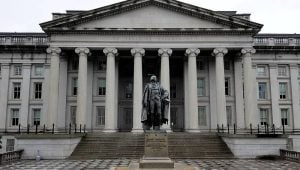
In a notable move reinforcing its pressure campaign on Iran’s regional activities, the U.S. Department of the Treasury has updated multiple Syria-related sanctions entries to include designations that highlight the clerical dictatorship’s extensive entanglement in the Syrian conflict.
Among the updates issued on June 30, the Iranian Ministry of Intelligence and Security (MOIS) was explicitly flagged for its role in human rights violations, hostage-taking, and cyber operations, with a clear link to activities in Syria. The MOIS now faces secondary sanctions under multiple executive orders, underscoring its designation as a terrorist-affiliated entity.
Also listed is the Islamic Revolutionary Guard Corps-Qods Force (IRGC-QF), a key arm of Iran’s extraterritorial military operations. The IRGC-QF, already under U.S. sanctions, remains central to Iran’s strategic depth in Syria, providing military, intelligence, and financial support to the Assad regime.
Additionally, Iranian individuals such as Mohsen Chizari, identified as a commander in IRGC-QF operations and training, were re-listed with updated identifiers and explicit secondary sanctions warnings under Executive Order 13224.
This action reflects Washington’s continued focus on countering Iran’s destabilizing influence in Syria through proxy networks, intelligence coordination, and economic backing of sanctioned actors. The Treasury’s update reinforces the message that the clerical dictatorship’s support for the Assad regime and other sanctioned entities in Syria will carry significant financial and diplomatic consequences.
UPDATE: 8:00 AM CEST
Berlin Exhibition Condemns Iran’s Human Rights Abuses, Calls for Global Support to End Violations

Berlin, Germany – June 28, 2025 – Supporters of the People’s Mojahedin Organization of Iran (PMOI/MEK) held an exhibition to denounce the Iranian regime’s escalating human rights abuses, particularly the increasing number of death sentences imposed on political prisoners.
Participants demanded the immediate abolition of these death sentences and the unconditional release of all political detainees in Iran. They condemned the regime’s ongoing repression and expressed steadfast solidarity with the Iranian people’s courageous struggle for democratic change.
Zurich Exhibition Condemns Iran Regime’s Executions and Demands Release of Political Prisoners
Zurich, Switzerland – June 28, 2025 – Supporters of the People’s Mojahedin Organization of Iran (PMOI/MEK) held an exhibition to protest the Iranian regime’s escalating human rights abuses, with a special focus on the recent surge in executions across the country.
#Zurich Exhibition Condemns #Iran Regime’s Executions and Demands Release of Political Prisoners #StopExecutionsInIran #FreePoliticalPrisoners #where_is_our_prisoner #FreeIran2025 https://t.co/e553AbHEBZ
— Iran Freedom (@4FreedominIran) July 1, 2025
The demonstrators demanded the immediate abolition of these death sentences and the unconditional release of all political prisoners in Iran. They condemned the regime’s ongoing human rights violations and expressed solidarity with the Iranian people’s struggle for democratic change.
A Regime Propagandist’s Confession: Tehran’s Main Threat Is the Unbroken Spirit of the PMOI and Its Supporters

In a moment of startling candor on state television, a regime-linked propagandist has inadvertently confessed to Tehran’s four-decade failure to extinguish its main opposition, the People’s Mojahedin Organization of Iran (PMOI/MEK). The comments reveal a deep-seated fear within the ruling establishment, confirming that the PMOI remains the principal and most organized threat to its survival.
On June 25, 2025, documentary maker and security apparatus mouthpiece Javad Mogoui appeared on state television and compared the regime’s current precarious state to 1981, a year he described as “the worst year in the history of the revolution.” He recounted the era with a sense of dread, reminding viewers of the PMOI’s formidable power.
Arghavan Fallahi Held in Solitary, Location Still Unknown Despite Phone Call

Several days after political prisoner Arghavan Fallahi was transferred from Ward 209 of Evin Prison to an undisclosed location, her exact whereabouts and condition remain unclear.
According to informed sources, Arghavan Fallahi has been held in solitary confinement following her removal from the IRGC Intelligence Ward, without any notification to her family or legal representative. In a brief phone call on June 29, 2025, she told her family that she is being kept in solitary confinement but does not know where she is being held. She speculated that she might be in Qarchak Prison in Varamin.
Reports suggest that several detainees were forcibly transferred to undisclosed locations, accompanied by a complete severance of communication and a troubling lack of information for their families.
Families of Political Prisoners Demand Their Freedom

Amid a growing wave of public opposition to death sentences and executions in Iran, today, Tuesday, July 1, 2025, the families of political prisoners, Vahid Bani-Amerian and Pouya Ghobadi, have released a protest video urgently warning of the imminent risk of execution faced by their sons. In the video, they call for an end to state repression and the immediate release of all political prisoners. The video, a poignant expression of courage and resistance by the families of repression victims, features the parents, holding placards with slogans such as “No to Execution,” “Free Political Prisoners,” and “Stop the Executions.” They denounce the appalling conditions inside Iranian prisons, especially the notorious Fashafouyeh Prison, and appeal to the public conscience and international attention.
Bloody Raid on Gonich Village, Leaves 1 Baluch Woman Dead, 11 Others Injured

In the early hours of Tuesday, July 1, 2025, the Gonich village, located in Iran’s southeastern province of Sistan and Baluchestan, was the target of a violent and large-scale military assault by the Revolutionary Guard Corps (IRGC) and other security forces of the Iranian regime. The raid began at 5 a.m. and involved dozens of armored vehicles, aerial surveillance by military drones, and the deployment of heavily armed ground units. The operation was launched despite the complete absence of men in the village—only women and children were present at the time.
Political Prisoners Held in the Greater Tehran Prison Are Enduring Unbearable Conditions

Nine days after the Israeli army’s airstrike on Evin Prison and the subsequent transfer of a group of political prisoners to the Greater Tehran Prison and Qarchak Varamin Prison, reports indicate that political detainees in Greater Tehran Prison are being held in extremely poor and unbearable conditions, deprived of even their most basic rights. According to the PMOI’s network, conditions inside Evin Prison were in complete disarray. Fearing riots and the possibility of widespread unrest leading to the release of political prisoners, authorities began relocating inmates. The prison’s notorious chief, Hedayat Farzadi, was reportedly so overwhelmed that he lacked even a basic list of those being transferred.
Iran’s Regime Arrests European Nationals in Connection with the 12-Day War

Amid an increasingly repressive security atmosphere in Iran, Asghar Jahangir, the spokesperson for Iran’s judiciary, announced that in several provinces, “individuals of European nationality” who, according to him, “were in some way collaborating with Israel,” had been arrested and that legal cases had been opened against them.
In a press conference on Monday, June 30, Jahangir did not specify the identity or number of European detainees but announced that special judicial branches had been ordered to be established throughout the country to handle the cases of individuals labeled as “traitors and mercenaries.”
UK Probes Iranian Regime’s Hidden Network Amid Growing Fears of Tehran’s Hybrid Warfare

The UK Treasury is investigating nine suspected violations of sanctions related to Iran’s nuclear program in 2024—infractions that have gained greater sensitivity amid tensions following the recent 12-day war with Israel.
According to the Telegraph, these cases represent only a small part of Iran’s regime’s extensive covert financial and political influence network in Britain—a network fostered by years of inattention from London’s policymakers to Tehran’s “hybrid warfare.”
In June 2009, the Iranian regime’s supreme leader called the UK the “most evil” foreign power, and the slogan “Death to Britain” was chanted during Friday prayers in Tehran—a symbol of the regime’s long-standing hostility toward the UK.
The Telegraph reports that Tehran has targeted British public opinion in an effort to undermine the UK’s support for human rights in Iran and retaliate against sanctions.
Day 19: Tehran Rejects Peace Narrative as Global Powers Push for De-Escalation

On Day 19 following the Iran-Israel ceasefire, Iranian officials continued to reject de-escalation efforts as global powers pushed for renewed diplomacy. Accusations of espionage against workers, nurses, and border porters intensified amid reports of nuclear secrecy, cyber threats, and casualties among security forces. New international developments and tightened internal security regulations reflect a regime preparing for prolonged confrontation.
-
The G7 foreign ministers issued a joint statement supporting the ceasefire and urging the resumption of verifiable negotiations over Iran’s nuclear program. They also warned against actions that could further destabilize the region.
-
French President Emmanuel Macron held a phone conversation with Iran’s president, emphasizing the need to protect French nationals, resume nuclear and ballistic talks, and uphold the Non-Proliferation Treaty.
-
U.S. State Department spokesperson Tammy Bruce reiterated that the Iranian people control their destiny and emphasized the administration’s readiness to ensure regional peace through all necessary means.