

THIS PAGE WILL BE UPDATED WITH THE LATEST NEWS
UPDATE: 11:00 PM CEST
Risch, Colleagues Urge European Snapback Sanctions on Iran

WASHINGTON – U.S. Senators Jim Risch (R-Idaho), Pete Ricketts (R-Neb.), Steve Daines (R-Mont.), Bill Hagerty (R-Tenn.), Ted Cruz (R-Texas), and John Cornyn (R-Texas), today sent a letter to Jean-Noël Barrot, the French Minister of Europe and Foreign Affairs, Johann Wadephul, German Federal Minister of Foreign Affairs, and David Lammy, British Secretary of State, urging them to immediately trigger snapback sanctions on Iran following continued Iranian violations of the 2015 nuclear agreement and Nuclear Non-Proliferation Treaty.
The lawmakers wrote, “Iran’s ejection of the International Atomic Energy Agency from its facilities marked the latest in a long chain of violations to Iran’s nuclear commitments. These actions confirm what we have known all along: the Iranian nuclear program is not civilian; it is the pursuit of a bomb to destroy Israel and threaten U.S. national security interests in the region. The international community must not tolerate this activity any longer.”
UPDATE: 8:00 PM CEST
Iranians Emphasize on the Third Option: “No to Appeasement, No to War – Yes to Regime Change by the People, and Their Organized Resistance”

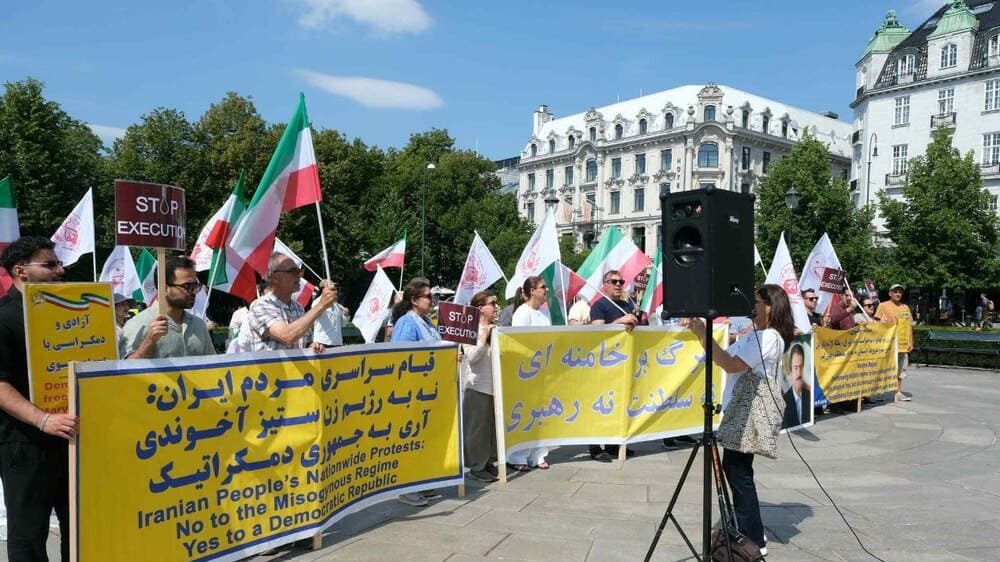
Although cease fire in the Middle East is preserved, the escalations between Iran and Europe about Iran’s nuclear program and the activation of snapback mechanism is reaching a new turning point. With this regard, on Wednesday July 16 Hundreds of Iranians and supporters of the National Council of Resistance of Iran (NCRI), gathered at Place du Luxembourg in Brussels to denounce the Iranian regime’s escalating repression and to call on the European Union and international community to take decisive action.
The rally, organized in response to the regime’s brutal crackdown following the recent Israel-Iran war and ceasefire, highlighted the urgent need to support the Iranian people’s struggle for freedom and justice
The demonstration came just one day after the EU Foreign Ministers’ meeting in Brussels, where France, the UK, and Germany (the E3) announced that the EU will reimpose sanctions on Iran starting August 29 unless Tehran takes verifiable steps to curb its nuclear program. Protesters urged the EU to go further by blacklisting the Islamic Revolutionary Guard Corps (IRGC) and activating the UN’s snapback mechanism.
UPDATE: 12:30 PM CEST
Europeans Warn Iran of UN Sanctions If No Concrete Progress on Nuclear Issue
PARIS, July 18 (Reuters) – France, Britain and Germany told Iran on Thursday that they would restore U.N. sanctions unless it reopened talks on its nuclear programme immediately and produced concrete results by the end of August.
The foreign ministers of the so-called E3, along with the European Union’s foreign policy chief, held their first call with Iranian Foreign Minister Abbas Araqchi since Israel and the U.S. attacked Iranian nuclear facilities a month ago.
A French diplomatic source said the ministers had urged Iran to resume diplomacy immediately to reach a “verifiable and lasting” deal, threatening to use the so-called ‘snapback’ mechanism if it failed to do so.
UPDATE: 8:00 AM CEST
Khamenei’s Speech of Fear Reveals a Regime on the Brink
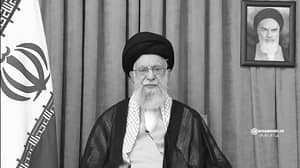
In his first public address since the regime’s defeat in the 12-day war, Iranian regime Supreme Leader Ali Khamenei delivered a speech not of strength, but of desperation. Speaking to the regime’s judicial authorities on July 17, Khamenei attempted to project a facade of “sham power” to boost the collapsing morale of his loyalists. However, his words only succeeded in revealing a leader trapped by military failure, consumed by internal division, and haunted by the specter of a popular uprising. The speech was a desperate attempt to encourage his forces to continue their suppression, even as the regime sinks deeper into a vortex of crises.
Iranian political prisoner Saeed Masouri exposes regime’s plan for a new massacre

In a brazen act of desperation, the Iranian regime’s security forces launched a violent raid on Ghezel Hesar prison on July 16, attempting to abduct one of Iran’s longest-serving political prisoners, Saeed Masouri. According to a harrowing report from the Iran Human Rights Society (HRS), the regime’s henchmen stormed the political prisoners’ ward without a judicial warrant, intending to move Masouri, a supporter of the People’s Mojahedin Organization of Iran (PMOI/MEK), to an unknown location. The plot was only thwarted by the courageous and collective resistance of his fellow inmates, who forced the guards to retreat.
Sara Gowhari, an Afghan Student, 29, Arrested by Intelligence Ministry

Sara Gowhari, a 29-year-old Afghan citizen and sociology student at the University of Tehran, was arrested on July 6, 2025 near the Taybad border region by Iranian security forces and taken to an undisclosed location.
According to sources close to her family, the arrest was carried out by Iran’s Ministry of Intelligence, without presenting an arrest warrant or official documentation from the Judiciary.
Prior to her detention, Sara Gowhari had posted on her personal Instagram account about a planned independent research trip to the border region of Taybad. Her project aimed to document the lived experiences of Afghan migrants through interviews and personal narratives, shedding light on the realities of life along the Iran-Afghanistan border.
Iranian Regime Figure Tied to 1988 Crimes Against Humanity Reemerges in Academic Circles
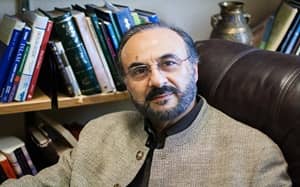
Mohammad Jafar Mahallati, former Iranian regime ambassador to the United Nations, who became embroiled in scandal over serious accusations of helping justify the 1988 massacre of political prisoners in Iran and charges of sexual abuse and assault during his teaching career in the United States, is now engaging with students in Iran.
His biography on the website of the Majd Research Center describes him as a “full professor of religious and peace studies at Oberlin College, USA.”
He also co-organized a conference from May 26 to 28 at the University of Tehran titled “The Sixth Annual Conference on Peace and Conflict Resolution.”
The Myth of National Unity: How the Iranian Regime Hijacks the People’s Voice After the War

Despite claiming 90 million Iranians support the regime, reality and public dissent expose a decades-old propaganda machine that uses “the people” as a shield for repression and foreign adventurism.
In the aftermath of Iran’s recent military confrontation, one of the dominant narratives echoed by regime officials and media is that of “maximum popular support” for the Iranian regime in the face of external threats.
This line of messaging, long embedded in the regime’s propaganda playbook, was amplified again when parliamentary speaker Mohammad Bagher Ghalibaf declared, “The hard core of the regime is made up of 90 million Iranians.”
Iran Legalizes Tiered Internet Access: Reformists Lead Push for “Digital Apartheid”

Despite past promises to defend open access, Iran’s new administration accelerates internet segregation, giving elites freer access while ordinary citizens remain censored and restricted.
In a major policy move that critics are calling the “butchering of the internet,” the Iranian regime has officially approved a regulation to implement tiered or class-based internet access under the guise of “facilitating digital businesses.” Simultaneously, Masoud Pezeshkian’s First Vice President has called for the rapid rollout of the so-called “National Internet”—a long-feared infrastructure designed to isolate Iran from the global web and reinforce state surveillance and control.
Iran’s Regime Rejects Zero-Enrichment Demand as Nuclear Deal Deadline Looms
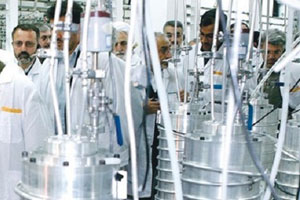
As diplomatic pressure mounts over Iran regime’s nuclear program, the regime is doubling down on its refusal to halt domestic uranium enrichment—setting the stage for a potentially explosive standoff with the West by the end of August. The firm stance comes amid growing speculation that the United States and its European allies may soon invoke the so-called “trigger mechanism” that would reimpose UN sanctions on Tehran.
On July 16, Alaeddin Boroujerdi, a senior member of Iran regime’s Parliamentary National Security and Foreign Policy Committee, reiterated the regime’s unwavering position: “Iran will never accept zero enrichment.” This declaration is in line with the long-standing policy of the Iranian regime, which considers uranium enrichment a national right and strategic necessity.