

THIS PAGE WILL BE UPDATED WITH THE LATEST NEWS
UPDATE: 07:30 PM CEST
Iran to Execute the First Woman Over Widespread Anti-Regime Demonstrations

Iran’s barbaric regime is set to execute its first female protester over recent protests, one of an estimated 1,600 sentenced to death by the Islamic Republic in the past year. Bita Hemmati is the first woman due to be hanged in relation to the demonstrations that broke out in January across the country and were viciously stamped out by government forces. The regime accused her of numerous crimes, including using explosives and weapons, throwing objects such as concrete blocks, participating in protest gatherings, and disrupting national security, according to a Tuesday press release from the opposition National Council of Resistance of Iran (NCRI).
Her husband, Mohammadreza Majid Asl, 34, as well as two other men, Behrouz and Kourosh Zamaninezhad, who lived in the couple’s apartment building, were also sentenced to death following a hasty trial and their property confiscated.
A fifth defendant, Hemmati’s relative Amir Hemmati, was sentenced to almost six years in prison for “assembly and collusion against national security” as well as “propaganda against the regime.”
UPDATE: 07:00 AM CEST
Message to the Official Meeting of the Region of Marche, Italy
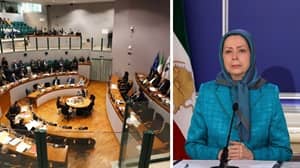
Maryam Rajavi’s speech: “Greetings to all. I sincerely appreciate your solidarity with the Iranian people’s resistance for freedom and democracy, and the establishment of a democratic republic in Iran. Today, Iran and the entire Middle East are at a decisive and unprecedented moment. Last January, a major uprising spread across all 31 provinces of Iran. The ruling mullahs responded to that uprising with the killing of thousands of young people, including teenagers. This violence, in turn, increased the determination of our people to bring an end to the regime.
“At the same time, resistance units expanded their activities against the regime. In practice, they have developed into organized units of a liberation army inside Iran.
On February 23, they carried out a major operation targeting the headquarters of Khamenei, one of the most heavily protected sites of the regime. This event demonstrated the power of the resistance movement inside the country.”
Iran’s ‘No to Executions Tuesdays’ Campaign Marks 116th Week Amid Internet Blackout, Post-War Crackdown
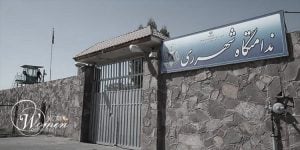
On April 14, 2026, inmates across Iran marked the 116th consecutive week of the “No to Executions Tuesdays” campaign, holding hunger strikes in at least 56 prisons nationwide. The protests continue under the shadow of a severe, seven-week internet blackout, escalating security pressures, and the turbulent aftermath of a war that has been paused in an April 7 ceasefire. Despite the complete severing of internet access—which has drastically reduced the ability to publish statements and inform the public—the weekly hunger strikes have not stopped. Political prisoners and other inmates have managed to convey that their resistance remains highly organized and functional even without the ability to communicate with the outside world.
Participants in this campaign have announced that despite the existing pressures and restrictions, they remain committed to their pledge and will continue the weekly hunger strike, demonstrating the persistence of protests inside the penitentiaries.
Why Can Reza Pahlavi Not Learn to Remain Silent?

Reza Pahlavi, who is commonly referred to in Iranian political discourse as the “shah’s son,” claimed in remarks delivered at the Swedish parliament on April 13 that what has happened in Iran is a revolution against the 1979 revolution. In other words, Reza Pahlavi claims that in their recent uprisings from 2022 to 2025, the people of Iran are pursuing demands and ideals that stand in direct opposition to those of 1979. From a scientific and sociological standpoint, can such a claim even be valid? What does a revolution actually mean? Has sociology ever identified such a phenomenon in its historical record?
A revolution is always an action formed against the existing order and political system, and in reaction to current crises—not a reaction to a historical revolution that occurred in the past and has already concluded.
Iran Sentences 4 Protesters to Death as 2025 Executions Hit 1,639

New death sentences against protesters come as executions in Iran reach one of the highest levels in decades, raising fresh concerns over due process.
Iran sentences 4 protesters to death, including a young woman, in cases linked to recent unrest, according to human rights organizations. The development comes as executions in Iran surged to at least 1,639 in 2025—one of the highest figures in years—highlighting a sharp escalation in the country’s use of capital punishment.
The combination of fresh death sentences and rising execution numbers signals growing pressure on detainees, particularly those linked to the January 2026 protests.
Berlin Protest Hits 45th Day as Iranian Resistance Supporters Denounce Executions and Demand Action

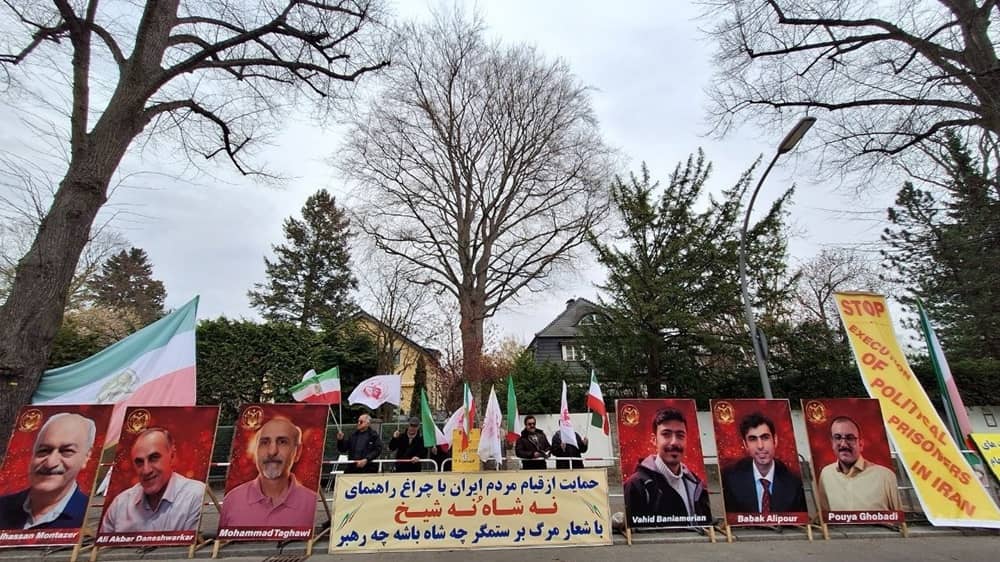
Berlin, Germany – April 13, 2026: For the forty-fifth straight day, supporters of the Iranian Resistance gathered outside the Iranian regime’s embassy in Berlin, protesting the recent execution of six political prisoners — Mohammad Taghavi, Akbar Daneshvar Kar, Babak Alipour, Pouya Ghobadi, Vahid Bani-Amerian, and Abolhassan Montazer—who were affiliated with the People’s Mojahedin Organization of Iran (PMOI/MEK).
Oslo: Iranian Resistance Supporters Continue Protests Against Executions, Call for Democratic Republic in Iran

Oslo – April 11, 2026: After more than 40 days of continuous protest gatherings, supporters of the Iranian Resistance gathered outside the Iranian regime’s embassy to protest the executions of six political prisoners affiliated with the People’s Mojahedin Organization of Iran (PMOI/MEK): Mohammad Taghavi, Akbar Daneshvar Kar, Babak Alipour, Pouya Ghobadi, Vahid Bani-Amerian, and Abolhassan Montazer.