

THIS PAGE WILL BE UPDATED WITH THE LATEST NEWS
UPDATE: 06:30 PM CEST
Peace Is More Dangerous Than War for the Mullahs’ Regime

They also allow it to intensify repression and turn the streets into veritable military garrisons.
According to an analysis inspired by the work of Max Weber, regimes that do not derive their legitimacy from elections and that consequently suffer from poor economic performance—as evidenced by the spread of poverty to more than two-thirds of the population—tend to produce not wealth, but a “state of emergency.” In this context, crisis replaces legitimacy. The existence of a permanent enemy becomes a condition for internal cohesion. Moreover, such regimes use external tensions to divert attention from their internal crises.
While the regime’s capacity for resilience in the face of bombings and military attacks may have exceeded some expectations, its ability to withstand popular dissent remains extremely fragile. This is illustrated by the bloody repression of the January protests, marked by the deaths of tens of thousands of unarmed civilians, as well as the public display of their bodies across cities throughout the country.
The Iranian Regime Is Not Capable of Peace

The failure of negotiations between Iran and the United States on April 12 highlights a reality often underestimated by the international community: the Iranian regime is not capable of peace. In other words, it refuses to abandon a strategy based on three pillars—the nuclear program, the development of ballistic missiles, and the use of proxy forces.
By Hamid Enayat, political scientist and specialist on Iran
This is precisely what Maryam Rajavi, leader of the opposition National Council of Resistance of Iran, had stated on March 26. Moreover, by putting forward Khamenei’s son as the successor to the supreme leader killed in the recent war, the mullahs’ regime has clearly demonstrated its intention to continue along the same political line.
Woman Among 4 More Iranians Sentenced to Death Over Protests, Rights Groups Say

Iranian authorities have sentenced to death four more people, including a woman, over last January’s protests, several rights groups said on Tuesday.
Iran has already hanged seven people in connection with the protests, which activists say were put down in a crackdown that killed thousands and led to tens of thousands of arrests.
Rights groups accuse the Islamic Republic of using the death penalty as a tool of repression to instill fear in society, and fear it will ramp up capital punishment in the wake of the war against Israel and the United States.
The regime’s judiciary accused the group of numerous charges, including “using explosives and weapons,” “harming stationed forces on-site,” and “throwing objects including bottles, concrete blocks, and incendiary materials from the roofs of buildings,” according to the opposition National Council of Resistance of Iran.
UPDATE: 03:00 PM CEST
Economic Fury Targets Illicit Oil Smuggling Network Run by Iranian Regime Elite
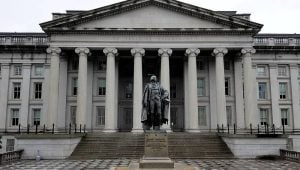
WASHINGTON—Today, the Department of the Treasury’s Office of Foreign Assets Control (OFAC) intensified pressure on Iran’s illicit oil transportation infrastructure by sanctioning more than two dozen individuals, companies, and vessels operating within the network of Iranian oil shipping magnate Mohammad Hossein Shamkhani (Shamkhani), the son of now-deceased senior Iranian security official Ali Shamkhani.
“Treasury is moving aggressively with Economic Fury by targeting regime elites like the Shamkhani family that attempt to profit at the expense of the Iranian people,” said Secretary of the Treasury Scott Bessent. “Under President Trump’s leadership, Treasury will continue to cut off Iran’s illicit smuggling and terror proxy networks. Financial institutions should be on notice that Treasury will leverage all tools and authorities, including secondary sanctions, against those that continue to support Tehran’s terrorist activities.”
UPDATE: 02:00 PM CEST
Iran to Execute First Female Protester Tied to Anti-Regime Unrest

Iran is set to execute its first female protester tied to the January 2026 uprising in Tehran, according to multiple human rights organizations.
Bita Hemmati was named in a collective death sentencing alongside three other defendants, including her husband, Mohammadreza Majid-Asl, 34, according to the National Council of Resistance of Iran (NCRI) and the Human Rights Activists News Agency (HRANA). The couple’s reported neighbors, Behrouz Zamaninejad and Kourosh Zamaninejad, were also sentenced to death, while a relative, Amir Hemmati, received five years in prison.
The verdicts mark some of the most recent capital punishment decisions amid the government’s broader crackdown on suppressing unrest. Possibly thousands of protesters have reportedly been killed since demonstrations erupted this year.
UPDATE: 07:30 AM CEST
Iran’s Regime Hands Down Death Penalties to Four January 2026 Protesters Amidst Execution Spree
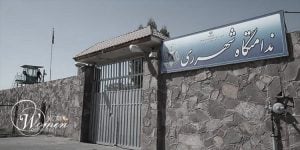
Following the massive nationwide uprisings of December 2025 and January 2026 that brought the clerical regime to its knees, Tehran is accelerating its execution machine in a desperate bid to cling to power. The regime, which only managed to survive the recent popular revolt through the brutal massacre of thousands of protesters across the country, is now weaponizing the judicial system to instill terror. In its latest criminal act, the regime’s judiciary has hastily issued severe, collective death sentences and property confiscation orders against four protesters arrested during the uprising in Tehran.
This ruling is not an isolated incident but part of a systematic, state-sanctioned killing spree designed to crush dissent. In just the past month alone, the regime has carried out 13 political executions. These victims include seven protesters from the recent nationwide uprising and six members of the People’s Mojahedin Organization of Iran (PMOI), underscoring the regime’s zero-tolerance policy for political opposition.
Iranian Regime Judiciary Chief Paves the Way for More Political Executions
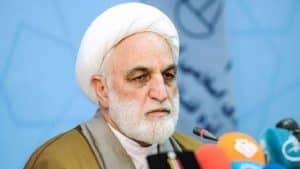
Gholamhossein Mohseni Eje’i, the head of the Iranian regime’s judiciary, has issued an alarming directive for the judicial system to adopt a “war posture,” paving the way for fast-tracked death sentences. In the shadow of ongoing conflict, Eje’i’s remarks signal a dangerous shift toward establishing drumhead trials to quickly eliminate political dissidents. This is not just empty rhetoric; it serves to justify a deadly surge in state violence. Over the past month, the regime has executed 13 political prisoners—including seven protesters from recent uprisings and six members of the People’s Mojahedin Organization of Iran (PMOI/MEK). Meanwhile, four other protesters have just been sentenced to death and remain under imminent threat of execution.
According to state media, Eje’i recently declared that the judiciary has taken on a “jihadist and war posture” in response to what he termed the “third imposed war,” a reference to the recent conflict between the regime and U.S. and Israel. Crucially, he emphasized that dealing with “enemy collaborators” will no longer be “subject to the usual conventions and rules governing normal conditions.” He demanded “utmost decisiveness and acceleration” in issuing and carrying out sentences, particularly concerning laws like the “intensification of punishment for espionage.”
Young Female Kurdish Fighter Killed in Drone Attack by Revolutionary Guards

Ghazal Mowlan, a member of the Peshmerga forces of the Komala Party of Iranian Kurdistan, has died on April 15, 2026 from severe injuries sustained during a drone attack carried out by the Revolutionary Guard Corps (IRGC) on one of the party’s camps.
Mowlan was wounded on April 14, during a drone attack targeting a Komala camp in the Surdash area of Sulaymaniyah province, northeastern Iraq. At least two other Peshmerga fighters were also injured in the same attack.
Ghazal Mowlan Chaparabad, 19, was a native of Mahabad in Iran’s West Azerbaijan province.
Only one week into the ceasefire, the IRGC simultaneously targeted camps of both the Komala Party of Iranian Kurdistan and the Democratic Party of Iranian Kurdistan using what it describes as “suicide drones.”
Iran’s Silent Health Catastrophe: When War, Mismanagement, and Neglect Converge

Over the past two months, Iran has entered one of the most severe healthcare crises in its recent history—one that is not only disrupting access to medical services but also placing the lives of vulnerable patients in immediate danger. While war and security tensions have intensified the situation, the roots of this catastrophe run much deeper, embedded in years of structural weakness, mismanagement, and systemic neglect.
Today, Iran’s healthcare system is not merely strained—it is unraveling.
Field reports, patient testimonies, and even data from state-affiliated media paint a grim picture: the shutdown of several pharmaceutical companies, combined with severe disruptions in supply chains and an unprecedented surge in demand for healthcare services, has pushed an already fragile system to the brink.
Swedish Media and Lawmakers Criticize Invitation of Reza Pahlavi to Parliament

The recent visit of Reza Pahlavi to the Swedish Parliament on Monday, April 13, has triggered widespread criticism from lawmakers, media outlets, and Iranian expatriates, highlighting deep concerns about legitimizing a figure associated with Iran’s monarchical past.
The invitation—reportedly extended by far-right members of the Swedish Parliament—has been described as inappropriate, politically naïve, and disconnected from the core demands of Iran’s ongoing anti-regime protests.
Jakob Risberg, a member of Sweden’s parliament from the Green Party, strongly condemned the invitation, calling it “very brazen and inappropriate.”
He further criticized the personality cult surrounding Pahlavi, noting that slogans such as “Long live the Shah” reflect “an unhealthy form of personal worship.”
Iran’s Regime Expanding Use of Child Recruits: A Systematic Strategy Rooted in Survival

On March 26, a senior cultural official of the Islamic Revolutionary Guard Corps (IRGC) announced a deeply alarming policy shift: the minimum age for participation in patrol units has been reduced to 12. Shortly thereafter, reports emerged of an 11-year-old boy killed at a checkpoint—an incident that has intensified scrutiny over the regime’s use of minors in security operations.
The contradiction is stark. In a system where individuals under 18 are legally barred from basic civic responsibilities such as obtaining a driver’s license, children are now being deployed in high-risk military and paramilitary roles. The death of the 11-year-old underscores the human cost of this policy.
According to the child’s mother, speaking to the state-run newspaper Hamshahri, the tragedy was the result of severe personnel shortages. She explained that on the night of the incident, the boy’s father—unable to meet operational demands—took his son with him to a checkpoint. This admission provides rare insight into the structural deficiencies driving the regime’s reliance on child recruits.
CENTCOM Announced a Complete Naval Blockade of Iran

The United States Central Command (CENTCOM) announced that the plan to block the ports of the Iranian regime has been fully implemented. In a statement, the command said that within just 36 hours of the start of the operation, U.S. forces had succeeded in halting all maritime commercial exchanges to and from Iran.
CENTCOM emphasized maintaining U.S. naval superiority in the Middle East region and added that the operation was carried out with the aim of full control over maritime traffic related to Iran and is still ongoing.
Meanwhile, military analysts assess this move as one of the lower-risk options compared with more aggressive scenarios. According to Mark Montgomery, a retired U.S. admiral, enforcing a naval blockade carries fewer risks for American forces than actions such as military escort of ships through the Strait of Hormuz or seizing strategic points.
Iran’s Regime Prioritizes Its Repressive Apparatus over People’s Lives During Ceasefire

The state-run Tabnak media outlet published a piece on April 11 titled “The Wounded but Living Brain; Command Rises Again from Beneath the Rubble.” The state-run outlet examines the extent of the blow to the command force and how the Iranian regime was thrown into convulsions after the killing of Ali Khamenei, the supreme leader of Iran’s regime, and senior regime commanders during a foreign war.
And its key message is that the regime’s priority is not to address the needs of the war-stricken people but to maintain its hold on power against a restive population that demands regime change.
The state-run Tabnak writes: “Now supposedly there is a ceasefire, supposedly America and Israel are not attacking Iran, but right now is the time for the recovery and restoration of the central command forces, the thinking brains that were deep in the war and have become exhausted and wounded.”
Iman Afshari: Death Judge, Systematic Covenant Violator & Accomplice in Crimes Against Humanity in Iran
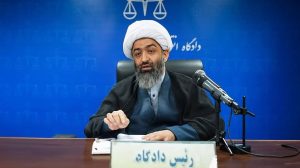
In recent years, the name Iman Afshari has become synonymous with the issuance of death sentences and long-term imprisonment for political prisoners, protesters, civil activists, and religious minorities. As the presiding judge of Branch 26 of the Tehran Revolutionary Court, Afshari is recognized as a figure who has not only trampled upon the fundamental principle of judicial impartiality but has also transformed the court into an instrument for consolidating intimidation and institutionalizing state repression.
An examination of the cases handled by this branch reveals that he acts as the executive arm of security agencies in violating Article 6 of the International Covenant on Civil and Political Rights (ICCPR), the right to life. His most recent crime involves the issuance of death sentences for six political prisoners: Mohammad Taghavi, Vahid Bani-Amerian, Babak Alipour, Pouya Ghobadi, Abolhassan Montazer, and Akbar Daneshvarkar, who were executed on March 30, 31and April 4, 2026 (10, 11, and 15 Farvardin 1405). He also issued a death sentence for female political prisoner Pakhshan Azizi.
The Judiciary in Iran; A Legal Instrument of Repression under Velayat-e Faqih- Part Three
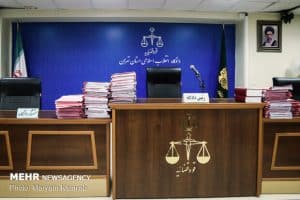
In the previous two parts, this report showed that the judiciary in Iran is not an independent institution but rather operates within the framework of Velayat-e Faqih and under the domination of political power. It also demonstrated that the body of this institution is formed not on the basis of professional independence, but on ideological vetting, political loyalty, and the exclusion of independent elements. This part examines the operational stage of that same structure; namely, the Revolutionary Courts and security prosecutor’s offices, where this judicial body is transformed in practice into an instrument of security adjudication, the containment of dissent, and the suppression of political and ideological cases.
Revolutionary Courts and security prosecutor’s offices should not be understood merely as specialized bodies for handling a particular category of offenses. In practice, these institutions form the operational heart of judicial repression in Iran; the point at which political opposition is turned into a security accusation, detention is converted into a judicial file, and the will of security institutions is transformed into a court judgment. Within this structure, law and criminal procedure are used not to restrain power, but to formulate and legitimize its exercise.
Strait of Hormuz Crisis Triggers Fertilizer and Helium Shock Beyond Oil Markets

Rising urea, ammonia, helium, and diesel costs are rippling through food and industrial supply chains, with economists warning of a prolonged global impact.
The Strait of Hormuz crisis is no longer just an oil story—it is rapidly turning into a broader supply shock hitting agriculture, industry, and global trade. As Iran tightens control over the strategic waterway and the United States enforces a naval blockade targeting Iranian-bound shipping, disruptions are spreading across key commodities, from fertilizer to helium, with direct consequences for food prices and manufacturing.
While Washington says non-Iran-bound vessels are technically exempt, market data and shipping reports indicate that rising insurance costs, delays, and risk premiums are already slowing real flows of goods. The result: a cascading effect across global supply chains.