

Three-minute read
For more than a century, the people of Iran have stood resilient in the face of brutal storms—first of monarchy, then of theocracy—refusing to surrender their yearning for freedom. They have walked across a bloodied and oppressed homeland with hearts ablaze with hope. From the Constitutional Revolution of 1906 to the national uprisings of the 21st century, they have proven their resilience, continuing their struggle in face of brutal repression.
The Historical Arc of Resistance
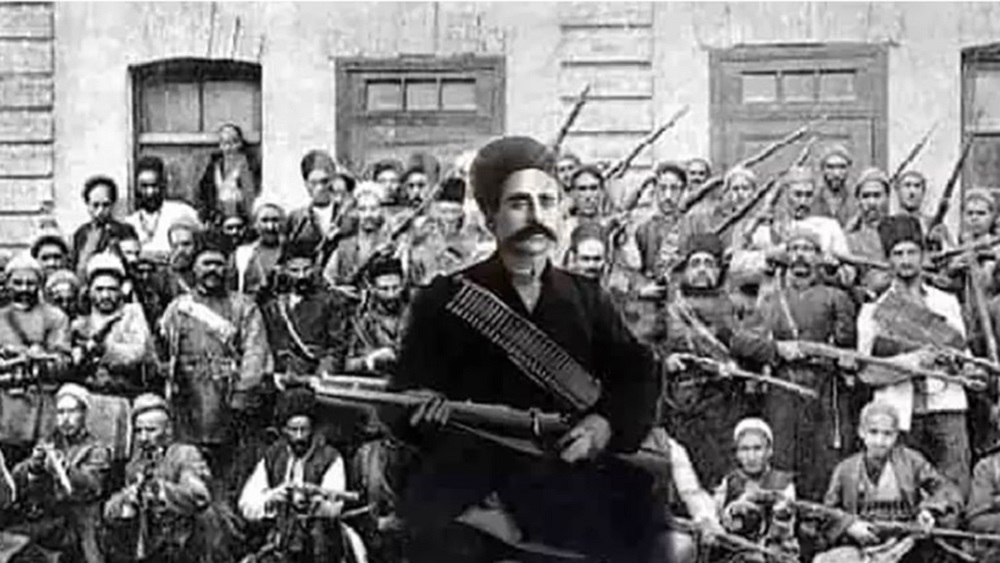
The dawn of Iran’s modern resistance was the Constitutional Revolution, where the nation raised the banner of rule of law against the absolute rule of an unelected monarch. That first cry for justice was not the product of elite salons but the courage of ordinary citizens, enlightened clerics, intellectuals, and bazaaris. They refused to let Iran become a den of tyranny, paving the road with the blood of heroes like Sattar Khan and Bagher Khan.
But the dream was betrayed. Reza Shah, installed through foreign manipulation, dismantled the fledgling constitutional order and replaced it with militarized despotism. Yet the call for liberty rose again in Gilan, where Mirza Kuchak Khan and the Jangal Movement gave voice to justice—only to be silenced by the same forces of tyranny and colonial collusion.
Years later, Mohammad Mossadegh, a man of integrity and law, rose to nationalize Iran’s oil and defend its sovereignty. With the support of the people, he pursued independence not only in economics but in governance. His comrade Hossein Fatemi affirmed: “If the people have claimed their oil, they must claim their vote too.” But again, tyranny struck. The CIA- and MI6-backed coup of August 1953 extinguished a shining moment of democracy, forcing Mossadegh into house arrest and executing Fatemi. The monarchy returned with boots and daggers—until the nation rose again.
Who was Mohammad Reza Pahlavi, Shah, Iran’s Last Pahlavi Dictator?https://t.co/0t7nTCbetQ
— NCRI-FAC (@iran_policy) April 26, 2023
Revolution Hijacked, but Not Forgotten
In 1979, Iranians overthrew the monarchy with dreams of liberty. Yet before they could taste freedom, a clerical dictatorship in the name of religion seized the revolution. Ruhollah Khomeini installed a theocracy that mirrored the same oppression, now with a turban instead of a crown. The IRGC replaced SAVAK, and dissent was brutally suppressed.
But the spirit of resistance endured. From the massacre of political prisoners in the 1980s, to the student protests of 1999, to the December 2017 and November 2019 uprisings, and finally the nationwide 2022-2023 movement led by women and youth, each generation has taken up the banner of freedom. Iranians have endured bullets, prison, torture, and death to reclaim their future.
A Resistance Reborn: The NCRI
In the heart of this century-long struggle, a new force has emerged—not tied to the past but rooted in it. The National Council of Resistance of Iran (NCRI), founded by Massoud Rajavi in 1981, has revived the legacy of Constitutionalists, the Jangal Movement, Mossadegh’s National Front, and the original aspirations of the 1979 Revolution. The NCRI is not just a political alternative; it is the living memory of Iran’s freedom struggle.
Throughout the years, the Resistance has preserved the dreams the regime tried to erase: the voice of Fatemi, the vision of Mossadegh, the bravery of the women of 2022, and the hopes of a silenced nation.
Even in 2025, the list of martyrs grows. On July 27, PMOI members Behrouz Ehsani and Mehdi Hassani were executed by the regime. But their words remain immortal. Behrouz said, “I do not bargain over my life.” Mehdi wrote to his child, “Eat freedom like bread, breathe it like air.” These were not farewells—they were commitments to a better Iran.
Revisiting the Legacy of Mohammad Mossadegh: A Blueprint for Democratic Governance in #Iran https://t.co/RyeT8s4ISt
— NCRI-FAC (@iran_policy) July 30, 2025
The End of Tyranny, the Dawn of a New Era
Today, the mullahs’ regime is in an existential crisis. It lacks legitimacy, a viable future, or the confidence of its own people. The economy is shattered, public rage is boiling, and international trust has eroded. In desperation, the regime reaches out to long-failed monarchist elements to preserve itself.
But Iran has moved beyond the Shah and the Mullahs. The nation does not seek a return to the past but a bold design for the future. The NCRI, with its democratic structure, experienced cadres, deep roots in sacrifice, and the leadership of Mrs. Maryam Rajavi, offers that future.
Her 10-point plan envisions:
- An Iran without executions,
- Gender equality,
- Separation of religion and state,
- An independent judiciary,
- Freedom of expression and belief,
- And a non-nuclear, peaceful foreign policy.
The Choice of History
As history turns its page, Iran’s people are confronted with a choice. As the people once overthrew the Shah, today they must rise to consign the clerical regime to the dustbin of history. Not one tyrant, but all symbols of backwardness must be defeated. It is no longer a time for nostalgia; it is a time for building.
The Resistance is not a return. It is a way forward. The path to a free Iran runs not through palaces or pulpits, but through the sacrifice, memory, and democratic will of its people.