

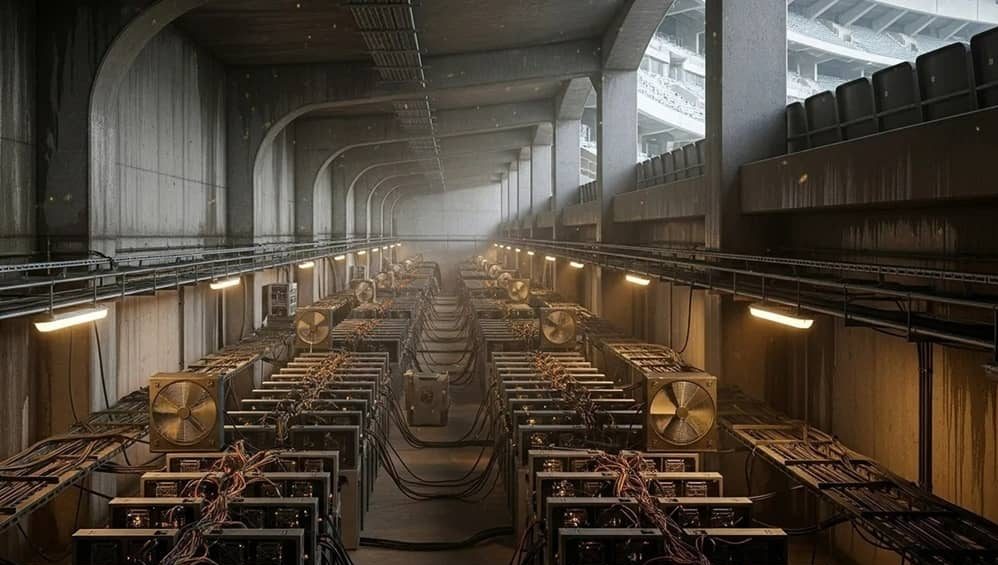
The discovery of a large-scale cryptocurrency mining operation hidden beneath a 16-hectare state-owned sports stadium in Ahvaz has ignited public outrage, highlighting both systemic corruption and the misuse of public resources by regime-linked officials amid nationwide power shortages.
According to Eghtesad Online and the state-run Asr-e Iran, the illegal mining farm was located in tunnels beneath the cycling track at the Shahid Ghorbani Sports Complex and in service rooms housing lighting and electrical systems. The concealed location allowed the operation to continue undetected for over two years. Reports allege the site was directly managed by Khosro Pirhadi, head of the Khuzestan Cycling Board and former head of security for the Khuzestan provincial governor’s office.
Additional names have surfaced in the case, including Hamid Bani-Tamim, a former senior sports official in the province. Sources told Eghtesad Online that access to the tunnels was tightly controlled by cycling board staff, with entrances locked to prevent outsiders from discovering the operation.
Bitcoin Mining in #Iran, #IRGC Operations and the Power Grid Crisishttps://t.co/XlSLOyWBIO
— NCRI-FAC (@iran_policy) May 26, 2025
The revelation comes at a time when Iran is facing its worst summer power crisis in years. As Gadget News noted, the country is experiencing prolonged daily blackouts and severe electricity shortages. While regime officials routinely blame “public overconsumption” for outages, the Ahvaz case has prompted questions about the unmonitored use of subsidized electricity by powerful insiders.
The Gadget News report described how the mining farm was equipped with an industrial cooling system, a dedicated water tank, and specialized internet antennas — all installed within the stadium grounds to support continuous crypto mining. Such infrastructure, critics say, could not have been set up without high-level protection and complicity.
In response to the public uproar, the Khuzestan Provincial Department of Sports and Youth issued a statement claiming that “the discovery, reporting, and sealing of the illegal operation were carried out in cooperation with the head of the Cycling Board” and that the matter has been referred to “relevant judicial authorities.” The statement insisted that normal sporting activities at the complex will continue.
Delving into Iran’s #Corruption Chronicles – Part 1https://t.co/3uRDWFAqxD
— NCRI-FAC (@iran_policy) December 21, 2023
However, as the state-run ILNA News Agency admits, competing accounts have emerged in the media, with some suggesting the official narrative is designed to downplay the scale of the operation and shield higher-ranking figures from accountability. The outlet noted that the scandal has struck a nerve with the public: “While people endure sudden blackouts, dead air conditioners, and unbearable summer heat, some individuals appear to have enough influence to tap into subsidized electricity and public facilities for personal enrichment.”
Observers say the case underscores a deep and growing disparity between how the regime polices ordinary citizens and how it shields those with political connections. Unless addressed transparently, the Ahvaz crypto scandal risks becoming yet another symbol of the impunity enjoyed by Iran’s ruling elite — and of the public’s mounting resentment toward them.
For years, the regime is exploiting special state-backed privileges—particularly through IRGC-affiliated cryptocurrency mining operations—to evade international sanctions, siphoning off enormous amounts of subsidized electricity. Meanwhile, ordinary Iranians suffer under relentless droughts, scorching heat, crippling power outages, and failing infrastructure, a stark contrast that underscores the regime’s misallocation of critical resources.