

Two-minute read
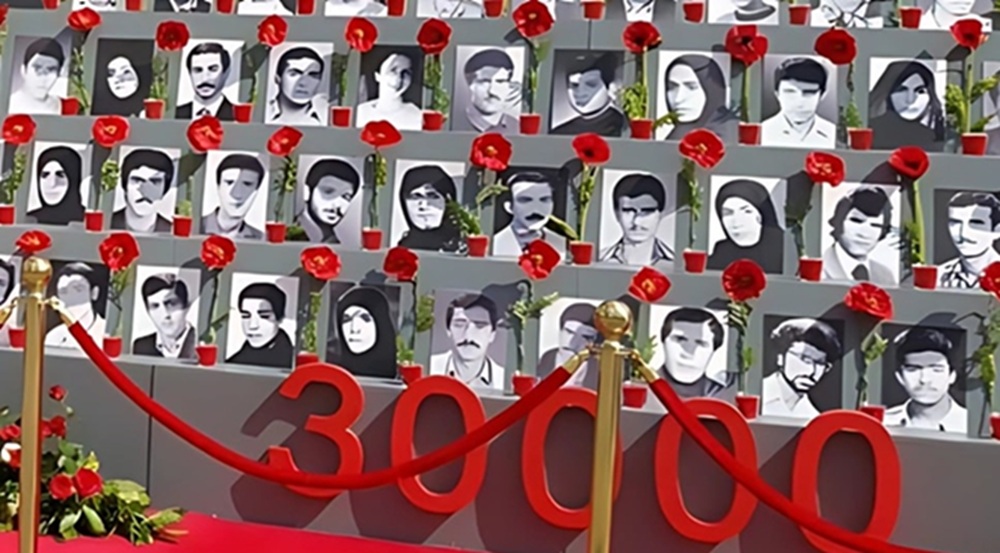
A recent article in Iran’s state-run newspaper Farhikhtegan has once again exposed the clerical regime’s violence-driven ideology and its policy of physically eliminating political opponents. The publication defended the mass executions of 1988—when more than 30,000 political prisoners, primarily members and supporters of the People’s Mojahedin Organization of Iran (PMOI/MEK), were slaughtered—as “appropriate and necessary” and even as an example of “high discretion” in dealing with dissent.
In its August 12 edition, Farhikhtegan invoked the case of political prisoner Behrouz Ehsani Eslamlou to claim that “how appropriately and with great care the execution of elements of the terrorist group of the [PMOI] in 1988 was carried out.” The publication further claimed that if the political prisoners had not been executed, “today the terror cells in the [PMOI]’s Thousand Squares project would have multiplied; history must be read from the perspective of documents.”
The paper, affiliated with senior regime figure Ali Akbar Velayati, attacks the opposition—especially the PMOI—while presenting mass executions not only as legitimate but as essential to “maintaining security.” This rhetoric underscores that the 1988 massacre was not an isolated incident but part of the regime’s ongoing strategy of organized repression.
Dr. @JavaidRehman: “The #Iranian regime has weaponized the death penalty to exterminate dissent. The international community failed to act in 1988. It must not fail again.” pic.twitter.com/KYKjxTGaL8
— NCRI-FAC (@iran_policy) August 8, 2025
International Warnings of History Repeating
At the Free Iran 2025 Summit in Italy, Professor Javaid Rehman, former UN Special Rapporteur on Human Rights in Iran (2018–2024), warned that this continued glorification of mass killings points to a real danger of history repeating itself.
Expressing solidarity with the families of recently executed political prisoners Mehdi Hassani and Behrouz Ehsani, Rehman revealed: “They had been tortured, subjected to ill-treatment including beatings and prolonged solitary confinement, and their families were threatened with harm in order to extract forced confessions. They were subjected to a completely unfair, arbitrary, summary trial that denied them access to a lawyer and were convicted by the notorious Revolutionary Court in Tehran.”
Rehman also referenced a July 7, 2025, editorial by the IRGC-linked Fars News Agency titled “Why the 1988 executions should be repeated.” The piece praised the mass killings and openly called for their repetition against current detainees, equating political dissent with a security threat punishable by execution “in the style of 1988.”
Experts Urge UN to Prevent Repeat of #Iran’s #1988Massacre Amid Surge in Executionshttps://t.co/tPxhOsHPFg
— NCRI-FAC (@iran_policy) July 24, 2025
“These state-sponsored statements present a dangerous prognosis of the regime’s intention to repeat the atrocity crimes committed against the Iranian people in 1988,” Dr. Rehman said. “There are already real fears of mass executions among political prisoners, including Saeed Masouri, who has been imprisoned for 25 years without a single day of furlough.”
According to Dr. Rehman, since its inception the Iranian regime has systematically used the death penalty and mass executions as tools of repression and fear. In his final report to the UN Human Rights Council, he categorized the wave of arbitrary and extrajudicial executions between 1979 and 1988 as “crimes against humanity” and even “genocide.”
This escalation confirms the dire warning from one of Iran's longest-serving political prisoners, Saeed Masouri, who recently warned the world that the regime is planning a repeat of the 1988 massacre, declaring: "a crime is in progress."https://t.co/ankskSBCeY
— People's Mojahedin Organization of Iran (PMOI/MEK) (@Mojahedineng) August 8, 2025
A Call for Urgent International Action
Dr. Rehman urged immediate global intervention to prevent a repeat of these atrocities: “The international community failed to act in 1988. It must not fail again. The responsibility to prevent these atrocity crimes from being repeated rests with the United Nations and its member states. An international investigative and accountability mechanism is now more important and urgent than ever.”
The Farhikhtegan article, together with similar calls from Fars News, serves as a chilling reminder that the regime’s policy of mass elimination of political opponents remains active—and that without international accountability, the crimes of 1988 could be repeated on an even larger scale.