

Two-minute read
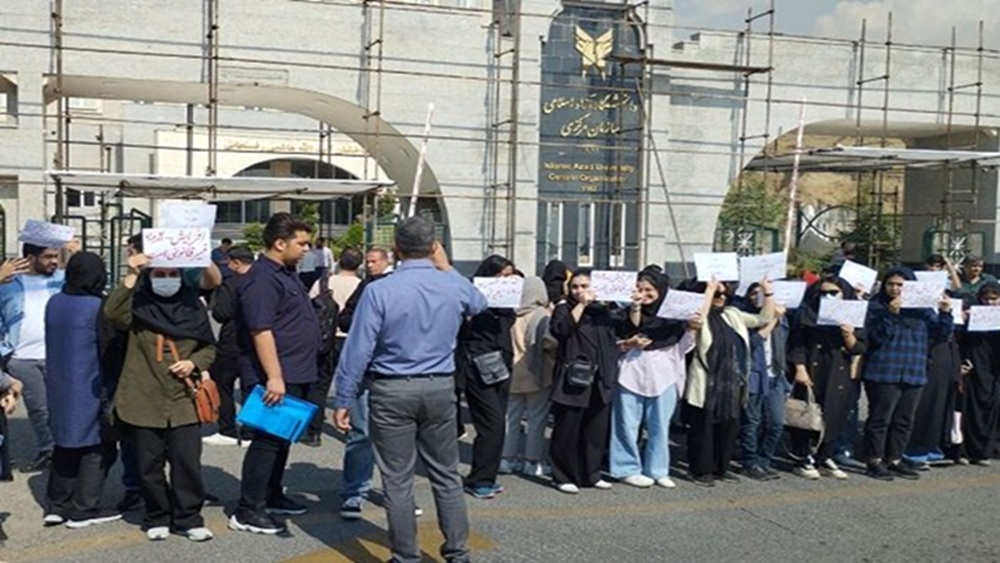
Reports from Iranian media reveal that fixed tuition fees for several majors at Islamic Azad University have skyrocketed, in some cases increasing from 2 million to nearly 12 million tomans per semester. This surge, coming as many families already struggle with record inflation and unemployment, has sparked outrage among students who see the hikes as part of the regime’s broader economic mismanagement.
Despite the growing anger, university officials attempted to dismiss the issue as mere “claims by students.” Mohammad Ghorbani Golshanabadi, the university’s spokesperson, insisted that fixed tuition had not changed for students within the standard timeframe, admitting only to a 23 percent increase in “variable tuition.” Yet, students across campuses dispute this, describing hikes between 50 and 100 percent—and in some cases far higher.
Students Speak Out Against the Injustice
Accounts from students paint a starkly different picture from the regime’s narrative. One humanities student explained: “Last semester my fixed tuition was about 2 million tomans. Now it has jumped to nearly 11.7 million. How are we supposed to continue our studies under these conditions?”
More Than 32,000 Associate Professors Dismissed from #Iran’s Azad Universityhttps://t.co/HpziEJai1B
— NCRI-FAC (@iran_policy) October 23, 2023
Another student recounted: “I’ve been studying for six or seven semesters. Now the tuition has been raised nearly fivefold. Continuing my education has become impossible.”
Such testimonies highlight the growing divide between the regime’s official denials and the crushing reality facing students.
Contradictory Statements from Officials
Even within the regime’s own institutions, contradictions abound. While the university spokesperson downplayed the issue, the Minister of Science admitted in late 2024 that tuition had tripled, calling it a “shock” to families. A member of the regime’s parliament also warned that students in medical fields were increasingly falling into debt because of the exorbitant costs.
Despite these acknowledgments, the regime has failed to take corrective action, leaving students and their families to bear the financial burden.
#Iran: Demonstration and Protest of Azad University Students for the Second Consecutive Dayhttps://t.co/PSPr63eCVJ #IranProtests pic.twitter.com/fN0h5ICrdu
— NCRI-FAC (@iran_policy) December 30, 2018
Education as a Privilege, not a Right
The tuition crisis at Islamic Azad University reflects the regime’s broader pattern: reducing access to basic rights, including education, healthcare, and housing, while prioritizing resources for repression, corruption, and regional adventurism. Students from lower- and middle-income families are being systematically excluded from higher education, transforming it into a privilege accessible only to the wealthy or those connected to the ruling elite.
Protests last year already saw students rally against tuition hikes. With the new academic year, anger is once again mounting, and many believe that education is becoming yet another front in the struggle against the regime’s unjust policies.
University Students in #Iran Capital Protest Restrictions on Women's Clothing
Iranian university students held a defiant protest against the regime on Monday in #Tehran over restrictions on what female students are allowed to wear on campus.https://t.co/Q32CdwrsHx #IranProtests pic.twitter.com/ph4N77SyLk— NCRI-FAC (@iran_policy) May 13, 2019
A Brewing Student Crisis
The drastic rise in tuition has intensified dissatisfaction within Iran’s student population, which has historically been at the forefront of protest movements. As one student put it bluntly: “The regime is making sure only the rich can study, while the rest of us are pushed out.”
With growing frustration and deepening economic inequality, the regime’s assault on education could serve as another spark for broader unrest.