

THIS PAGE WILL BE UPDATED WITH THE LATEST NEWS
UPDATE: 7:30 AM CET
Iran’s Resistance Units Defy Execution Wave, Vowing to End All Forms of Dictatorship
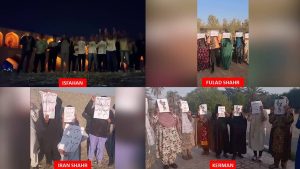
Despite an unprecedented wave of state-sanctioned violence by the Iranian regime, PMOI Resistance Units in Zahedan are escalating their activities across the country. The brave youths took to the streets on October 24, sending a clear and defiant message that repression will only be met with more organized resistance. Their actions prove that the Iranian people’s quest for a democratic republic cannot be silenced by the gallows.
On October 24 in Zahedan, the capital of Sistan and Baluchestan province, Resistance Units held placards with powerful slogans that directly confront the regime’s machinery of death and intimidation. Their messages underscore a profound courage in the face of overwhelming brutality, turning the regime’s weapons of fear back on itself. Placards boldly declared, “The real answer to execution and repression is not compromise or fear, but uprising and resistance,” and “The mullahs tried to define our fate with hangings, but we rose up in rebellion.” These actions are not just symbolic; they are a direct challenge to the regime’s authority and a beacon of hope for a population suffocating under tyranny.
Hundreds Condemn Iran’s Brutal Rise in Executions

Hundreds of Iranian activists condemned Tehran’s alarming use of the death penalty – after a coalition of dissident groups reported the hangings of 280 people, including children, in October alone.
The record number is twice as many as the same period in 2024, and a death toll not seen in three decades. Among those hanged in October were 36 women and six children, the National Council of Resistance of Iran noted — and in the seven months from March to October of this year, a record 1,135 people were executed by Tehran.
The Islamic Republic is “turning executions into a tool of control and repression with unprecedented intensity,” read a statement released by 800 Iranian activists Friday, including political prisoners.
Iran: Political Prisoner Shahin Zoughitabar Sends Message from Evin Prison

Exclusive — Simay Azadi: Shahin Zoughitabar, a political prisoner re-arrested by IRGC Intelligence on July 23, 2025, has sent a message from Evin Prison calling on the Iranian people and the international community to reject the regime’s disinformation and to support the organized Resistance. In a statement dated July 28, 2025, Zoughitabar describes new interrogation and prison tactics by the regime and reiterates his support for Mrs. Maryam Rajavi’s “Third Option” as the path to liberation.
Zahra Shahbaz Tabari, Electrical Engineer, 67, Sentenced to Death
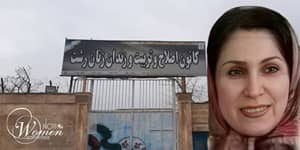
In a continuation of escalating crackdown on political dissent in Iran, Zahra Shahbaz Tabari, a 67-year-old political prisoner, has been sentenced to death by Branch 1 of the Revolutionary Court of Rasht. The regime’s judiciary has accused her of “supporting the People’s Mojahedin Organization of Iran (PMOI).”
According to Zahra Shahbaz Tabari’s family, her trial was held via video conference last week and lasted less than ten minutes. The court-appointed public defender reportedly offered no meaningful defense, and the death sentence was issued during the same brief session. Her family has condemned the proceeding as a “pre-determined show trial” devoid of any element of due process or fairness.
Iran’s Political Prisoners Facing Deliberate Medical Neglect in Prison
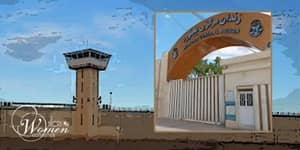
Despite repeated warnings from human rights organizations, new reports from inside Iran reveal an alarming deterioration in the health of several political prisoners. These cases expose what activists describe as a deliberate and systematic policy by the Iranian regime to pressure, torture, and slowly kill political opponents through medical neglect.
Mohammad Ali Akbari Monfared, a 58-year-old political prisoner in Fashafouyeh Prison, is paralyzed in both legs and suffers from advanced diabetes, heart disease, brain complications, and prostate problems. Recently, due to a severe blood clot and infection, he underwent surgery, and doctors warned that his leg must be amputated to prevent the infection from spreading.
Iran’s Banking System on the Brink: Collapse of Bank Ayandeh Exposes Deep Financial Crisis
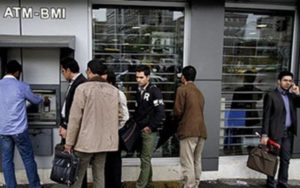
The official dissolution of Bank Ayandeh by Iran’s Central Bank marks one of the most serious financial failures in the regime’s recent history. As authorities begin transferring 2.5 quadrillion rials (250 trillion tomans) of deposits and liabilities from Ayandeh to Bank Melli, reports suggest that at least five other major banks—Sepah, Sarmayeh, Day, Iran Zamin, and Mellat—are also facing severe financial imbalance. According to official data, Bank Ayandeh owed the Central Bank more than 5 quadrillion tomans, with its capital adequacy ratio plunging to an extraordinary –600 percent—a figure that indicates total insolvency.
Farshad Mohammadpour, the Central Bank’s deputy for supervision, justified the move by stating that the bank’s imbalance was “irreparable” and that Ayandeh had created a “false and dangerous image of the entire banking system.”
Critical Air Pollution in Iran’s Major Cities
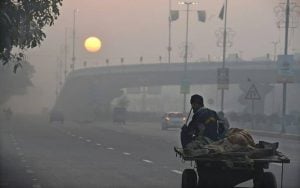
The air in several cities of Khuzestan Province has reached the red alert level, meaning it is unhealthy for all groups. In Isfahan and Mashhad, air quality is reported to be at an orange level, unhealthy for sensitive groups.
According to air quality monitoring data on Friday, October 24, the city of Hoveyzeh, with an air quality index (AQI) of 158, is classified as “unhealthy for all groups” and is currently the most polluted location in Khuzestan Province.
The Air Quality Index (AQI) is divided into five main categories: 0–50 represents clean air, 51–100 indicates moderate air quality, 101–150 is unhealthy for sensitive groups, 151–200 is unhealthy for everyone, 201–300 is very unhealthy, and 301–500 represents hazardous air conditions.
Water Inflow into Dams in 21 Iranian Provinces Down 39% Compared to Last Year

According to the latest data on Iran’s dam reservoirs, the volume of water inflow into dams from September 23 (the start of the current water year) to October 18 has decreased by 39%, and rainfall in 21 provinces has been recorded as zero. Currently, Iran’s dams are on average only 34% full.
The state-run ILNA news agency reported on Friday, October 24, that the total volume of water entering Iran’s dams from September 23 to October 18 was 780 million cubic meters — a 39% drop compared to 1.29 billion cubic meters during the same period last year.
Water discharge has also decreased by 29% due to management restrictions.
Iran: Report Reveals High Rate of Depression Among Students

Media outlets in Iran are reporting on what they describe as a major crisis in the country’s education system. The reports state that the school system under the Iranian regime is exposing millions of children and adolescents to systematic depression, and they link this to tragic deaths of students due to strokes and suicides.
According to a report published in the government-daily Jahan Sanat on 22 October 2025 (30 Mehr 1404), there are approximately 16.5 million students in the country. The report states that “according to government statistics … close to 43 percent of this number suffer from depression … 19 percent mild depression, 30 percent moderate and 16 percent of the total student population suffer from severe depression.” The report emphasises that the primary causes of this situation are “academic pressure, physical punishment, family problems and shortage of counsellors in schools.”
Melbourne Exhibition Condemns Executions in Iran and Advocates for Political Prisoners

Melbourne, Australia – October 24, 2025 – Supporters of the People’s Mojahedin Organization of Iran (PMOI/MEK) held an exhibition to protest the Iranian regime’s increasing use of the death penalty, particularly against political prisoners. The event also expressed solidarity with the “No to Execution” campaign.