

THIS PAGE WILL BE UPDATED WITH THE LATEST NEWS
UPDATE: 12:30 PM CET
An Iranian-Linked Tanker Fleet Is Operating Off the U.S. Coast Right Now

Over the past month, Windward detected an unusual concentration of tankers in and around the Caribbean Sea with elevated sanctions and compliance risk.
In Q4 2024, Windward recorded 119 area visits by vessels with similar risk profiles. In Q4 2025 to date, that number has already reached 233, a 95% increase year-over-year. The growth reflects not just higher traffic volume, but repeated regional presence by vessels carrying overlapping risk associations tied to Iran, Russia, and Venezuela.
December activity so far appears lower compared to December last year. While it’s too early to draw conclusions, this timing coincides with the U.S. seizure of the Iran-linked tanker Skipper and warrants close monitoring as the month progresses.
UPDATE: 8:30 AM CET
Iran’s Regime Mobilizes Troops Fearing Uprising Over Gasoline Prices

Following the abrupt implementation of a three-tier gasoline price hike by the government of Masoud Pezeshkian, the Iranian regime has placed its security apparatus on maximum alert. Terrified of a recurrence of the nationwide November 2019 uprising, Supreme Leader Ali Khamenei has effectively turned the capital into a military garrison. According to information obtained by the Social Headquarters of the People’s Mojahedin Organization of Iran (PMOI/MEK) inside the country, the regime has deployed tens of thousands of suppressive forces across Tehran since Saturday, December 13. The intelligence reveals a regime in a state of panic, prioritizing the suppression of its own citizens over any external threat.
The security mobilization coincides with the regime’s desperate attempt to cover a catastrophic budget deficit. As of midnight on December 13, 2025, gasoline is now rationed into three price brackets: a subsidized quota at 15,000 rials per liter, a second tier at 30,000 rials, and a punitive “free market” rate of 50,000 rials per liter.
Razieh Abbasi Hanged in Qezel Hesar Prison, Karaj
On Wednesday morning, December 17, 2025, the death sentence of female prisoner Razieh Abbasi was carried out at Qezel Hesar Prison in Karaj.
According to Hamshahri newspaper, Razieh Abbasi, 40, had been sentenced to death for allegedly murdering her husband. She had previously been held in the notorious Qarchak Prison in Varamin and was recently transferred to Qezel Hesar for execution. With the execution of Razieh Abbasi, the number of women executed in Iran in 2025 has reached 61, marking at least an 80% increase compared to 2024.
According to data recorded by the Women’s Committee of the National Council of Resistance of Iran, at least 324 women have been executed in Iran since 2007.
Many of the women executed by the Iranian regime are themselves victims of domestic violence and discriminatory family laws. A significant number have acted in self-defense.
Iran’s Livelihood Crisis: How the Regime’s Economic Failure Is Eroding Society from Within
For the overwhelming majority of Iranians, the primary demand is no longer political reform or abstract rights—it is survival. Livelihood security and the containment of runaway inflation have become the dominant public concern, far surpassing all other demands. This reality alone exposes the emptiness of claims by regime apologists who point to crowded fast-food shops or weekend traffic on the Tehran–Chalus road as proof of economic “normalcy.” Such narratives collapse under the weight of everyday experience.
This crisis is not new, but in recent years it has entered a far more dangerous phase. Conditions have deteriorated so severely that even a “simple life” has become unattainable for millions of families. In today’s Iran, a simple life no longer means modest comfort; it means cutting out travel, social gatherings, proper clothing, basic healthcare such as dental care, and any aspiration beyond sheer endurance. It means struggling to pay rent for substandard housing and consuming just enough calories to remain alive.
Blood on the Circuitry: How the Iranian Regime Weaponizes American Tech to Terrorize Ukraine

For years, the Iranian regime has refined its image as a regional provocateur. However, its involvement in the invasion of Ukraine has unmasked a far more expansive and predatory ambition. A high-stakes lawsuit filed in Texas state court now alleges that this campaign of terror is being powered by a shocking source: American-made microchips.
The legal action, brought by Watts Law Firm LLP and BakerHostetler LLP, targets industry titans Texas Instruments (TI), AMD, and Intel. The core of the allegation is as simple as it is devastating: these companies allowed their high-performance technology to flow into the hands of the Iranian regime, which then integrated them into the “kamikaze” drones currently raining fire on innocent Ukrainian civilians.
Iran’s Drug Crisis: How the Regime’s Priorities Are Collapsing the Health System

While officials in Masoud Pezeshkian’s government repeatedly cite “budget deficits” and “resource shortages,” Iran’s healthcare system is facing one of the most severe pharmaceutical crises in decades. The scale of the disaster is no longer confined to official statistics; it is visible in overcrowded pharmacies, skyrocketing prices of life-saving medicines, mass bankruptcies among drugstores, and interrupted treatments for patients with thalassemia, diabetes, cancer, and rare diseases.
Industry insiders warn that the final months of the Iranian year will be exceptionally difficult for the pharmaceutical sector. According to assessments shared by senior figures in the health economy, the current crisis is not a sudden shock but the culmination of years of structural mismanagement. Chronic shortages of working capital, delayed and distorted pricing policies, accumulated debts, and dysfunctional currency allocation mechanisms have now reached a breaking point, producing shortages described even by veteran professionals as unprecedented.
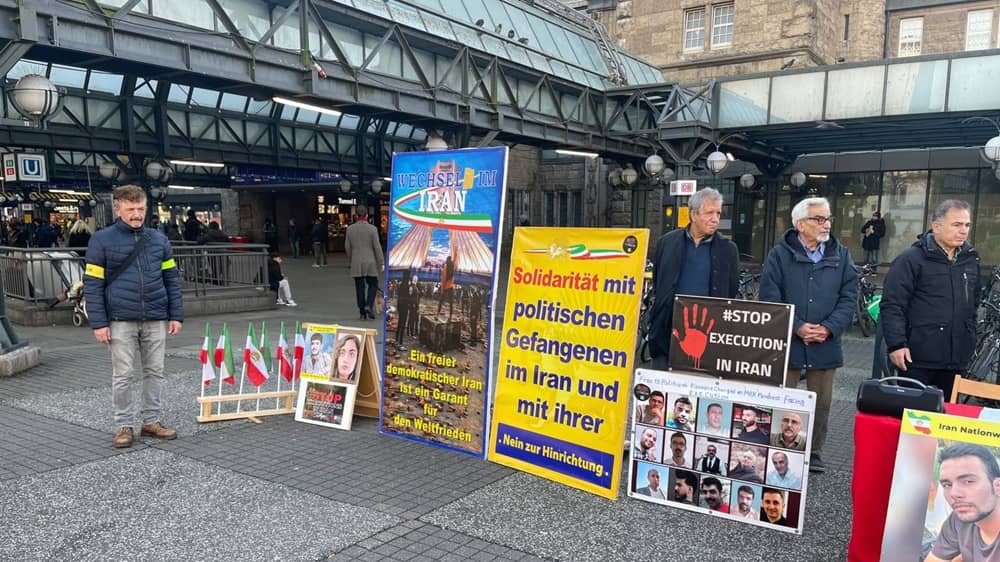
MEK Supporters in Hamburg Urge an End to Iran’s Executions and Freedom for Political Prisoners

Hamburg, Germany – December 16, 2025 — Supporters of the People’s Mojahedin Organization of Iran (PMOI/MEK) gathered in Hamburg to condemn the Iranian regime’s escalating use of the death penalty, particularly against political detainees, and joined in the nationwide “No to Execution” campaign.
Gothenburg Rally in Solidarity with the 99th Week of Iran’s ‘No to Execution Tuesdays’ Campaign

Gothenburg, Sweden – December 16, 2025 – Supporters of the People’s Mojahedin Organization of Iran (PMOI/MEK) gathered in Gothenburg to mark the 64th consecutive week of local participation in the global “No to Execution Tuesdays” campaign. The movement protests the Iranian regime’s escalating wave of executions and systematic repression.