

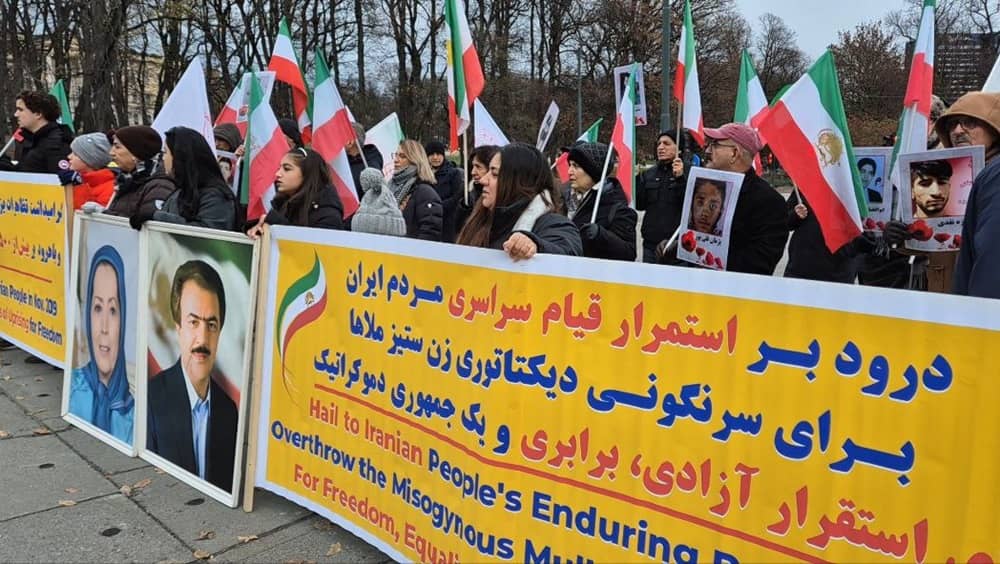
THIS PAGE WILL BE UPDATED WITH THE LATEST NEWS
UPDATE: 08:00 PM CET
Iran Killing Spree Continues as Regime Sets New Record For 2025 Executions, Dissident Group Says

As the United Nations adopted a resolution condemning Iran for its execution spree “in the strongest terms,” a leading dissident group released a report accusing Tehran of putting 2,013 Iranians to death under President Masoud Pezeshkian between Jan. 1 and Dec. 15 of this year.
The Mujahedin-e Khalq (MEK) report says this more than doubles the total of 975 executions that the United Nations Deputy High Commissioner for Human Rights counted in 2024. The U.N. noted that the 2024 figure was the highest recorded since 2015. The group counted a similar total of 1,001 executions in 2024.
According to MEK documents provided to Fox News Digital, a free-falling Iranian currency, nationwide protests, factional power struggles, “snapback” U.N. sanctions and fractures among leaders are stoking the increase in executions. The MEK says that this year’s execution total is the highest recorded since the 1980s.
UPDATE: 06:00 PM CET
Final Round for an Iranian Boxer?

Hope is fading for Mohammad Javad Vafaei-Sani. Sentenced to death by the Iranian regime, the young boxer now faces the risk of an “imminent” execution after the Supreme Court in his country rejected his request for a retrial.
Vafaei-Sani was arrested in 2020 for taking part in anti-government protests in 2019, sparked by a rise in fuel prices. Accused of being a member of the People’s Mojahedin (MEK), an opposition group banned in Iran, he was sentenced to death for “corruption on earth,” the most serious charge under Iran’s Islamic Penal Code. Since then, his case has followed a roller-coaster course of justice: his death sentence was overturned twice, only to be reinstated.
Human rights organizations and the Iranian opposition in exile have been following the case for five years. This week, the Norwegian NGO Iran Human Rights (IHR) stated that the boxer faces an “imminent” execution and that he was “tortured to extract forced confessions.”
UPDATE: 03:30 PM CET
Iran Seen Working on Nuclear Site Hit by US

New satellite imagery shows recent activity at a uranium enrichment facility in Iran that was damaged during June’s 12-day war with Israel when U.S. and Israeli airstrikes targeted several of the country’s nuclear sites.
The image raises concerns that Tehran may be working to restore or recover aspects of its nuclear program, according to the U.S.-based Institute for Science and International Security (ISIS). The image suggests Iran is taking steps to shield and access the damaged site, highlighting continued uncertainty over its nuclear intentions.
The Pilot Fuel Enrichment Plant (PFEP) at Natanz is a key site within Iran’s nuclear complex, historically used for advanced enrichment research and development. Although the facility “likely held several kilograms of highly enriched uranium,” ISIS stressed that such material is “not negligible” in the broader context of Iran’s nuclear capabilities.
UPDATE: 02:00 PM CET
Treasury Increases Pressure on Iran’s Sanctions-Evading Shadow Fleet
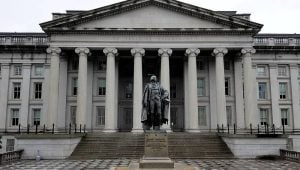
WASHINGTON—Today, the U.S. Department of the Treasury’s Office of Foreign Assets Control (OFAC) is placing further pressure on the Iranian shadow fleet, which exports Iranian petroleum and petroleum products through deceptive shipping practices. OFAC is targeting 29 shadow fleet vessels and their respective management firms that have transported hundreds of millions of dollars’ worth of Iranian petroleum products. Today’s action also targets Hatem Elsaid Farid Ibrahim Sakr, an Egyptian businessman whose companies are associated with seven of the 29 shadow fleet vessels included in this action, as well as multiple shipping companies.
UPDATE: 01:00 PM CET
Iranian Boxing Champion at Imminent Risk of Execution as Retrial Request Rejected

A boxing champion in prison in Iran is thought to be at imminent risk of execution after his request for a retrial was rejected by the country’s supreme court. Mohammad Javad Vafaei Sani, 30, from Mashhad in north-east Iran was arrested in 2020 for taking part in nationwide democracy protests in 2019 and accused of supporting an opposition group, the People’s Mojahedin Organization of Iran (MEK). He has spent five years in prison, where he has been tortured and put in solitary confinement.
His request for a retrial was turned down on 15 December. On the same day, he was unexpectedly granted a visit from his mother, a move that campaigners believe could signal that he will soon be executed. She was told in a phone call from the prison that his case had been forwarded to the department for the implementation of sentences in Mashhad.
UPDATE: 08:00 AM CET
How Iran’s Regime Is Poisoning 59,000 Iranians A Year by Burning Hyper-Toxic Fuel

As of December 18, 2025, the people of Iran are facing a bitter winter. While cold weather, the flu, and severe economic hardship have already made life difficult, the clerical regime is subjecting the population to the hidden crime of burning Mazut. Mazut is the heaviest, dirtiest residue of crude oil, full of sulfur and heavy metals. It is a fuel the world abandoned years ago, yet the mullahs inject it directly into the people’s lungs. While the regime’s president Masoud Pezeshkian has been in office for over a year, his administration has failed to curb a pollution crisis that is literally choking the nation. According to the regime’s own Ministry of Health, 59,000 Iranians fall victim to air pollution every year.
Maryam Akbari Monfared Denied Medical Care, Warning of Possible Knee Surgery

Maryam Akbari Monfared, a political prisoner held in Qarchak Prison, continues to be denied consistent access to specialized medical treatment, a delay that could lead to a serious deterioration of her physical condition and the need for knee surgery. Over the past week, she has been transferred several times to medical facilities outside the prison to receive physiotherapy and chiropractic care. However, prison authorities have conditioned the continuation of her treatment on referrals to state-run medical centers, facilities which lack the capacity to provide the specialized care she requires. Her request for access to an appropriate treatment center on her own expense has so far gone unanswered.
Iran: Rising Gasoline Prices and the Unprecedented Collapse of the Rial

Iran’s rial continues to fall and has reached the lowest level in its historical record. As a result, the U.S. dollar exchange rate in the open market has surpassed 1.32 million rials. This sharp decline comes less than two weeks after the rial crossed the 1.2 million thresholds against the dollar for the first time, a trend that has accelerated under the pressure of sanctions and escalating regional tensions. In a report, the Associated Press news agency addressed the unprecedented decline in the value of Iran’s national currency, writing that currency traders in Tehran on Thursday, December 18, quoted rates higher than 1,320,000 rials per dollar, indicating the rapid pace of the rial’s depreciation since December 3, the date when it reached a historic record.
Engineered Crises and a Broken Future: How Iran’s Regime Destroys Knowledge and Human Capital

From mass graduate unemployment to rising addiction among students, official data expose a deliberate strategy of social exhaustion under clerical rule. The Iranian regime is no longer governing; it is merely surviving—encircled by self-made crises and sustained through daily attrition. Reports, statistics, and even admissions by regime-affiliated experts confirm a consistent tactic: bend society under manufactured pressures until it loses the capacity to stand. The destructive consequences of these engineered crises have gone far beyond temporary hardship, eroding economic infrastructure and systematically dismantling Iran’s human capital. A striking illustration appeared in Jahan-e Sanat on December 16, 2025, documenting the growing futility of education and expertise under the clerical regime.