

THIS PAGE WILL BE UPDATED WITH THE LATEST NEWS
UPDATE: 06:30 PM CEST
UK Sanctions Iranian Targets in Response to National Security Threats

Organisations and individuals enabling hostile Iranian activity are amongst those being targeted under new sanctions announced by the Foreign Secretary, Yvette Cooper, today (11 May). The measures come in response to Iranian action against global security and its use of criminal gangs to carry out threats overseas. The measures target illicit finance flows which enable the Iranian regime to pursue destabilising action across the Middle East, including their blockade of the Strait of Hormuz – contravening international law and disrupting the global economy – and military strikes against regional and Gulf allies.
Today’s sanctions also target criminal proxies who act on behalf of the Iranian state to threaten the US and Europe by preventing criminal gangs from travelling to the UK or accessing assets which finance their illegal activity.
UPDATE: 11:30 AM CEST
Repression and the Redistribution of Legitimacy within the Iranian Opposition

Repression and the redistribution of legitimacy within the Iranian opposition constitute a complex phenomenon that goes beyond the mere physical elimination of political actors. This dynamic redefines power relations within the opposition, elevating those who face high levels of sacrifice in a context marked by violence and political fragility.
At first glance, recent developments within the Iranian opposition may appear fragmented: on the one hand, the decline in the visibility of Reza Pahlavi in some international media, accompanied by a growing number of critical comments; on the other, the growing media attention towards the People’s Mujahideen Organisation of Iran, in a context marked by intensified repression and the execution of its members within Iran. However, this convergence is no coincidence. It can be better understood through the combined perspective of political sociology and media dynamics.
UPDATE: 08:00 AM CEST
Executed PMOI Member Babak Alipour’s Letter Reveals the Unbreakable Spirit of Iran’s Resistance
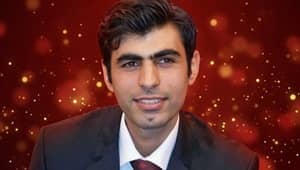
On the morning of March 31, 2026, the Iranian regime executed Babak Alipour, a 34-year-old law graduate and a devoted member of the People’s Mojahedin Organization of Iran (PMOI/MEK).
His execution, alongside his cellmate Pouya Ghobadi, came just 24 hours after the regime hanged two other PMOI political prisoners, Mohammad Taghavi and Ali Akbar (Shahrokh) Daneshvarkar. In the days that followed, the regime executed four more PMOI members, Vahid Bani Amerian, Abolhassan Montazer, Hamed Validi, and Mohammad (Nima) Massoum Shahi.
Amidst this bloody wave of executions—driven by the clerical regime’s profound fear of an impending uprising under the fog of war—Alipour’s letter from December 2025 serve as a profound testament to the unbreakable will of the Iranian youth and their commitment to a free Iran.
PMOI/MEK Resistance Units Strike Back Against Regime’s Execution Spree
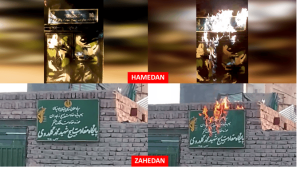
The clerical regime in Iran has intensified its brutal wave of executions in a desperate bid to maintain control, but the Iranian people and their Resistance are refusing to back down. On May 7, PMOI/MEK Resistance Units carried out a series of daring operations across the country, targeting the regime’s centers and symbols of repression. These coordinated strikes were launched in direct response to the recent executions of political prisoners and protesters arrested during the massive nationwide uprising of December 2025 to January 2026, a historic revolt that brought the clerical establishment to its knees.
The immediate catalyst for the Resistance Units’ latest campaign was the execution of three courageous young men—Mehdi Rasouli, Mohammadreza Miri, and Ebrahim Dowlatabadi—in Mashhad.
On May 4, the regime officially announced their hangings. According to the judiciary’s news agency, Mizan, these youths were accused of “leading and directing rioters” during the recent nationwide uprising. Mizan reported that Rasouli and Miri had a direct role in eliminating a Basij paramilitary member, Hamidreza Yousefinejad, while Dowlatabadi was labeled a main leader of unrest in Mashhad’s Tabarsi district.
Iran Internet Blackout Passes 1,728 Hours Amid Growing Digital Restrictions
Simay Azadi – As Iran’s nationwide internet disruption entered its 1,728 hour on Sunday, new reports indicated that authorities continue to impose one of the longest and most extensive internet restrictions ever recorded in the country.
According to data published by NetBlocks, the large-scale disruption has severely limited access to the global internet across Iran, deepening concerns over digital repression and communication isolation.
📉 Metrics show the #Iran internet blackout is now in its 72nd day with connectivity flatlining after 1704 hours. The unprecedented measure is well into its third month with no indication of a wider restoration as authorities bar the general public from international access. pic.twitter.com/eg7Qc51qBp
— NetBlocks (@netblocks) May 10, 2026
NetBlocks stated that unrestricted internet access during times of crisis is a vital necessity, warning that shutdowns disproportionately harm vulnerable groups, including people with disabilities, students, small businesses, and ordinary citizens.
Iran Drug Crisis Deepens as Medicine Prices Surge Up to 300 Percent

Simay Azadi – Iran’s state-run Etemad newspaper has reported that the country’s medicine crisis has sharply worsened following the recent war and amid what it described as a “fragile ceasefire,” with some drug prices increasing between 30 and 300 percent.
According to the report, officials from Iran’s Pharmacists Association said declining foreign currency reserves and reduced government ability to subsidize medicine production and imports have triggered severe shortages and soaring prices.
Etemad quoted a cancer patient identified as “Azar M.” as saying: “Before the war, I could obtain this medication with insurance support for less than one million tomans. Now, since the outbreak of the war, I have to buy each dose of Xgeva at the non-subsidized price of 30 million tomans.”
January 2026 Protesters Remain in Arbitrary Detention Without Due Process

More than three months after the January 2026 Protests, a wave of Iranian citizens remains trapped in a judicial “black hole,” held in prolonged detention without clear charges or access to due process. What began as a sweeping crackdown has evolved into a strategic campaign of legal attrition, as authorities keep protesters in a state of agonizing uncertainty to stifle the embers of nationwide unrest. The situation is dire in Mashhad, where women and young activists have been transferred to the notorious Vakilabad Prison. Many have spent months in pre-trial limbo, facing the shadow of draconian charges such as Moharebeh (“Enmity against God”), a capital offense that carries the threat of the death penalty. These arbitrary detentions are a form of “judicial hostage-taking,” designed to intimidate families and paralyze a society still reeling from the January uprising.
The Commercial Complex Death Trap: When Corruption and Rente Burn Iranian Women to Ashes
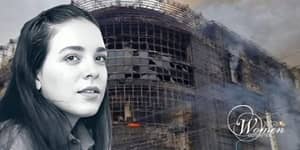
On the evening of Tuesday, May 5, 2026, the Arghavan commercialcomplex in Shahriar County, west of Tehran, became a death trap for dozens of citizens who found themselves with no escape amidst flames and thick smoke. In the heart of this tragedy, the deaths of at least four women once again pulled back the curtain on a bitter reality: under the misogynistic rule of the clerics, the security and lives of women hold the lowest value compared to the profiteering of rent-seeking gangs.
Zahra Farahmand (40), Bahar Mehdipour (26), Golnoosh Baharlou (29), and Shokoufeh Hassanvand (40)—these are not just names of fire victims; they are living witnesses to a structure where “regime survival” and “official profiteering” take absolute priority over the “human right to life.” These women were victims of oversight bodies that had long ago buried their safety under piles of bribes and negligence.
Iran Regime’s Execution Machine Fuels Defiance Instead of Fear

The Iranian regime has long relied on fear as its primary instrument of survival. Through mass surveillance, an expanding security apparatus, public executions, and relentless intimidation, Tehran believes it can silence dissent and extinguish the growing flames of unrest across the country. Yet recent events suggest the opposite may be occurring: every execution appears to deepen public anger, and every act of repression seems to generate new waves of resistance.
Authorities have flooded cities with security forces, intelligence agents, and surveillance cameras. Major intersections are increasingly connected to centralized monitoring systems designed to identify and suppress potential protests before they emerge. At the same time, executions continue at an alarming pace, with political prisoners, dissidents, and marginalized communities facing growing pressure from the judiciary and security services.
However, rather than creating stability, these measures appear to be intensifying anti-regime sentiment.
Iran’s Regime Faces a Crisis No Amount of Repression Can Resolve
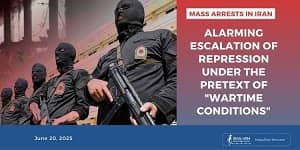
The future of Iran’s regime is increasingly being shaped not by foreign wars or external pressure alone, but by the intensifying confrontation between the regime and its own society. Despite repeated attempts to portray outside enemies as the primary threat, the clerical establishment’s deepest fear remains internal unrest: organized resistance, nationwide protests, and a population pushed to the edge by economic collapse and political repression.
For decades, Tehran has relied on a combination of ideology, security control, and coercion to maintain power. Yet the accumulation of crises now facing the country has exposed growing vulnerabilities within the system. Inflation, unemployment, political fragmentation, international isolation, and recurring waves of public anger are converging in ways that many observers believe threaten the regime’s long-term stability.
At the same time, the regime’s response has remained largely unchanged: more repression, broader surveillance, harsher punishments, and increased militarization of public space.
Iran’s Uprisings Have Redefined the Path to Change
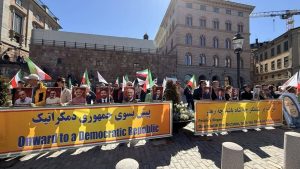
Over the past three decades, Iran has witnessed at least six major nationwide uprisings, each leaving behind not only scars of repression but also deeper political conclusions within society. From student protests in 1999 to the protests of 2009, and from the nationwide unrest of 2017, 2019, 2022 and 2026 to more recent waves of resistance, a significant portion of Iranian society — particularly younger generations — appears to have reached a decisive reassessment of the country’s political future.
These uprisings have transformed Iran’s political landscape into a testing ground for competing strategies of change. Reformism, foreign dependence, passive opposition, and spontaneous protest movements have all, in different ways, been put before public judgment. The accumulated experience of repeated confrontations with the ruling establishment has led many activists and politically engaged citizens to conclude that some paths have failed fundamentally, while others continue to gain traction.
One of the clearest outcomes of these decades of unrest is the widespread erosion of belief in the possibility of reforming the system of the Velayat-e Faghih from within. Repeated cycles of elections, promises of moderation, and factional rivalries inside the establishment have consistently ended with intensified repression, tighter political control, and broader disillusionment.
The Shadow of Iranian Regime Assassination Squads in Germany
As political and security tensions rise across Europe, German security officials have warned about an escalating security threat in the country. Germany’s Interior Ministry announced that the country’s intelligence agencies have received specific signs and information regarding the possible planning of terrorist operations by the Iranian regime and its affiliated forces. This warning comes as the Iranian regime’s name has repeatedly surfaced in recent years in cases involving the assassination of political opponents and the activities of proxy networks in Europe.
Elena Singer, spokesperson for Germany’s Interior Ministry, said during an emergency press conference that “the country is currently facing a high-threat situation.” She stated that German security and intelligence agencies are working around the clock to review and monitor information related to this security threat. According to her, the intelligence gathered indicates that the danger of terrorist operations is not limited to one specific target and involves several groups and centers.
Tehran Responds to U.S. Proposal After Trump’s Threat
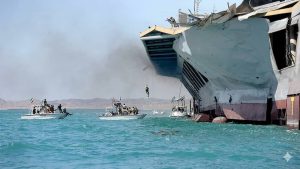
The state-run IRNA news agency reported on Sunday, May 10, that the Iranian regime had sent its response to the latest U.S. proposal aimed at reaching an agreement and ending the war to Washington through Pakistan, acting as a mediator in the negotiations.
Without providing details of the response, IRNA wrote that the negotiations at the current stage are focused on ending the war in the region. This comes as U.S. officials in recent days had repeatedly warned that if the talks fail, they will consider other options.
U.S. President Donald Trump said on Friday that Washington would likely receive Tehran’s response by that evening. Speaking to reporters at the White House, he warned that if something positive does not happen from the Iranian regime, America may once again carry out the freedom project.
Trump also stressed last week that the United States would not allow the Iranian regime to obtain nuclear capability and would take Iran’s enriched uranium. At the same time, U.S. Secretary of State Marco Rubio expressed hope that Tehran’s response would pave the way for serious negotiations.
375% Increase in Food Prices in Iran

State-run media outlets reported on Saturday, May 9, a new wave of price increases for essential goods and basic necessities; a wave affecting bread, sugar, oil, rice, chicken, and eggs, further intensifying economic pressure on Iranian households.
The state-run Etemad newspaper, in a report on rising bread prices, wrote that increased production costs—from insurance and workers’ wages to energy, yeast, and rent—have led to the implementation of new bread prices. Based on the new rates, the price of lavash bread has reached 20,000 rials, sangak bread 80,000 rials, plain barbari bread 165,000 rials, and taftoon and local bread 350,000 rials.
At the same time, sugar prices have also increased. The state-run IRNA news agency, quoting the deputy minister of agriculture of the Iranian regime, stated that rising production costs in the new year are the main reason for the price hikes. Under the new rates, each kilogram of bulk sugar at the factory gate has been set at 950,000 rials, while a 900-gram package of sugar is priced at 1.25 million rials.
New Investigation Exposes the Profitable Network Behind Iran’s Internet Blackouts

A new investigation alleges that Iran’s prolonged internet shutdowns have evolved into a profitable system of privileged access, black-market connectivity, and digital inequality.
The profitable network behind Iran’s internet blackouts is becoming harder to ignore. As millions of Iranians struggle with one of the longest internet disruptions in modern history, new reporting by investigative journalist Yashar Soltani suggests the restrictions may have created something far larger than a censorship system: a lucrative access economy reserved for insiders, connected institutions, and those able to pay for unrestricted connectivity.
According to data published by NetBlocks, Iran has experienced one of the longest large-scale internet disruptions in modern history, with major international connectivity problems lasting between 68 and 70 days through early 2026.
MEK Supporters Rally in Stockholm, Condemn Executions and Urge Action Against Iranian Regime
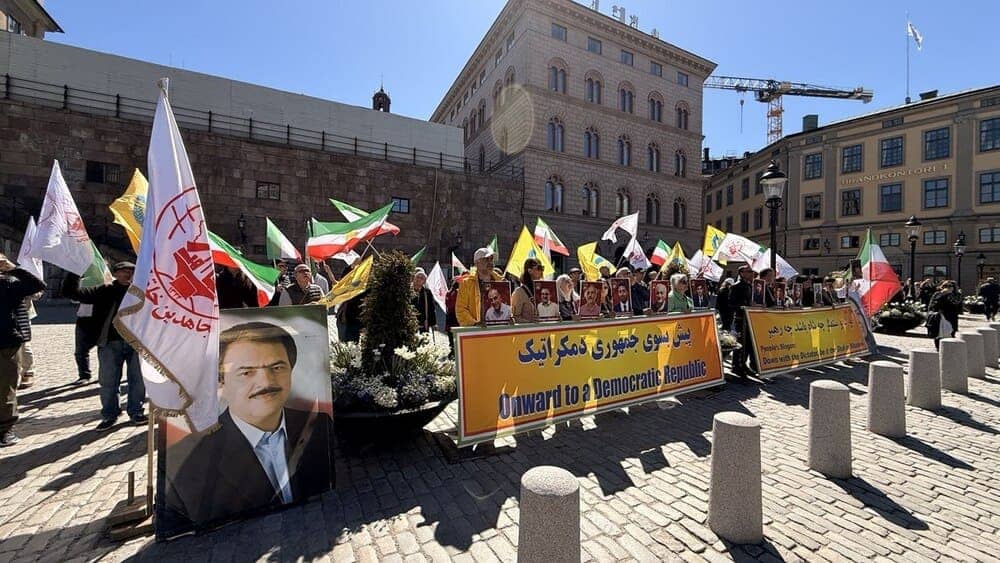
Stockholm, Sweden – May 9, 2026: Supporters of the People’s Mojahedin Organization of Iran (PMOI/MEK) rallied outside Sweden’s Parliament to protest the execution of political prisoners in Iran, including PMOI members and protesters arrested during the January 2026 uprising.

Protesters called on the Swedish government to take decisive action against the Iranian regime over its criminal executions and terrorist activities, including closing the regime’s embassy in Stockholm, which they described as a center of espionage and terrorism. They also demanded the immediate and unconditional release of all political prisoners in Iran.
Rally in Gothenburg: MEK Supporters Denounce Executions, Call for a Democratic Republic in Iran
Gothenburg, Sweden — May 9, 2026 — Supporters of the People’s Mojahedin Organization of Iran (PMOI/MEK) rallied to protest the execution of political prisoners in Iran, including PMOI members and protesters arrested during the January 2026 uprising.

Protesters called on the Swedish government to take decisive action against the Iranian regime over its criminal executions and terrorist activities, including closing the regime’s embassy in Stockholm, which they described as a center of espionage and terrorism. They also demanded the immediate and unconditional release of all political prisoners in Iran.
MEK Supporters in Kiel, Germany Condemn Executions, Call for a Democratic Republic in Iran
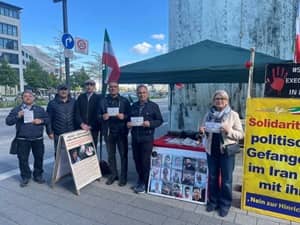
Kiel, Germany – May 9, 2026: Supporters of the People’s Mojahedin Organization of Iran (PMOI/MEK) held a book stall to protest the Iranian regime’s escalating executions of political prisoners and protesters. The event expressed solidarity with the nationwide “No to Execution” campaign and called for urgent international action against the mullahs’ regime. The participants also called for the immediate release of all political prisoners.
The supporters backed the NCRI President-elect Maryam Rajavi’s “No to Executions” campaign and urged the international community to hold the Iranian regime accountable for its human rights violations.
Participants emphasized the Iranian people’s demand for freedom and democracy under the slogan: “No to Shah, No to Mullahs, Yes to a Democratic Secular Republic.” The gathering rejected both the former monarchical dictatorship and the current theocratic regime, while advocating the establishment of a secular and democratic republic in Iran.