

THIS PAGE WILL BE UPDATED WITH THE LATEST NEWS
UPDATE: 01:00 PM CET
Iran Building Missiles ‘Designed Solely to Strike America’

Iran is producing missiles designed to strike America, Marco Rubio has warned. The US secretary of state said the Islamic Republic was rebuilding its nuclear programme. It was not yet enriching uranium, “but they’re trying to get to the point where they ultimately can”.
He made the comment shortly before crunch talks between Iranian and American negotiators ended with no breakthrough on Thursday night.
While the talks focused on Iran’s nuclear programme, Mr Rubio said Iran’s refusal to discuss its ballistic missile programme was a “major problem” that would have to be addressed eventually, as the missiles were “designed solely to strike America”.
UPDATE: 09:30 AM CET
The Women-led Resistance the Iranian Regime Fears Most

Women in the political arena can be a very potent transformative force. I know this firsthand from almost 50 years in the challenging field of politics. In this long odyssey, the women who changed me — who changed how I understand leadership, sacrifice, and what it means to fight for freedom — are mostly unsung heroines the world has never heard of. And that silence is not an accident. It is a strategy.
The case in point is Iran, where there is a great deal of debate about its future.
For years, I have stood alongside the Iranian Resistance, not from a comfortable distance, but close enough to see decisions being made when the cameras were off, and the stakes were life and death. I was there during the Camp Liberty years, when thousands of unarmed men and women of the Iranian resistance were trapped in a camp near Baghdad airport, stripped of their protective barriers, denied medical supplies, and blockaded from food shipments, while rockets from the Iranian regime’s proxies rained down on them. Five missile strikes. One hundred and seventy-seven dead. The world looked away.
Selling Iran King Without a Kingdom: How Coordinated Networks Manufacture the Appearance of Mass Support
On the afternoon of February 14, 2026, anyone browsing MSN, Microsoft’s news aggregator would have encountered a concentration of content about a single political figure: Reza Pahlavi, the exiled son of Iran’s last shah. The articles came from credible outlets such as Reuters, The Hill, Real Clear Politics, and AFP. Their headlines formed a coherent narrative arc that Pahlavi was urging humanitarian US intervention in Iran. They claimed that a quarter of a million people had rallied for him in Munich and that world leaders were listening. Interspersed among these were nostalgic photo galleries of Tehran before 1980, videos about Iran before the Islamic Revolution from Manoto TV, and military explainers mapping US bases in the Middle East or recounting how America obliterated half of Iran’s navy in eight hours. Taken together, delivered simultaneously on a single user’s feed, they created a three-act persuasion architecture designed to prime, justify, and sell a specific political product. This is not a story about media bias. It is a story about how the infrastructure of the modern information ecosystem can be weaponised to manufacture the appearance of consensus, and how in the case of Iran that manufactured consensus may serve the very regime it claims to oppose.
Treasury Targets Iran’s Shadow Fleet, Networks Supplying Ballistic Missile and ACW Programs
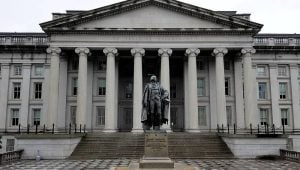
WASHINGTON — Today, the U.S. Department of the Treasury’s Office of Foreign Assets Control (OFAC) sanctioned over 30 individuals, entities, and vessels enabling illicit Iranian petroleum sales and Iran’s ballistic missile and advanced conventional weapons (ACW) production, as part of Treasury’s ongoing campaign of maximum pressure on Iran. Specifically, OFAC targeted additional vessels operating as part of Iran’s shadow fleet, which transport Iranian petroleum and petroleum products to foreign markets and serve as the regime’s primary source of revenue for financing domestic repression, terrorist proxies, and weapons programs. OFAC also targeted multiple networks that enable Iran’s Islamic Revolutionary Guard Corps (IRGC) and Ministry of Defense and Armed Forces Logistics (MODAFL) to secure the precursor materials and sensitive machinery required to reconstitute ballistic missile and ACW production capacity, as well as proliferate unmanned aerial vehicles (UAVs) to third countries.
UPDATE: 08:00 AM CET
Annalena Baerbock, President of the United Nations General Assembly in Geneva: Shooting of Women in Iran for Peaceful Demonstrations

Annalena Baerbock, President of the 80th session of the United Nations General Assembly, on February 24, 2026, during her press briefing at the United Nations Office in Geneva at the Palais des Nations, while emphasizing the necessity of defending human rights worldwide, referred to cases of violations of women’s rights in various countries, including Iran. In part of her remarks, Annalena Baerbock said that girls are now being treated as second-class human beings, something that does not exist in international law. She also referred to a woman in Iran who was shot in the face simply for demonstrating peacefully…
In these statements, the President of the United Nations General Assembly, by placing the situation in Iran alongside other serious examples of human rights violations, described the shooting of a woman in Iran solely for peaceful protest as an attack on the fundamental rights of women.
Systematic and Arbitrary Issuance of Capital Sentences

The repeated emphasis by Iran’s judicial and security authorities on “expediting the trial process” for those detained during the January 2026 nationwide protests is a clear manifestation of replacing “judicial justice” with “political vengeance.” The issuance of indictments in extremely short timeframes—sometimes less than 24 hours—while defendants are kept in total isolation and deprived of access to independent legal counsel, has decimated all standards of due process. The official announcement of verdicts using keywords such as “decisiveness” and “speed” indicates a pattern of summary trials, where final outcomes are dictated by security apparatuses long before court sessions convene. In this process, the court functions not as an independent trier of fact, but as a Procedural Facade to legitimize sentences based on torture-tainted confessions. This trend has utterly compromised the Presumption of Innocence and transformed the judicial system into a tool for public intimidation.
Iran Inflation Surges to 62.2%, Triggering Fresh Alarm Over Cost of Living

Iran’s annual point-to-point inflation rate climbed to 62.2% in the month of Bahman (February), marking one of the sharpest price accelerations in recent years and intensifying pressure on household budgets. Iran’s inflation rate has surged to 62.2% on a year-over-year basis, meaning the average basket of goods and services now costs more than 60% more than it did a year ago. The figure signals not just another statistical milestone, but a deeper erosion of purchasing power for millions of wage-earning households.
A 62.2% point-to-point inflation rate means that a consumer basket priced at 10 million tomans last year (approximately $60 at the current exchange rate of 1,651,700 rials per dollar) now costs about 16.22 million tomans (roughly $98).
In practical terms, families are paying nearly two-thirds more for the same goods and services compared with the same month last year. That magnitude of increase places Iran among the highest-inflation economies globally.
MEK Supporters in Gothenburg: Salute to the PMOI Fighters Paving the Way for the Revolution

Gothenburg, Sweden — February 24, 2025 — Supporters of the People’s Mojahedin Organization of Iran (PMOI/MEK) gathered in Gothenburg to pay tribute to the PMOI fighters paving the way for the revolution and to express solidarity with the movement’s Resistance Units inside Iran.
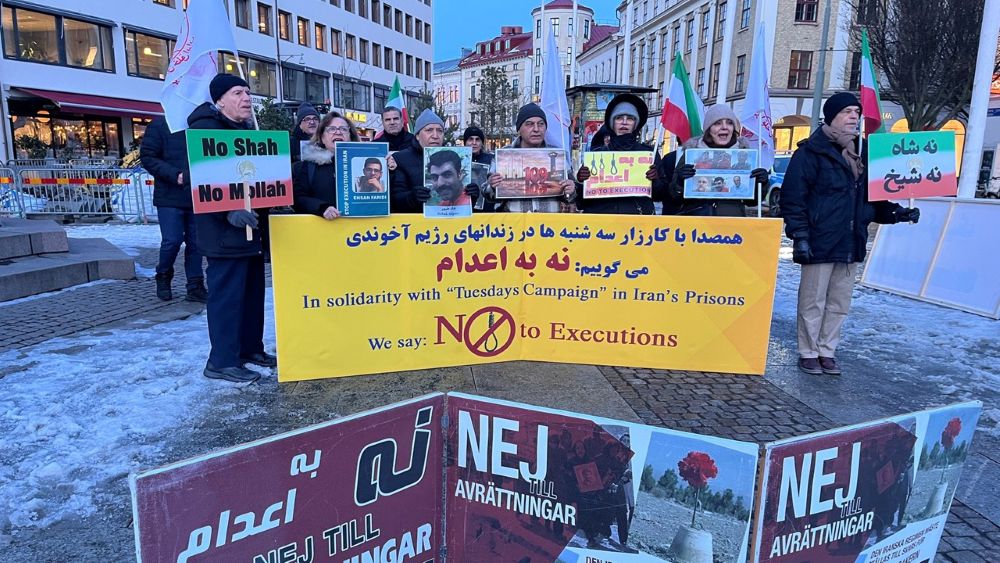
Gothenburg Rally Marks 109 Weeks of “No to Execution Tuesdays” and Backs Iran Uprising

Gothenburg, Sweden — February 24, 2025 — Supporters of the People’s Mojahedin Organization of Iran (PMOI/MEK) held a rally to mark the 109th consecutive week of the “No to Execution Tuesdays” campaign, a movement protesting the Iranian regime’s escalating wave of executions and ongoing systematic repression.
Tehran’s Sanctioned Networks used Bianance to Transfer $1 Billion

The Wall Street Journal has reported that internal investigators at this exchange identified the transfer of more than 1 billion dollars in digital assets linked to entities attributed to the Islamic Revolutionary Guard Corps (IRGC), but instead of pursuing the matter, they were dismissed from their jobs. Binance, the world’s largest digital asset exchange, has consistently been at the center of controversy. Since its establishment in 2017 by Changpeng Zhao in Shanghai, the platform rapidly grew into a giant handling billions of dollars in daily transactions. However, its rapid growth has been accompanied by legal challenges.
Fact-Finding or Fact-Free? Tehran’s Four-Decade Pattern of Concealment

Since 1979, there has not been a single political-security case in Iran for which the regime has formed an independent fact-finding body that led to genuine accountability. This is not an administrative oversight; it is a structural feature of a system that treats responsibility—accountability—as an existential threat. Within such a framework, every major national tragedy becomes not an opportunity for truth-seeking, but a mechanism for producing fresh layers of obfuscation. From the early post-revolutionary vigilante violence backed by figures such as Mohammad Beheshti and Ruhollah Khomeini, to torture scandals, acid attacks, the chain murders of intellectuals, the bombing at the Imam Reza shrine in Mashhad, the killings of Christian pastors, the downing of Ukraine International Airlines Flight 752, the Shah Cheragh attack in Shiraz, the killing of Mahsa Amini, and the death of Armita Geravand—the pattern has been consistent.