

Two-minute read
Even as Iran faces bombing and foreign air strikes, the clerical regime’s own media and officials are showing that one fear still sits near the top of their agenda: the possibility that the MEK and a wider uprising could turn the crisis into a deadly force for ultimate change.
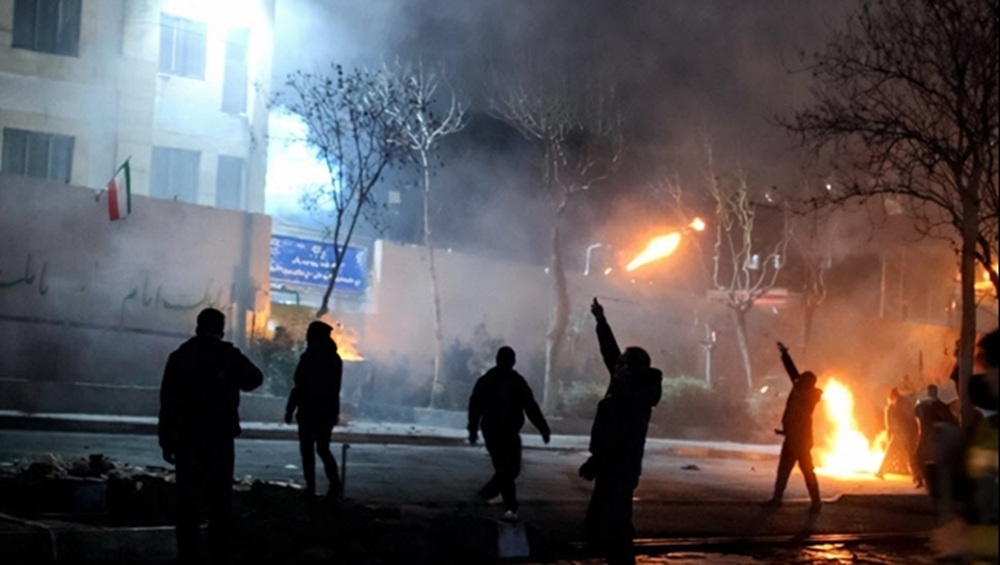
That anxiety was unmistakable in an IRIB Channel 2 broadcast on March 17, 2026. The program did not confine itself to denouncing foreign enemies. It repeatedly shifted the spotlight to the danger of an internal revolt, reading out messages from so-called viewers threatening the regime’s domestic opponents, warning the “monafeqin,” invoking slogans such as “death to the monafeq” and “death to the traitorous homeland-seller,” and amplifying calls for citizens to remain in public squares and confront what presenters described as the enemy within.
Monafeq—Arabic for “hypocrite”—is the regime’s pejorative label for the People’s Mojahedin Organization of Iran (PMOI/MEK), used to discredit the group in Iranian society.
That was not an isolated outburst. Iranian state and state-aligned media have been pushing the same line in recent days. Tasnim reported on the same day that State Security Forces chief Ahmadreza Radan urged the regime’s base not to “empty the squares,” calling the night “decisive” and arguing that the enemy had expected people to withdraw after the killing of senior figures so that others could pour into the streets and the revolution would be lost. The significance of that message is hard to miss: even in wartime conditions, the regime was not speaking as though the main danger came only from the skies. It was openly warning that the street itself remained a battlefield.
Thirty-Six Years After NLA’s Grand Operation, #Iran’s Regime Shivers While Hailing Its Survivalhttps://t.co/5wj000ZU5S
— NCRI-FAC (@iran_policy) July 28, 2024
The same day, Tasnim quoted Mohammadreza Aref warning that if the regime’s enemies and their “agents” attempted to repeat something akin to the PMOI’s 1988 “Eternal Light” operation, the regime’s security and armed forces would respond with a new “Mersad.” The significance of the statement lies in the historical reference it chose.
By invoking “Eternal Light” and “Mersad,” the regime was reaching for a precedent that speaks to its core survival anxiety: not collapse from air strikes, but the danger from an organized armed challenge on the ground. In the regime’s own historical memory, that danger is bound above all to the PMOI. The point of the reference was therefore twofold: to reassure a demoralized base that the system had faced such a threat before and survived it, and to signal that any renewed uprising or armed challenge would be met with the same kind of ruthless suppression.
Furthermore, the regime’s intelligence messaging points in the same direction. Tasnim published a Ministry of Intelligence warning calling on the public to report suspicious activity through the ministry’s channels on Eitaa, Baleh, and Rubika, as well as by phone, while claiming that hostile elements sought to exploit public events to carry out sabotage and disturb security.
Taken together, the messaging reveals a state that remains deeply preoccupied with the prospect of an uprising in which the PMOI could play an organizing or catalytic role. Even under bombing, the clerical establishment is still summoning crowds into the streets, reviving the language of “Mersad,” urging citizens to inform on suspicious activity, and portraying unrest as the work of an organized internal enemy linked to foreign attack. That is the clearest indication of all: amid war from outside, Tehran is still showing how much it fears a relentless enemy from within.