

THIS PAGE WILL BE UPDATED WITH THE LATEST NEWS
UPDATE: 10:30 PM CET
Israeli Strikes Hit Deep Across Iran as Tehran Fires Back, Tightens Control at Home and the War Widens Around the Gulf
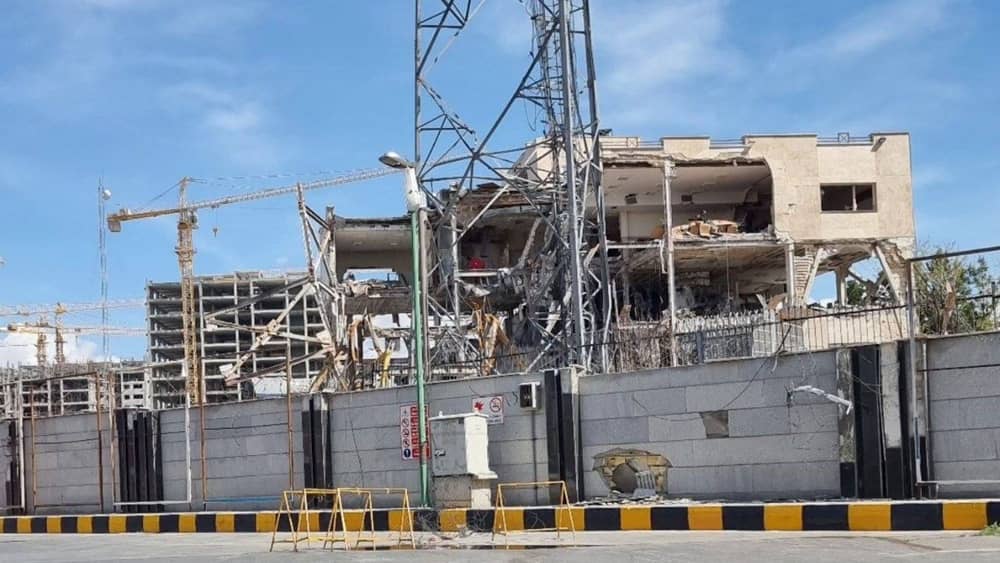
The past 24 hours were defined above all by what happened inside Iran: a new wave of Israeli strikes across Tehran and several provincial cities, fresh damage to military and dual-use industrial sites, renewed explosions around sensitive facilities, and a sharper turn inward by the Iranian state through arrests, checkpoints and a continuing communications blackout. The clerical regime in Iran did answer with more missile and drone fire into Israel and other parts of the region, but the clearest pattern of the day was sustained pressure on Iranian territory itself, paired with growing regional alarm over Hormuz, Gulf infrastructure and the absence of any coherent diplomatic off-ramp.
Inside Iran, the strikes were broad rather than isolated. Reports described overnight and early-morning explosions in Tehran, Karaj, Qazvin, Shiraz, Bushehr, Isfahan and Tabriz, with additional activity reported in Kerman and over Zanjan. In Tehran, multiple blasts across the capital and one strike in the south of the city killed at least 12 people and wounded 28. Later reports said the eastern side of the capital was hit again before dawn, leaving heavy debris and smoke, and that the Air Force compound known as “Padegan-e Chakesh” was struck around 3 a.m.
Iran’s foreign minister says his government does not plan on any negotiations to end the war and that no talks with the U.S. have taken place. https://t.co/Ih0YmTRk8Q
— The Associated Press (@AP) March 25, 2026
The clearest named targets inside Iran were military and military-adjacent. Israel said it struck two long-range naval cruise-missile production sites in central Tehran that were operating under Iran’s Defense Ministry. In Isfahan, at least five strong explosions were reported on two significant sites: the Optics SAIran complex on Kaveh Boulevard, part of the state electronics and defense network, and what Israeli reporting described as an underwater research center used in submarine design and unmanned maritime systems.
Elsewhere, a munitions depot in Kerman was bombed, an IRGC-linked shed in northern Tabriz near Rabe Rashidi was hit, repeated explosions in Bushehr, a radio station in Bandar Abbas was struck, and renewed damage at Bandar Anzali, where facilities linked to the Defense Ministry and the Shahid Tamjidi marine industries complex were said to have been badly damaged. The Wall Street Journal said the earlier Anzali attack was intended to disrupt the Caspian supply line used for Russian transfers of arms and military technology to Iran.
Issuing a stern warning to Tehran, White House press secretary Karoline Leavitt said US President Donald Trump vowed to 'hit harder' and 'unleash hell' if Iran does not accept defeat https://t.co/tb2kDqacDa pic.twitter.com/xhSpe5bnnA
— Reuters (@Reuters) March 25, 2026
Casualty reporting inside Iran remained uneven over the last 24 hours. One same-day account put the toll in southern Tehran at a specific urban death and injury count. These included reported deaths among IRGC, Basij and affiliated personnel, as well as a claim that dozens of Guardsmen were killed when a missile sealed the exit of a tunnel site.
⚠️ Update: The internet blackout in #Iran has now entered its 26th day after passing the 600 hour mark.
The measure leaves civilians cut off from international networks, violating their right to access information in times of war. pic.twitter.com/2AsPc39EXP
— NetBlocks (@netblocks) March 25, 2026
The war’s regional spillover intensified again. In Iraq, a fresh airstrike on a Popular Mobilization Forces position in Habbaniyah killed seven people, according to Iraq’s Defense Ministry, while two Iraqi soldiers were reported killed and 20 others wounded near an army medical facility in western Anbar. In Kuwait, a drone hit a fuel tank at Kuwait International Airport and caused a fire, though authorities said there were no casualties. Meanwhile, 13 drones and six missiles were intercepted overnight as warning sirens sounded repeatedly. In southern Lebanon, state media said Israeli strikes killed at least six people near Sidon, including four in Adloun and two in the Mieh Mieh camp area.
🚫FALSE: The Islamic Revolutionary Guard Corps announced a U.S. F/A-18 fighter was struck over Chabahar using new advanced air defense systems.
✅TRUE: No U.S. fighter aircraft have been shot down by Iran. pic.twitter.com/I25QFjYo0l
— U.S. Central Command (@CENTCOM) March 25, 2026
Hormuz remained the hinge between the war and the world economy. Tehran has formally told the United Nations and the International Maritime Organization that “non-hostile” vessels may pass if they coordinate with Iranian authorities, while excluding ships linked to the United States, Israel and other participants in the war. Reports also indicated that Iran had already begun charging some commercial vessels for passage and intended to continue doing so. At the same time, Bahrain’s effort to secure a U.N. Security Council resolution authorizing “all necessary means” to keep the strait open met resistance, while the U.N. Human Rights Council separately adopted a consensus resolution condemning Iranian attacks on Gulf infrastructure and calling for reparations. Together, those developments showed how the shipping crisis is becoming a central international front of the war, shaped at once by coercion, legal pressure and the growing risk to global energy flows.
Mattis identifies 'problem' if US declares victory over Iran now https://t.co/BxxZcHVVua
— Fox News (@FoxNews) March 25, 2026
UPDATE: 7:30 PM CET
Mohammad Mohaddessin, Iranian Opposition Figure: “Saying ‘No to War’ Is A Good Slogan, But Europe Must Support Regime Change”

Mohammad Mohaddessin (Tehran, 1955) is the chairman of the Foreign Affairs Committee of the National Council of Resistance of Iran (NCRI), and his activity right now is frenetic. He is working hard to gather support for the cause in the midst of the US and Israeli war against the ayatollahs, and he wants a country free from the autocratic yoke that has punished the population for decades: that is the message, the ayatollahs must fall. In that context, and while Donald Trump gives Tehran room for negotiations that, for the time being, the Iranians are rejecting, Mohaddessin sits down in Brussels with 20minutos to talk not only about the conflict, but also about how a regime that he sees as increasingly weakened can be defeated through resistance and from exile, and with which, he insists, diplomacy is of no use.
Do you think the end of the war is near?
Yes, we pray for that, and we believe it could be a matter of weeks. It is what the people in Iran want. Our people are currently under two kinds of pressure. One comes from the Iranian regime: repressive forces, the Revolutionary Guard, the Ministry of Intelligence; and on the other hand they are under the daily threat of bombings, because these bombings are not only directed at regime officials or the Revolutionary Guard. Ordinary people are also under the pressure of the bombings.
UPDATE: 7:30 AM CET
Gingrich, Ex-Military Leaders Throw Support Behind Iran Opposition Group

A bipartisan group of former senior U.S. officials — including former military leaders, diplomats, and former House Speaker Newt Gingrich — has issued a letter backing regime change in Iran and endorsing an opposition roadmap for the country’s future.
The letter, signed by about 30 key individuals calls on Western governments to support Iran’s democratic opposition, the National Council of Resistance of Iran (NCRI).
“With the Tehran regime discredited and weakened, not since 1979 have the Iranian people been in such a position of strength to take it back.” the letter states.
“Democracy should never have been stolen from the citizens of Iran in 1953 and again in 1979.
Wave of Arrests Sweeps Iran Amid War and Internet Blackout

Reports emerging from Iran indicate that authorities are continuing a sweeping campaign of arrests across the country, even as the nation faces ongoing conflict, executions of protest detainees, and a near-total internet blackout.
According to both state-affiliated media and independent human rights organizations, security forces have detained large numbers of citizens and civil activists in recent days. Official outlets frequently accuse those arrested of charges such as “cooperating with hostile entities,” while rights groups describe a far broader crackdown targeting various segments of society.
The situation is further complicated by severe restrictions on information. Iran has now entered its twenty-fifth consecutive day of widespread internet disruption, leaving most citizens without reliable access to communication platforms. This blackout has significantly limited the flow of information and made independent verification of arrests and related developments extremely difficult.
The Only Viable Path for Iran Lies Within Its People

For years, the Iranian resistance has warned the international community about the root of instability in the region—long before today’s crises and current war unfolded. From exposing the regime’s pursuit of nuclear capabilities to revealing its role in regional conflicts, terrorism, and human rights abuses, the pattern has been consistent: the root cause lies in Tehran. These warnings extended beyond military and security concerns. The resistance repeatedly highlighted how the regime used its diplomatic network abroad as a cover for intelligence and operational activities, while also exposing the illusion of so-called internal reform and the danger of continued appeasement by Western governments. The central argument has remained unchanged: as long as the current regime remains in power, instability will persist both inside Iran and across the region.
More recently, Maryam Rajavi, the president-elect of the National Council of Resistance of Iran (NCRI) has called on the international community to recognize what she describes as the only viable solution to the Iranian crisis. In her view, resolving the situation requires acknowledging a path centered on the overthrow of the regime by the Iranian people and their organized resistance. This approach rejects both foreign military intervention and passive diplomacy, instead emphasizing a structured, domestic movement capable of leading political transformation.
Iran’s Future Will Be Decided from Within, Says Opposition Figure
In a recent interview with One America News, Iranian opposition figure Alireza Jafarzadeh, deputy director of the U.S. office of the National Council of Resistance of Iran (NCRI), emphasized that the future of Iran will be determined not by foreign intervention, but by forces inside the country.
Jafarzadeh, a senior representative of the National Council of Resistance of Iran (NCRI) in Washington, outlined what he described as the “third option” for Iran—rejecting both foreign military intervention and continued appeasement of the ruling regime, while placing responsibility for change firmly in the hands of the Iranian people and organized resistance units.
He argued that although the regime has suffered growing military and political setbacks, the decisive factor in any change will be domestic forces. In his view, the ruling system is currently in one of its weakest positions, yet its fate will ultimately be decided by organized networks inside Iran rather than by external pressure. He stressed that meaningful change depends on the capacity, coordination, and persistence of internal opposition forces.
War Footing in Courts and Streets of Iran: The Islamic Republic’s Strategy of “Maximum Elimination” on the Eve of the Iranian New Year

While Iran endures its 24th day of a total nationwide internet blackout, recent statements by senior judicial and military officials signal the consolidation and intensification of a strategy of “Official State Terrorism and Arbitrary Deprivation of Life.” This strategy has been pursued by the Islamic Republic since the onset of the January 2026 (Dey 1404) uprising. An analysis of the positions taken by Gholam-Hossein Mohseni-Eje’i and FARAJA (Law Enforcement Force) commanders on the eve of the new Iranian year 1405 (starting on March 20, 2026) reveals an organized exploitation of a “war-state” status to formalize a killing machine whose objective is not “unrest control,” but the physical elimination of and vengeance against civil society.
On March 20, 2026, Chief Justice Mohseni-Eje’i stated in his New [Iranian] Year message: “In the year 1405, we deliver an ultimatum to all destabilizing elements.
Gothenburg Nowruz Rally Backs NCRI Provisional Government, Calls for Democratic Republic in Iran

Gothenburg, Sweden — March 21, 2026 — Supporters of the People’s Mojahedin Organization of Iran (PMOI/MEK) rallied in Gothenburg on the first day of the Iranian New Year, Nowruz, expressing support for the National Council of Resistance of Iran’s (NCRI) Provisional Government and calling for the establishment of a democratic republic in Iran.