

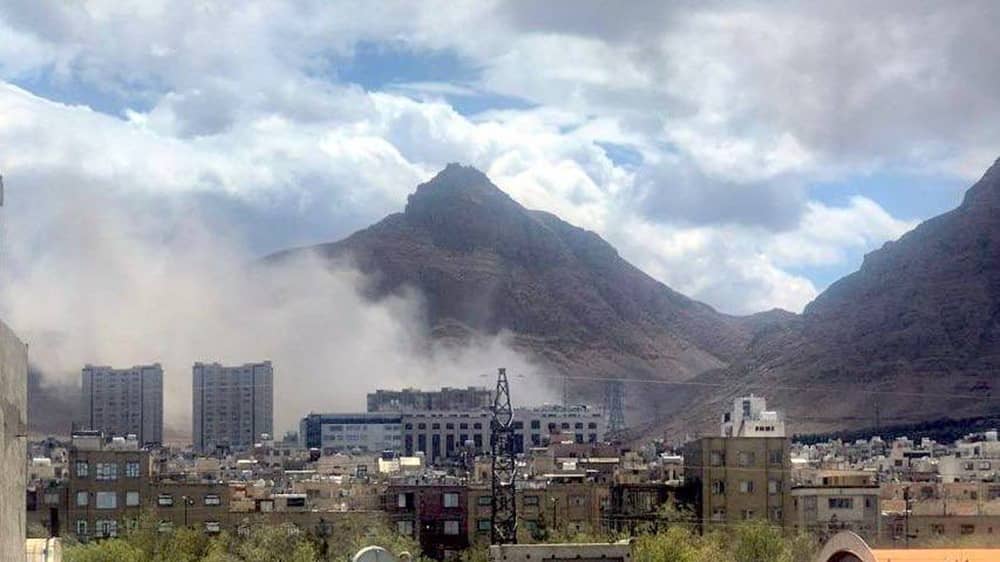
THIS PAGE WILL BE UPDATED WITH THE LATEST NEWS
UPDATE: 9:00 PM CET
Massive Strikes Across Iran Hit Nuclear, Military and Industrial Core as War Expands to Yemen, Iraq and Gulf Shipping
The regime in Iran sustained sweeping military and infrastructure losses over the past 24 hours as coordinated U.S. and Israeli strikes hit nuclear-linked facilities, military bases, intelligence centers and major industrial sites across multiple provinces, including Tehran.
At the same time, the regime continued limited missile retaliation against Israel, while the conflict widened with a direct missile launch from Yemen, drone activity in Iraq and Oman, and deepening disruption to global shipping through the Strait of Hormuz. Internally, the country remains under one of the longest nationwide internet blackouts on record, underscoring tightening state control amid sustained wartime pressure.
Regime Losses: Strategic Sites, Military Infrastructure and Industry Hit
The most consequential developments came from a sustained, multi-wave air campaign targeting Iran’s military-industrial backbone.
In Tehran, repeated strikes from early morning through midday affected a broad range of districts, including Tehranpars, Majidiyeh, Saadat Abad, Velenjak, Niavaran, Jannat Abad, Pounak, Lavizan and areas near Mehrabad airport. Explosions were reported across both residential and sensitive areas, with evidence of coordinated targeting across the capital. Among the sites struck were facilities linked to the defense sector and positions associated with the Islamic Revolutionary Guard Corps embedded within civilian environments, including parts of Amirkabir University of Technology and Iran University of Science and Technology.
A key military installation, the Imam Ali base in the Darband–Farmanieh area, was hit multiple times, alongside a state broadcasting transmitter in the same northern corridor. Additional strikes were reported along major urban routes and near sensitive infrastructure nodes.
🗓️ Exactly one month ago on Saturday morning, 28 February, #Iran was plunged into digital darkness as authorities cut off access to the global internet.
After four full weeks, 672 hours, the blackout remains in effect, violating Iranians' right to communicate and stay informed. pic.twitter.com/DwLhElXAp7
— NetBlocks (@netblocks) March 28, 2026
Across the country, attacks extended to core military and security infrastructure. In Khuzestan province, strikes targeted intelligence headquarters in Ahvaz’s Golestan district, a police facility and a Revolutionary Guard intelligence center, triggering power outages and significant disruption. In Dezful, elements of the 92nd Armored Division near a major air base were hit, with fires burning for hours, indicating direct impact on military assets.
The Iranian regime’s strategic weapons and nuclear-linked infrastructure also sustained significant damage. The heavy water complex in Arak, central to plutonium production, was struck multiple times, while uranium-processing infrastructure in Yazd, including a yellowcake facility, was targeted. Additional strikes hit explosives-related facilities linked to enrichment processes.
In parallel, a broad swath of Iran’s industrial base came under attack. Major steel production facilities in Isfahan, Khuzestan and Mobarakeh were hit, along with the Oxin steel complex in Ahvaz and industrial sites in Arak and Baqershahr. The Firuzabad cement complex was struck in an attack that killed at least two workers and injured others, highlighting the vulnerability of civilian-industrial infrastructure.
Maritime and defense industries were also targeted. A headquarters associated with Iran’s marine industries sector in Tehran, responsible for naval weapons development, was struck, indicating a focused effort to degrade naval production capacity. In Bushehr, shipbuilding and offshore infrastructure, including the Sadra complex, were hit.
Additional strikes targeted facilities near Bam airport linked to Revolutionary Guard activity, sites near Mashhad airport, and multiple logistics nodes. Satellite imagery indicated the destruction of a major ammunition depot in Sirjan, described as a key supply hub in Iran’s military logistics network.
🔊After days of internet blackouts, our Reuters team in Tehran sent back these rare glimpses of daily life during wartime. Watch On Assignment now: https://t.co/iWC8WKSbBl pic.twitter.com/nsL8LDIoCK
— Reuters (@Reuters) March 28, 2026
Iranian Retaliation: Continued but Constrained
The regime in Iran maintained missile and drone attacks against Israel over the same period. Air defenses were activated across multiple areas, intercepting a significant share of incoming projectiles.
At least one fatality was reported in Tel Aviv, with additional injuries caused by shrapnel and limited impacts. Explosions over Damascus were attributed to the interception of Iranian projectiles transiting Syrian airspace.
A notable escalation came from Yemen, where Iran-aligned Houthi forces launched a ballistic missile toward Israel for the first time in this phase of the conflict. The missile was intercepted, but the launch marked a clear geographic expansion of hostilities.
Iran-linked actions extended elsewhere. A drone strike targeted the residence of Kurdish regional president Nechirvan Barzani in northern Iraq, while another drone attack struck the port of Salalah in Oman, injuring a worker and causing localized damage.
In the Gulf, Iran continued to disrupt maritime activity. Attacks on vessels and interference in the Strait of Hormuz have significantly restricted traffic, with numerous ships damaged or halted and casualties reported among crews. The disruption has affected a major portion of global energy transit.
BREAKING: Yemen’s Houthis claim responsibility for a missile attack on Israel, their first since the war in the Mideast started. https://t.co/qRAiXjDfUX
— The Associated Press (@AP) March 28, 2026
Regional Spillover: Lebanon, Iraq, Yemen and Maritime Fronts
The conflict’s regional footprint expanded further over the past day.
In Lebanon, Israeli airstrikes continued against Hezbollah-linked positions, including weapons depots and logistical facilities, with ongoing exchanges of fire along the border.
In Yemen, Houthi involvement is becoming more direct, with missile launches and threats of further escalation raising the risk of sustained long-range attacks and additional pressure on Red Sea shipping routes.
In Iraq, drone activity linked to Iran-backed militias increased, while across the Gulf, tensions remain elevated following previous strikes affecting U.S. and allied positions.
Shipping disruption remains one of the most strategically significant developments. Large numbers of vessels are stalled or rerouted, and efforts are underway to organize a multinational naval response to secure maritime routes. The situation continues to impact global energy markets and trade flows.
For decades, Iranian naval vessels have threatened and harassed global shipping in regional waters, but those days are over. pic.twitter.com/J4WUwpfU24
— U.S. Central Command (@CENTCOM) March 28, 2026
Internal Conditions Inside Iran: Blackout and Control
Inside Iran, the war continues under conditions of severe information restriction.
A nationwide internet shutdown has now exceeded 670 hours, making it the longest sustained blackout in the country’s history. Communications are heavily limited, with even phone connectivity affected and access reportedly restricted to state-approved channels.
The blackout has significantly reduced the visibility of events inside the country while strengthening government control over information. There are also scattered reports of localized unrest and symbolic acts of resistance, though the scale of organized protest remains unclear under current conditions.
Thailand has reached an agreement with Iran to allow Thai oil vessels safe passage through the Strait of Hormuz, the Southeast Asian nation's prime minister said on Saturday.https://t.co/Yi8sLyEW33
— AFP News Agency (@AFP) March 28, 2026
UPDATE: 6:00 PM CET
Europe Should Not Promote a Preferred Leader for Iran’s Future

For Europe, which has consistently articulated its support for democratic principles and self-determination, involvement in any initiative perceived as selecting or promoting a preferred leader would carry significant reputational costs, write Alejo Vidal Quadras, Struan Stevenson and Paulo Casaca.
Prof. Alejo Vidal Quadras, President, International Committee in Search of Justice (ISJ), EP Vice President (1999 – 2014);
Struan Stevenson, Chair ISJ Committee on the Protection of Political Freedoms in Iran, President of the European Parliament’s Delegation for Relations with Iraq (2009 -2014), Member of the European Parliament (1999 – 2009);
Paulo Casaca, Former Chair of European Parliament’s delegation for relations with the NATO Parliamentary Assembly,
At a moment when Iran stands at a critical juncture, reports that efforts may be underway within the European Parliament’s Foreign Affairs structures to assemble a preferred configuration of the Iranian opposition should give policymakers pause.
‘Malicious Actors’ Targeted Kash Patel’s Personal Email, As Iran Hacking Group Takes Responsibility: FBI

An FBI spokesperson told Fox News the agency is aware of “malicious actors” targeting FBI Director Patel’s personal email information and has taken “all necessary steps to mitigate potential risks.”
The FBI noted the information in question is “historical in nature” and does not involve government information.
The Handala Hack Team, an Iran-linked hacking group, has claimed responsibility.
The State Department’s “Rewards for Justice” program is offering a $10 million reward for information leading to the identification of the Handala Hack Team — a group that has frequently targeted U.S. government officials.
UPDATE: 7:30 AM CET
Three Young Women Detained in Iran, Their Fate Remaining Unknown

Following the wave of organized repression after the nationwide protests in January 2026, three young women, including two teenagers, have been arrested, and their status remains unknown. These arrests are an example of the detention of women and teenagers during the protests, leaving their families in complete uncertainty.
Bahareh Golchin, a 17-year-old from Mashhad, was arrested by security forces on February 14, 2026. More than 40 days after her arrest, no information is available regarding her place of detention or her condition, and the security and judicial authorities have refused to provide any response to her family. Bahareh Golchin was arrested while distributing leaflets related to the 40-day memorial of those who lost their lives during the protests.
Batoul Gerami, Mother of a Fallen Protester, Brutalized in Gonabad
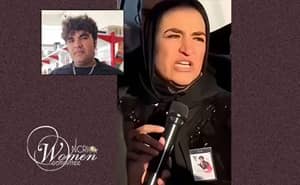
Batoul Gerami, the mother of Sajad Samadi, who was killed during Iran’s nationwide protests January 2026, was violently assaulted by security forces while attending a graveside ceremony for her son in the city of Gonabad, located in Razavi Khorasan province.
The incident took place during the final Thursday of the Iranian year, a day traditionally marked by memorial visits to cemeteries. According to reports, Gerami, a bereaved mother seeking justice, was severely beaten at her son’s gravesite. She sustained serious injuries, lost consciousness, and was subsequently transferred to a hospital. Medical reports indicate significant physical trauma, including a fractured shoulder blade, and confirm that she remains hospitalized.
Iran at a Turning Point: Opposition Figures Say Momentum Is Shifting Toward the People
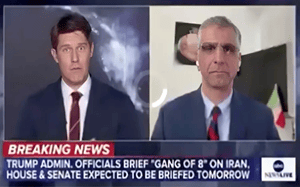
A recent interview broadcast by ABC News on March 24, 2026, featured Dr. Majid Sadeghpour, political director of the Organization of Iranian American Communities (OIAC), offering a stark assessment of Iran’s political trajectory. His remarks point to what he described as a decisive shift in both domestic and international dynamics surrounding the Iranian regime.
Sadeghpour argued that the current pressures facing the ruling system—both internal and external—have created a rare opening for change. According to him, the Iranian regime is now in a defensive position, and this environment provides an opportunity for the population to challenge its authority. However, he emphasized that the struggle between the Iranian people and the ruling establishment is not new, but rather a continuation of decades of confrontation.
Neither War nor Appeasement: The Case for Democratic Change in Iran

The debate over Iran’s future has long been framed as a binary choice between continued appeasement of the ruling establishment or the risk of military confrontation. Yet a third option—democratic change led by the Iranian people—has increasingly gained traction, particularly through the framework advanced by Mrs. Maryam Rajavi, the president-elect of the National Council of Resistance of Iran (NCRI).
This approach presents itself not as an abstract ideal, but as a practical alternative to two policies that have repeatedly failed. On one side stands decades of appeasement by major global powers, a strategy that has neither moderated the Iranian regime’s behavior nor curtailed its ambitions. On the other lies the prospect of war—an outcome that tends to arise only when diplomatic concessions fail to restrain the regime’s nuclear and regional activities.
An Analytical Look at One Year of Persistence by the People of Iran
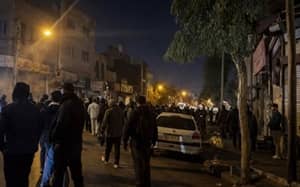
The Persian year 1404 (which began on March 21, 2025) came to an end for the people of Iran after many ups and downs, giving way to the year 1405 (starting March 21), a year that from the outset carries the sense of transformation and inevitable victory. The past year began with a widespread and continuous wave of more than 4,200 protests and labor strikes by workers, retirees, teachers, and those affected by economic plunder, and in January it turned into a nationwide uprising. During this year, Iran’s streets—from the capital Tehran to the smallest towns—became arenas of direct confrontation with the entirety of Iran’s regime.
At the heart of these confrontations, two driving forces shook the foundations of the mullahs’ regime: first, the “leading role of Iran’s courageous women,” who with remarkable bravery led the front lines of the uprising and challenged the repression apparatus; and second, the organized and fervent presence of “rebellious youth.”
Appointment of Mohammad Bagher Zolghadr as Secretary of the Supreme National Security Council

How this appointment reflects the shift of decision-making authority from the government to military-security structures and the intensification of centralized power during crisis conditions
The appointment of Mohammad Bagher Zolghadr as Secretary of the Supreme National Security Council cannot be understood merely as an administrative change. It has taken place at a time when the power structure in Iran is facing simultaneous crises in internal security, regional tensions, and political challenges.
An examination of this development indicates that the appointment is part of a broader process of restructuring the security decision-making system; a process in which the role of governmental and elected institutions in security affairs is diminishing, while the influence of the hard core military-security establishment is expanding.
In this context, Zolghadr’s appointment can be interpreted as a transfer of crisis management to figures with long-standing experience in designing and implementing security mechanisms and suppressing internal dissent.
Iran Child Soldiers: Iran Confirms Use of 12-Year-Olds in Security Patrols
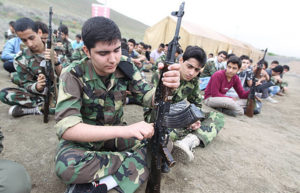
Iran child soldiers are now part of official security operations, as a senior IRGC official confirmed the use of 12-year-olds in patrols and checkpoints—an admission that raises serious concerns amid ongoing conflict.
Rahim Nadali, a cultural deputy of the IRGC in Tehran, stated that teenagers aged 12 and 13 are actively participating in “intelligence patrols, operational missions, and checkpoint inspections.”
The significance of this statement lies in its clarity. This is not an indirect report or allegation—it is a direct acknowledgment that minors are being integrated into operational security structures. The types of roles described suggest these children are not observers or trainees, but part of active, field-level enforcement networks.
Paris Exhibition Shows Solidarity with Iran’s Uprising and Condemns Human Rights Violations

Paris, France – March 26, 2026 – A book fair and an exhibition of photos of the uprising’s martyrs were held in Paris to express solidarity with the nationwide uprising in Iran and to honor its victims and fallen heroes. The event also condemned ongoing human rights violations and the harsh executions carried out by Iran’s ruling clerical regime. Organizers highlighted the serious risks faced by political prisoners, particularly under conditions of war and bombardment, and called for their immediate release.
Iranian Resistance Supporters Rally in Berlin for 27th Day, Back NCRI Provisional Government

Berlin, Germany — March 26, 2026 — Supporters of the Iranian Resistance demonstrated outside the Iranian regime’s embassy for the twenty-seventh consecutive day, calling for the overthrow of the clerical establishment and endorsing the National Council of Resistance of Iran’s (NCRI) announcement of a provisional government. They also demanded the closure of the Iranian regime’s embassy in Berlin, describing it as a center of espionage and terrorism.