

THIS PAGE WILL BE UPDATED WITH THE LATEST NEWS
UPDATE: 09:00 PM CEST
Woodland Hills Woman Nabbed at LAX on Iranian Arms Trafficking Charge

A Woodland Hills woman was arrested at Los Angeles International Airport Saturday night on suspicion of helping Iran funnel weapons to its proxies in Africa, propping up one of the world’s deadliest conflicts. Shamim Mafi, 44, was nabbed on charges she brokered the sale of “drones, bombs, bomb fuses, and millions of rounds of ammunition” between Iran and the Sudanese Armed Forces, First U.S. Attorney Bill Essayli wrote on X Sunday.
The Sudanese military is locked in a bloody civil war that is estimated to have killed upwards of 100,000 people and displaced millions more since 2023, making it the deadliest of the ongoing proxy fights between Gulf State powers.
UPDATE: 07:00 PM CEST
Trump ‘Needs Iraq-Style Mass Invasion Plan’ to Topple Iran’s Terror Regime

Mohammad Mohaddessin, who was jailed for daring to oppose rulers, said hundreds of thousands of troops would have to flood Tehran.
Despite Trump‘s rallying cry to Iranians to “take back their country” just hours into the war, the regime is still clinging to power two months on. The Sun previously told how its “final pillar”, the ruthless Islamic Revolutionary Guard Corps, will “stop at no crime” to protect the regime.
Activists and analysts alike have warned it will take more than foreign intervention and bombings to put the final nail in the tyranny’s coffin.
Mohaddessin, the president of the Foreign Affairs Committee of the National Council of Resistance of Iran, said Trump would have to deploy a vast number of soldiers deep into enemy territory.
UPDATE: 09:00 AM CEST
PMOI Resistance Units in Zahedan Chart the Path to a Democratic Iran Amidst Ceasefire
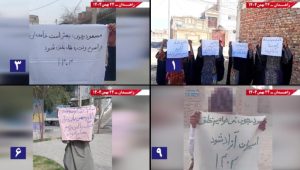
In defiance of the recent execution of political prisoners and a severe crackdown on dissidents, the People’s Mojahedin Organization of Iran (PMOI) Resistance Units resumed their anti-regime activities in Zahedan, southeast Iran, on April 17. Holding placards and displaying messages in various public locations, the activists reiterated their unwavering commitment to overthrowing the current regime and completely rejecting all forms of dictatorship. These acts of defiance occur at a pivotal moment, responding directly to the recent wave of state-sponsored killings and the ongoing ceasefire following external conflicts.
Central to the Resistance Units’ messaging in Zahedan is the ongoing 15-day ceasefire. In their public displays, activists held placards stating, “We hope the temporary ceasefire, despite the desires of the remnants of both clerical and monarchical regimes, leads to an end to the war and opens the path toward peace and freedom.” The ceasefire has also laid bare the hypocrisy of monarchist factions. One placard explicitly noted, “The ceasefire exposed the Shah’s son—his so-called humanitarian push for war has now been laid bare as a disgrace.”
Iran’s Regime Murders Arrested Protester Under Torture Amid Execution Spree

Thirty-one-year-old Abbas Yavari has become the latest victim of the Iranian regime’s brutal penal system, dying under severe torture in a Shiraz detention center.
Arrested during the massive nationwide uprisings of January 2026, Yavari was initially transferred to Shiraz Central Prison in late February. On March 26, authorities moved him to an undisclosed detention facility where he was tortured to death. In a familiar tactic used by the regime to cover up its crimes, state agents informed Yavari’s family on March 29 that he had “committed suicide.”
Human rights monitors and sources indicate that interrogators subjected Yavari to lethal torture to extract a forced confession. The regime intended to falsely implicate him in the alleged killing of Basij paramilitary members during the recent protests in the Ma’ali Abad and Molla Sadra areas of Shiraz.
Iran’s Regime Expands Use of Proxy Forces in Cities as Public Anger Intensifies
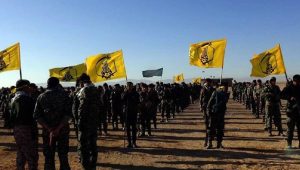
Amid deepening economic and social crises, the Iranian regime has escalated its reliance on proxy forces—deploying them openly in urban centers across the country. Reports from multiple cities indicate that these proxy forces, once used more discreetly, are now visibly present in public spaces, contributing to rising public anger and a heightened sense of insecurity.
From Tehran to Mashhad, eyewitness accounts point to a significant increase in the presence of armed proxy elements. In Tehran’s Moniriyeh Square, witnesses report individuals carrying weapons and actively monitoring and controlling civilian movement. Similar scenes have been described along Vakilabad Boulevard in Mashhad, where these forces appear to operate with authority in public areas.
Residents increasingly describe these forces as socially and culturally alien. Their presence in everyday urban environments—particularly when issuing orders to civilians—has intensified feelings of resentment and unease. One Tehran resident noted that encountering armed individuals dictating behavior in the streets has “amplified both fear and anger” among ordinary people.
War as a Tool of Repression: How Tehran Exploits Conflict to Silence a Nation
Wars, wherever they occur, tend to produce similar outcomes: they inflame nationalist sentiment, redirect public attention outward, and push domestic concerns to the margins. Economies become subordinated to conflict, daily life contracts, and political freedoms are often among the first casualties. In authoritarian systems, however, war is not merely a byproduct of geopolitical tension—it is a calculated instrument of control.
In Iran, this pattern has been evident for decades.
The Iranian regime has repeatedly used conflict—both direct and through proxies—not as a defensive necessity, but as a strategic tool to suppress dissent, weaken opposition, and consolidate power. To understand this dynamic, one must look beyond official narratives and instead evaluate the nature of these wars through two key criteria: whether they serve the national interest, and whether they obscure or reinforce the country’s central political conflict—the divide between an authoritarian ruling system and a society seeking freedom and accountability.
Iranian Protester Abbas Yavari Dies Under Torture in Shiraz Custody

The death of Abbas Yavari, a 31-year-old participant in Iran’s 2026 uprising, has once again drawn attention to the Iranian regime’s entrenched use of torture and custodial killings to suppress dissent.
According to reports, Yavari—described as a “rebellious youth” involved in the protests of January 2026—died under severe and systematic torture inflicted by Iranian security forces in a detention facility in Shiraz. His case underscores what rights advocates describe as a deliberate and organized machinery of repression.
Yavari, an Arab Iranian from Ahvaz, was arrested after taking part in anti-regime protests in Shiraz and transferred to the city’s central prison. However, on March 26, 2026, he was reportedly moved to an undisclosed detention center. It was there, sources say, that he was subjected to brutal torture, ultimately leading to his death.
Three days later, authorities claimed that Yavari had died by “suicide”—a narrative frequently used by officials to deflect responsibility in cases of deaths in custody. Such explanations have repeatedly been challenged by families, witnesses, and human rights organizations as fabricated attempts to conceal state killings.
Widespread Backlash in Italy Over Reza Pahlavi’s Visit
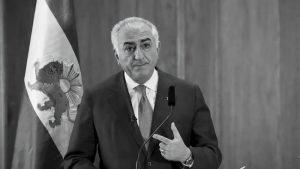
Reports from Italy indicate a growing wave of widespread protests and criticisms toward the recent visit of Reza Pahlavi, reflecting unease not only among political and civil groups but also within factions close to the Italian government.
According to the Italian outlet Today Politica, the visit has drawn sharp criticism from members of the ruling party led by Giorgia Meloni. Among the most vocal critics is Giulio Terzi, a senator from the Brothers of Italy party, who openly denounced Pahlavi’s presence, describing him as a representative of a dictatorial regime.
Terzi invoked an Italian proverb—“like father, like son”—to underscore his point, referencing the record of Iran’s former monarchy under Mohammad Reza Shah. He emphasized that the former regime was responsible for the repression and killing of thousands, adding that Pahlavi has yet to clearly distance himself from that legacy. Terzi further accused him of seeking power through reliance on foreign backing while failing to explicitly reject past authoritarian practices.
Hollow Show of Power by Supporters of Iran’s Regime in the Streets
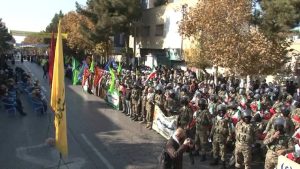
While the consequences of around 50 days of conflict between Iran, the United States, and Israel have left the country’s infrastructure facing a serious crisis, and the situation—caught between a fragile ceasefire and the possibility of renewed war—has left society in uncertainty, different scenes are emerging in some major Iranian cities. At the same time as indirect negotiations between Tehran and Washington began in Islamabad with Pakistan’s mediation, Iran’s regime has attempted to present an image of strength and popular support by organizing coordinated gatherings.
State-run media outlets, including the Student News Agency, described these gatherings in a report from Mashhad as a sign of “steadfastness” and spoke of people presenting over consecutive nights and praying for frontline forces. In these narratives, participation by different segments of society—even in unfavorable weather conditions—is portrayed as a symbol of national unity.
Rental Crisis in the Shadow of War; Livelihood Deadlock for Iranian Tenants
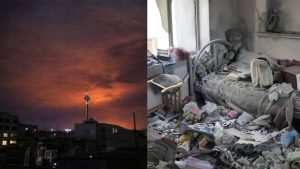
The end of military conflict and the ceasefire between the United States and Iran’s regime have not restored calm to the economic environment; instead, it has imposed a new wave of crushing pressure on vulnerable groups. While it was expected that relative stability would improve living conditions, the cost-of-living crisis driven by widespread unemployment and workforce reductions in companies has placed tenants in a far more difficult position. According to official statistics for 2024, about 30% of all households in the country and nearly 60% of residents of the capital, Tehran, rely on renting as their only housing optional population now trapped between the two blades of unemployment and securing shelter.
Workforce reductions in February and March marked a turning point in the rental crisis. The shutdown or reduced activity of companies under wartime conditions has eliminated the income of many households. This situation has left tenants facing a severe cost-of-living crisis, with many households now struggling to pay even the base rent.