

THIS PAGE WILL BE UPDATED WITH THE LATEST NEWS
UPDATE: 10:30 PM CEST
Senior Commanders Killed, Iranian Infrastructure Hit Nationwide, and Gulf Energy Routes Targeted
Over the past 24 hours, the Iran conflict has escalated across multiple fronts, with widespread strikes on military and industrial targets inside Iran, the killing of senior Iranian-linked and Hezbollah figures in Beirut, and expanding attacks on energy and shipping infrastructure across the Gulf. The clerical regime in Iran responded with one of its largest recent missile barrages against Israel, though most projectiles were intercepted. At the same time, internal repression intensified inside Iran, while diplomatic signals pointed to possible ceasefire efforts even as fighting continued.
Regime Losses: Targets, Infrastructure, and Personnel
A broad wave of strikes hit multiple locations across Iran from late March 31 into April 1, with Tehran experiencing some of the most intense activity. Explosions were reported across central, eastern, and western districts, including Haft-e Tir, Taleghani, Pasdaran, Narmak, Saadat Abad, Tehranpars, and Tehranser. Several sites linked to security and paramilitary structures were struck, including a Basij base in Shahrak-e Gharb and areas near the former U.S. embassy compound, which has reportedly been used by regime-affiliated forces. A strike was also reported near Baluchestan Street, where judiciary chief Gholamhossein Mohseni Ejei was described as a possible intended target.
⚠️ Update: Metrics show #Iran's internet blackout has entered day 33 after 768 hours with connectivity observed at ~1% of ordinary levels, as authorities widen their crackdown on satellite terminals in a bid to eliminate remaining means of communication with the outside world. pic.twitter.com/bCHIDyYed2
— NetBlocks (@netblocks) April 1, 2026
Industrial and strategic infrastructure sustained repeated damage. The Mobarakeh Steel Complex in Isfahan was hit again, marking a second strike on the facility, while the Sefid Dasht steel plant in Chaharmahal and Bakhtiari was also targeted. In Bushehr, a meteorological radar installation was damaged and taken out of service. On Qeshm Island, a desalination facility was knocked offline. In southern Iran, a ship repair facility at Shahid Rajaee port near Bandar Abbas was reported out of operation following a strike.
Additional attacks were reported in Karaj, Kermanshah, Qasr-e Shirin, Zanjan, and Mahallat. Casualties were recorded in several areas, including at least 11 killed and 15 wounded in Markazi province, along with further deaths and injuries in western Iran. Air defense systems were active over Tehran for extended periods, indicating sustained aerial operations.
Outside Iran, Israeli airstrikes in southern Beirut targeted a joint convoy of Iranian-linked personnel and Hezbollah members in the Jnah district. A nearby building was also destroyed. Among those killed was senior Hezbollah commander Hajj Youssef Ismail Hashem, who oversaw southern front operations, including rocket and drone coordination. Additional Iranian-linked and Hezbollah personnel were also reported killed in the same strike.
An airstrike in Iran’s capital, Tehran, appears to have struck inside the former U.S. Embassy compound. The embassy has been controlled by Iran’s Revolutionary Guard since the 1979 hostage crisis. https://t.co/gGmtdmC8hn
— The Associated Press (@AP) April 1, 2026
Iranian Retaliation and Its Effectiveness
The Iranian regime launched its largest missile barrage in roughly two weeks, firing approximately 10 ballistic missiles toward central Israel. Israeli air defense systems intercepted most of the missiles, and no fatalities were reported. Some impacts were attributed to debris, with limited damage assessments ongoing.
Iran-aligned forces expanded their activity. Yemen’s Houthi movement carried out its third missile attack against Israel since entering the conflict, claiming coordination with Iran and Hezbollah. The missile was intercepted, and no casualties were reported.
In the Gulf, Iran launched three cruise missiles toward maritime targets near Qatar. Two were intercepted, while a third struck a tanker leased by QatarEnergy near Ras Laffan. No casualties or environmental damage were reported.
Iranian-linked drone operations also targeted regional infrastructure. In Kuwait, fuel storage facilities at the main airport were hit, causing a significant fire that was later contained. Additional incidents were reported in Bahrain and Saudi Arabia, where multiple drones were intercepted before impact.
Wall Street gains as Iran war resolution hopes lift sentiment https://t.co/3FKGE4p2cN https://t.co/3FKGE4p2cN
— Reuters (@Reuters) April 1, 2026
Regional Spillover: Gulf, Iraq, and Strategic Infrastructure
The conflict continued to expand across the region. In northern Iraq, drone strikes targeted oil storage facilities linked to a Castrol-branded operation near Erbil. In Bahrain, a data center associated with Amazon Web Services sustained damage, indicating an expansion of targeting to digital infrastructure.
Maritime security deteriorated further, with multiple tanker-related incidents reported near Qatari waters. While no casualties were recorded, these attacks have begun to affect energy flows, with reports indicating a reduction in liquefied natural gas export capacity from Qatar.
Airspace disruptions continued. Kuwait’s airspace remains closed following repeated attacks, and regional aviation routes are increasingly affected.
Several media outlets recently reported accusations of U.S. forces striking a sports hall and residential area in the city of Lamerd, Iran, on Feb. 28. After looking into the reports, U.S. Central Command has confirmed the accusations are false.
Read more:…
— U.S. Central Command (@CENTCOM) April 1, 2026
Internal Conditions Inside Iran
Inside Iran, security measures intensified amid ongoing strikes. Checkpoints were established across Tehran, including on major highways, reflecting heightened internal control efforts. Reports indicate increased enforcement activity and movement restrictions in parts of the capital.
The nationwide internet blackout continued into its fourth week, with connectivity remaining extremely limited. Authorities have reportedly increased efforts to locate and confiscate satellite communication equipment, further restricting information flow.
Human rights concerns also escalated, with continued reports of executions and preparations for additional punitive measures against detainees during the conflict.
Iran's Kharg Island, a small strip of land about one-third the size of Manhattan, is at the center of the country’s oil economy—and increasingly, the Iran war.
After Iran’s shutdown of the Strait of Hormuz, a narrow passage through which roughly a fifth of global oil flows,… pic.twitter.com/qqi1FEINvy
— TIME (@TIME) April 1, 2026
UPDATE: 09:30 PM CEST
The US Offers Up to $3M Reward for Info on Attacks Targeting Diplomatic Facilities in Iraq

The US State Department’s Rewards for Justice Program said Wednesday it is offering a reward of up to $3 million for information on attacks against American diplomatic facilities in Iraq.
“Help us stop terrorist attacks on the US Embassy in Baghdad and elsewhere,” the program wrote on US social media platform X.
The announcement came after repeated attacks by Iranian-aligned militia groups or others targeting facilities, including the US Embassy in Baghdad, the US Consulate General in Erbil and the Baghdad Diplomatic Support Center.
The State Department said individuals who provide credible information may be eligible for relocation as well as a financial reward.
The Iranian Opposition Fears Mass Executions to Prevent Another Uprising

The Iranian opposition fears that the seven executions carried out in recent days are only a prelude to the intensive use of the gallows by the theocratic regime to intimidate the population and prevent another uprising once the war triggered by the United States and Israel comes to an end.
The National Council of Resistance of Iran (NCRI) placed Tehran’s repressive policy in context this Wednesday during a virtual press conference. Four of those recently executed were members of the People’s Mojahedin Organization. They were between 33 and 60 years old. Two were engineers, one a lawyer, and another an architect. There are fears for the lives of at least two other members of the People’s Mojahedin who have been sentenced to death. The three additional individuals executed last week had been arrested during the popular uprising in January. Another 15 death sentences have been confirmed by Iran’s Supreme Court and are awaiting implementation.
UPDATE: 08:00 PM CEST
Iran Unleashes New Execution Spree with Battered Regime ‘Fearful of Another Uprising’

Iran‘s regime has launched a killing spree in an attempt to clamp down on political dissidents and stop another uprising from unfolding.
At least four top anti-regime figures were brutally executed in Iran in the last 48 hours, while another 15 political prisoners have been sentenced to death in recent days, according to an opposition group.
The National Council of Resistance of Iran, a political coalition formed by exiled dissidents, warned of a potential upcoming ‘massacre’ in the country’s prisons as rattled leaders attempt to crush any notion of another mass uprising.
The brutal new clampdown comes as the US and Israel continue to hammer the country with bombs.
It also comes weeks after Supreme Leader Ali Khamenei – who oversaw the slaughter of tens of thousands of rioters in January – was wiped out in an airstrike, leaving his son Mojtaba in charge.
UPDATE: 04:30 PM CEST
Argentina Designates Iran’s IRGC A Terrorist Organization, Aligning With US
BUENOS AIRES, March 31 (Reuters) – Argentina has designated Iran’s Islamic Revolutionary Guard Corps (IRGC) as a terrorist organization, its presidential office said in a statement on Tuesday, following a push from the Trump administration for allies to do so.
Argentina attributed the measure to the IRGC’s backing for Lebanon-based Hezbollah, which it blames for the deadliest bombing in the South American nation’s history, a 1994 attack on the AMIA Jewish community center in Buenos Aires that killed 85 and injured hundreds.
The presidential office said the measure allows for the implementation of financial sanctions and other operational restrictions.
The IRGC is an elite military force whose purpose is to protect Shi’ite Muslim clerical rule in Iran. It controls large parts of Iran’s economy.
UPDATE: 10:00 AM CEST
Iran After the Bombs: Why the War Will Not Bring Democratic Change

The current war has shaken the Iranian regime, but it has not brought the country closer to democratic change. On the contrary, it reinforces a well-known pattern in authoritarian systems: external military pressure rarely produces internal transformation. Instead, it allows those in power to consolidate control, repress dissent, and conceal deeper crises. The debate in Spain and across Europe has often stopped at rejecting the war, without addressing the more difficult question: what the political outcome should be.
Since the intensification of attacks at the end of February, Iran has entered a phase marked by external conflict and heightened internal repression. The leadership has used the war to reinterpret domestic discontent as a matter of national security, justifying harsher repression amid growing internal pressure. The January 2026 uprising illustrates this clearly: rather than opening space for change, the war has helped to close it.
Iranian Resistance: “4 Executed In 48 Hours, Save the Others on the List”

Early this morning, the heroic members of the People’s Mojahedin Organization of Iran (PMOI), Babak Alipour and Pouya Ghobadi, were executed by the religious fascist regime in power in Iran.
In December 2024, together with Mohammad Taghavi, Akbar Daneshvarkar, Abolhassan Montazeri and Vahid Bani-Amerian, they had been sentenced to death after months of interrogations and torture. Yesterday, Mohammad Taghavi and Akbar Daneshvarkar faced the gallows with courage,” said the National Council of Resistance of Iran (NCRI) in a statement.
“On the evening of Sunday, the 29th, at the same time as the transfer of Taghavi and Daneshvarkar for execution, riot police units attacked the political prisoners’ ward in Block 4 of Ghezel Hesar prison and transferred them to solitary confinement.”
UPDATE: 08:00 AM CEST
Staring Down the Noose: In Memory of PMOI Martyr Pouya Ghobadi
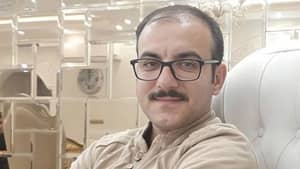
On the morning of March 31, 2026, the Iranian regime hanged 33-year-old PMOI members Pouya Ghobadi and Babak Alipour. Their deaths were part of a brutal 48-hour wave of executions that also claimed the lives of two other political prisoners and PMOI members, Mohammad Taghavi and Ali Akbar Daneshvarkar. But Pouya, a 33-year-old electrical engineer, was not just a victim of the regime’s flawed judicial system; he was a deeply conscious intellectual. While the regime attempted to silence him by cutting off communications and sending him to the gallows, his secretly penned letters from Evin and Fashafouyeh (Greater Tehran) prisons have survived.
These writings offer a profound glimpse into the mind of Iran’s youth, showcasing a man who consciously chose the dangerous path of resisting tyranny and maintained his unwavering support for the PMOI until his last breath.
The Unbreakable Spirit of PMOI Martyr Ali Akbar Daneshvarkar
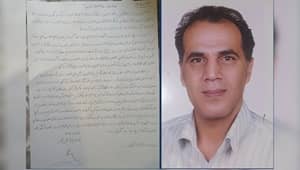
On March 30, 2026, the Iranian regime executed 59-year-old Ali Akbar (Shahrokh) Daneshvarkar, a dedicated member of the People’s Mojahedin Organization of Iran (PMOI/MEK). While the regime’s state media attempted to portray him as a “terrorist” to justify his hanging, Daneshvarkar life and writings—some of which were smuggled out of prison just days before his execution—reveal a man of profound moral clarity, driven by an unwavering commitment to a free Iran.
Born in Tehran in September 1966, Daneshvarkar was a trained civil engineer. However, under a regime that marginalizes its citizens, he was dismissed from his profession and forced to work as a motorcycle courier to make ends meet. On January 3, 2024, security forces arrested him at his home in Tehran. He was subjected to months of brutal interrogation in the notorious Ward 209 of Evin Prison. In May 2024, he was formally informed of his heavily politicized charges, which included “armed rebellion” (baghi), “collusion against the security of the miserable clerical regime,” “membership in the PMOI,” and destroying regime property.
Iran’s Futurelessness: A Society Trapped Between War, Inflation, and Structural Failure
Iran today is not merely enduring isolated crises—it is bearing the cumulative weight of decades of structural failure. The pervasive sense of futurelessness now saturating the social landscape has emerged at the intersection of war, chronic inflation, and institutional decay. This is not a transient disruption but the manifestation of long-entrenched dysfunction within the ruling order—one that has now surfaced as both psychological exhaustion and economic collapse.
What is unfolding in Iran transcends the boundaries of a typical economic downturn or wartime emergency. It is the reproduction of a “state of exception” sustained through chronic instability. As psychological research shows, when crises persist without resolution, societies lose their capacity for mental recovery. In Iran, this endless strain has profoundly eroded the collective psyche.
The consequences are visible in the texture of everyday life. Sleep disorders, declining motivation, and a deep sense of uncertainty have become normalized. A society unable to imagine its future is one losing its agency. The erosion of forward-looking imagination has dismantled the capacity for collective action and transformation.
Iran’s Streets: The New Frontline of Power and Fear

Since the outbreak of the war, Iran’s regime has worked relentlessly to project an image of resolve—mobilizing its supporters into the streets, staging rallies, and orchestrating spectacles of loyalty. Yet behind this carefully curated façade of strength lies a much more fragile reality, one increasingly at odds with the regime’s official narrative. At the center of this contradiction stands Mohammad Bagher Ghalibaf, the Speaker of the regime’s parliament, who has presented the street as a symbol of the regime’s “social power.” In a message circulated on Telegram on March 30, 2026—the 31th day of the conflict—Ghalibaf called the streets “a mirror of social strength,” claiming that “the enemy is angered and disturbed by the presence in the streets” and urging loyalists not to withdraw.
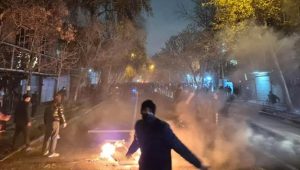
But field reports and eyewitness accounts tell another story. Across multiple cities, Iran’s streets have become spaces of tension and confrontation between security forces and disillusioned youth. Rather than a stable display of state authority, the urban landscape has turned into a contested arena where control shifts by the hour.
Lawyer of Executed PMOI Members Was Unaware of Execution
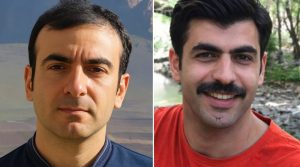
Babak Paknia, a lawyer and the attorney for Akbar Daneshvar Kar and Mohammad Taghavi Sangdehi, announced that despite the execution sentence against his clients being carried out in the early hours of March 30, the ruling still had not been officially served to him or the other lawyer in the case. In this case, Babak Paknia and Mostafa Nili were the attorneys for Akbar Daneshvar Kar, Mohammad Taghavi Sangdehi, Babak Alipour, Pouya Ghobadi, and Vahid Bani Amerian.
Babak Paknia wrote on his X social media account: “As of the moment of writing this tweet, no ruling has been served to us, and fundamentally we are not even aware of the outcome of the final proceedings, nor do we know whether this sentence has also been upheld for our clients or not.” He continued: “Before carrying out the sentence, it is necessary that its contents be served to the defense lawyers or at the very least to the defendant himself; the bare minimum right of a condemned person is to be able to benefit from the right to retrial and a stay of execution.”
Iranian Resistance Supporters Rally in Stockholm to Back the NCRI Provisional Government

Stockholm, Sweden – March 28, 2026 — Supporters of the Iranian Resistance and fellow Kurdish compatriots gathered outside the embassy of the Iranian regime in Stockholm, expressing support for the National Council of Resistance of Iran’s (NCRI) Provisional Government and calling for the establishment of a democratic republic in Iran.
Global Protests Across US and Europe Condemn Execution of MEK Political Prisoners
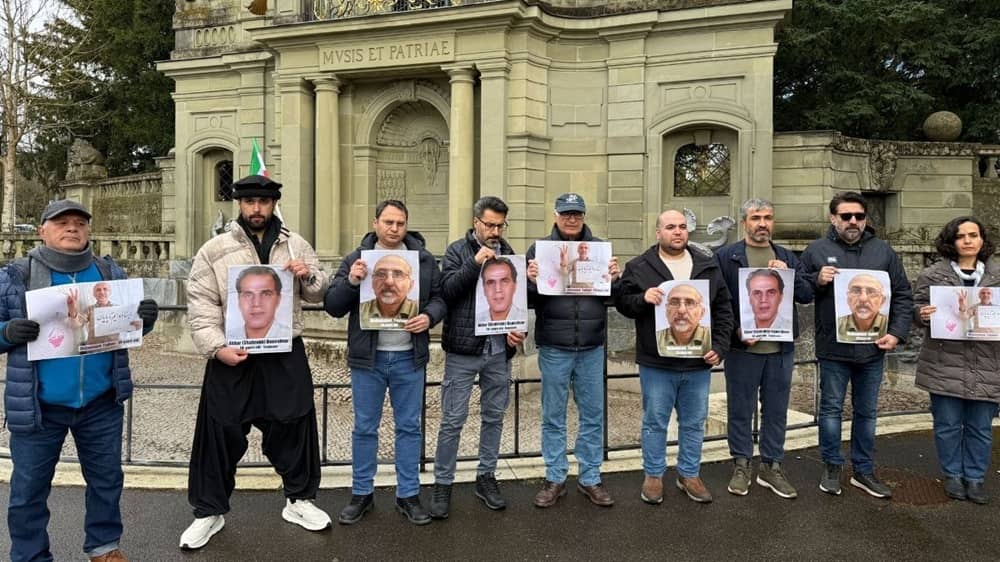
March 30, 2026 — Iranian Resistance supporters and diaspora communities held coordinated protests across the United States and Europe, condemning the execution of political prisoners affiliated with the People’s Mojahedin Organization of Iran (PMOI/MEK).
March 30, 2026 — Iranian Resistance supporters and diaspora communities held coordinated protests across the United States and Europe, condemning the execution of political prisoners affiliated with the People’s Mojahedin Organization of Iran (PMOI/MEK) .
In Washington, D.C. and…— Iran Freedom (@4FreedominIran) March 31, 2026
In Washington, D.C. and Los Angeles, demonstrators gathered to honor the victims and denounce the Iranian regime’s actions. Parallel protests were held across European cities including Paris, Rome, Copenhagen, Bern, Oslo, and Aarhus, with rallies taking place outside Iranian embassies.
Iranian Resistance Supporters Rally in Oslo to Back the NCRI Provisional Government

Oslo, Norway – March 28, 2026 — Supporters of the Iranian Resistance and fellow Baluch compatriots gathered outside the embassy of the Iranian regime in Oslo, expressing support for the National Council of Resistance of Iran’s (NCRI) Provisional Government and calling for the establishment of a democratic republic in Iran.