

THIS PAGE WILL BE UPDATED WITH THE LATEST NEWS
UPDATE: 07:30 PM CEST

UPDATE: 07:00 AM CEST
PMOI Resistance Units Across Iran Strike Back Against the Regime’s Execution Spree
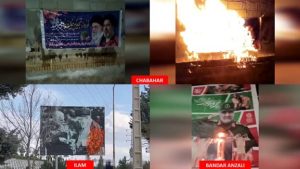
On April 16, the PMOI Resistance Units launched a coordinated, nationwide offensive, carrying out 15 fiery operations across Iran. These daring acts targeted the regime’s centers and symbols of repression and terror. The operations were a direct and forceful response to the clerical regime’s recent wave of political executions. By striking the regime’s infrastructure of suppression, the Resistance Units delivered a clear message of defiance: the regime’s brutal use of the gallows will not terrorize the public, but rather fuel further rebellion.
The operations spanned the entire country, illustrating the extensive reach of the organized resistance. In Chabahar and Iranshahr, Resistance Units directly targeted Islamic Revolutionary Guard Corps (IRGC) Basij bases. They also struck regime buildings in District 4 of Tehran and in Gonabad, alongside a regime center for terrorism and fundamentalism in Kermanshah.
Furthermore, the Resistance Units systematically dismantled the regime’s propaganda apparatus by setting fire to billboards, posters, and banners featuring former Supreme Leader Ali Khamenei and eliminated IRGC Quds Force Commander Qasem Soleimani in cities including Mashhad, Isfahan, Ilam, Bandar Anzali, Sonqor, and Talesh.
Commemorating The Martyrs of April 19: Why Iranians Will Never Trade One Dictatorship for Another
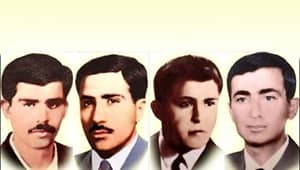
Today marks the anniversary of some of the most brutal crimes committed by the Shah’s dictatorship against Iran’s political dissidents. On April 19, 1972, and exactly three years later on April 19, 1975, Mohammad Reza Pahlavi’s regime executed and assassinated pioneering political prisoners who had raised the banner of revolutionary struggle against tyranny. While we commemorate the immense sacrifices of these martyrs, it is crucial to recognize the contemporary context. Today, the remnants of the Shah’s regime are actively attempting to rewrite history, whitewash a legacy of torture, and create the false impression that Iranians yearn for a return to monarchical tyranny. However, after a century of shedding blood for freedom, the Iranian people will not trade one dictator for another.
The cruelty of the Shah’s regime was fully unmasked on April 19, 1972, when military courts, following sham trials, sent a group of senior central committee members of the People’s Mojahedin Organization of Iran (PMOI/MEK) to the firing squad. Nasser Sadegh, Mohammad Bazargani, Ali Mihandoost, and Ali Bakeri were executed after enduring eight months of severe torture by SAVAK, the Shah’s notorious secret police. Around the same time, SAVAK murdered Asghar Montazer Haghighi in street clashes.
Iran’s Economic Breakdown Cannot Be Explained Away by War

When Iran’s regime president Masoud Pezeshkian addressed Iran’s Central Bank on April 17, he pointed to “wartime conditions” as a primary driver of the country’s worsening economic situation, while asserting that stability in key monetary and currency markets had been maintained. This narrative, however, fails to account for the depth, duration, and underlying causes of the crisis now unfolding across Iran. The current economic collapse bears the hallmarks of systemic failure rather than temporary disruption. Years of mismanagement, institutional corruption, rent-seeking, and costly foreign policy decisions have steadily eroded economic resilience. The recent military confrontation with the United States and Israel may have intensified these pressures, but it did not create them.
What distinguishes the present moment is the visible acceleration of decline. Inflation has reached levels that distort even the most basic commercial transactions. Price volatility is so extreme that agreements between buyers and suppliers can lose validity within a single day. Under such conditions, inventory replacement becomes financially irrational, and in some cases, halting business operations results in fewer losses than continuing them.
Fragile Calm, Deepening Fear: Iranians Confront an Uncertain Future
As a fragile ceasefire holds between the United States and Iran, a new report by Reuters paints a stark picture of daily life inside the country—one marked less by relief than by deep uncertainty and unresolved fear.
According to the report, many Iranians are attempting to return to a semblance of normalcy after weeks of bombardment by U.S. and Israeli forces, alongside the regime’s deadly crackdown on protests in January. Shops have reopened, cafes are filling again, and government offices are functioning. Yet beneath this outward calm lies a pervasive sense of instability.
While negotiations are reportedly underway to extend the ceasefire and potentially reach a broader agreement, citizens remain skeptical about what lies ahead. The economic situation continues to deteriorate, and concerns are mounting that the regime could soon resume its internal repression once external pressures subside.
The Shadow of Damage and Destruction Over the Livelihoods and Lives of Iranian Citizens
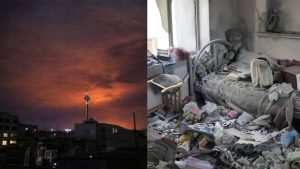
The Iranian regime’s adventurist policies in its nuclear program, missile development, and proxy forces in the region have ultimately imposed irreparable costs on Iran’s civil society.
The recent war, rooted in the regime’s tension-inducing activities, extended beyond military battlefields and directly targeted people’s daily lives. By impacting strategic infrastructure, this conflict has inflicted deep damage on the food security, health, and housing of ordinary citizens. Now, with a ceasefire in place, the catastrophic dimensions of this confrontation on public life have become even more evident.
The first official statistics on the damage caused by the recent clashes indicate a large-scale human catastrophe. Fatemeh Mohajerani, spokesperson for the government of Iranian regime president Masoud Pezeshkian, stated in striking remarks that the initial estimate of Iran’s damages is 270 billion dollars.
Head of the Iranian Regime’s Judiciary Emphasizes Accelerating Executions

Gholamhossein Mohseni Ejei, the head of the Iranian regime’s judiciary, has once again, in a commanding tone, called on courts to review cases at an abnormal speed and outside standard frameworks—an approach that effectively amounts to eliminating minimum standards of fair trial. In his latest remarks, he went even further and labeled detainees in advance as foot soldiers of the enemy, a designation that indicates many of these individuals have effectively been sentenced before any judicial process has taken place. Ejei’s continued insistence on speeding up proceedings comes as a wave of executions has unfolded in recent weeks, raising serious concerns among human rights organizations. In such a climate, emphasizing the abandonment of normal procedures not only fuels suspicion but presents a clear picture of a rushed and non-transparent process.
On the other hand, widespread arrests based on stereotypical accusations such as espionage and treason—without disclosing the identities of the accused or details of the cases—reinforce the question of whether anything resembling an independent judiciary still exists, or whether everything serves a predetermined scenario.
From ‘Open’ to Gunfire: The Strait of Hormuz Signals a Fractured Iranian Command

Conflicting signals over the Strait of Hormuz—ranging from open passage to armed confrontation—are exposing a deeper split inside Iran’s leadership.
The Strait of Hormuz has become more than a strategic chokepoint. In recent weeks, it has turned into a live test of whether Iran’s leadership can still speak with one voice. What’s emerging is not just mixed messaging—but a pattern of contradictions that point to something deeper: a fractured command at the top of the system.
The contradictions began to surface quickly. On March 12, Mojtaba Khamenei framed the Strait of Hormuz as a pressure tool, saying it should remain closed. Just four days later, Foreign Minister Abbas Araghchi struck a different tone, stating that the strait was not closed to all and that countries not involved in the conflict could pass through with coordination from Iranian forces .
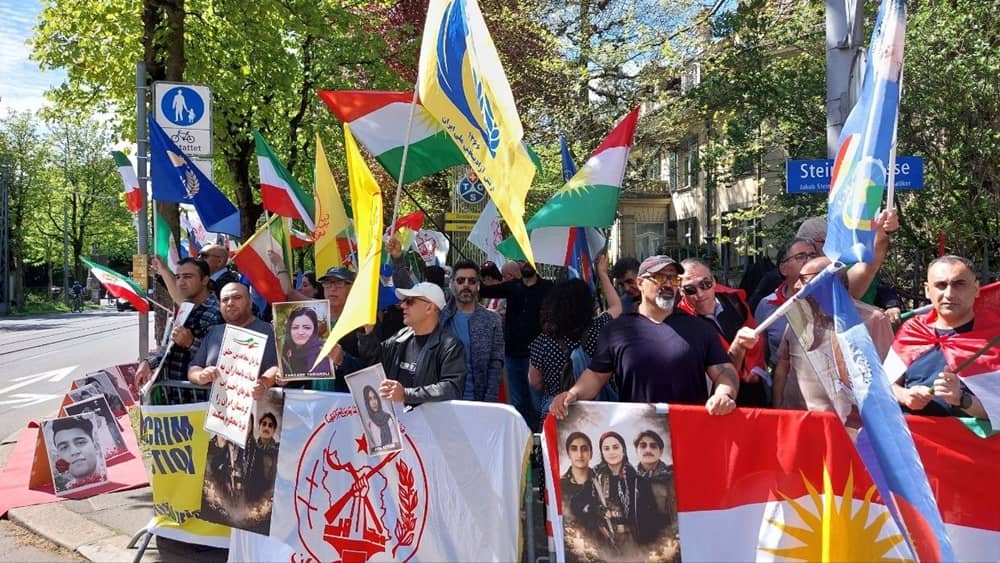
Copenhagen Rally Condemns Executions of Political Prisoners in Iran, Calls for Regime Change

Copenhagen, Denmark – April 18, 2026: Supporters of the Iranian Resistance have been rallying for several consecutive weeks outside the Iranian regime’s embassy in Copenhagen, protesting the execution of PMOI political prisoners.
MEK Supporters in Malmö Rally Against Executions of Political Prisoners in Iran

Malmö, Sweden – April 18, 2026: Supporters of the People’s Mojahedin Organization of Iran (PMOI/MEK) held a rally in Malmö to protest the execution of political prisoners in Iran.