

Three-minute read
In a damning investigation published by the Persian-language edition of Le Monde diplomatique, Reza Pahlavi’s carefully manufactured image as a moderate opposition figure falls apart, revealing a political figure increasingly driven by foreign networks, external sponsors, and the strategic interests of other states. What is presented as a democratic alternative for Iran appears to be a political project shaped not by autonomous national leadership, but by dependence on outside backing—particularly through controversial international alliances, foreign-linked influence operations, and a radical milieu marked by identitarian extremism, far-right convergence, and intimidation tactics.
The latest flashpoint came during Pahlavi’s February appearance in Munich at a rally. While mainstream coverage fixated on crowd size, Le Monde diplomatique zeroes in on what his supporters actually revealed: slogans like “One homeland, one flag, one leader – Prince Reza Pahlavi,” eerily echoing the Nazi-era “Ein Volk, ein Reich, ein Führer.”, alongside chants of “Death to the three corrupt ones: mullahs, leftists, mujahideen!” – a formula popularized by Pahlavi’s wife Yasmine and repeated at pro-monarchy events in Paris, Geneva and Brussels. These are not isolated outbursts, Le Monde diplomatique argues. They signal a deepening alignment with international far-right currents.
With ties to Iran’s MOIS and a history of betraying political prisoners in the 1980s, Iraj Mesdaghi has rebranded as a monarchist. In Europe—where history is clear—he rallies Pahlavi supporters with “One nation, one flag, one leader.”
Brussels, January 25, 2026 pic.twitter.com/XP9DL2PIDx
— Ehsan Sharifi | احسان شریفی (@4regimechange) January 30, 2026
In France, the monarchist ecosystem has forged concrete ties with the extreme right. Le Monde diplomatique details how the pro-Pahlavi association Femme Azadi – co-founded by lifestyle influencer Mona Jafarian – has converged with groups like Némésis, whose leader Alice Cordier has been photographed alongside its activists and far-right Belgian MP Darya Safaie. Another outfit, Homa, saw its vice-president Samuel Davoud launch events while appearing on extreme-right platforms. Jafarian herself has repeatedly posted the rallying cry “We are Aryans, we do not idolize any Arab” and proudly used the hashtag #jesuisislamophobe. On CNews she framed it as a defense of pre-Islamic Zoroastrian roots, but Kurdish sociologist Somayeh Rostampour, author of Femmes en armes, cuts through the euphemism: this is a nationalist tradition that casts Islam as a foreign import and Arabs as irreconcilable “others,” constructing an Iran where only a Persian elite holds legitimacy.
According to Le Monde diplomatique, Reza Pahlavi’s 178-page “emergency plan” for the first 180 days after the fall of the Islamic Republic reads less like a blueprint for democratic transition than a framework for concentrating power in his own hands: the article says that under the plan, the transitional legislature, government, and judiciary would all be appointed by Pahlavi himself as the “leader of the national uprising,” while the duration of the transition remains undefined. Le Monde diplomatique cites Azadeh Kian, emeritus professor of sociology at Paris Cité University, as saying that when one reads the booklet, “it has nothing to envy Khamenei’s dictatorship,” adding that “Mr. Pahlavi is the one giving himself the power to appoint everyone,” and that with no clear timetable for the transition, “it is a dictatorship.” The article also quotes Somayeh Rostampour, who argues that the document is “manifestly racist,” leaves no place for non-Persian and non-Shiite minorities, and seeks to restore the same system of Persian supremacy that existed under Pahlavi’s father before the 1979 revolution.
In an assessment, Col. Wesley Martin, former Senior Antiterrorism Officer for all Coalition Force – Iraq, portrays Reza Pahlavi’s Iran Prosperity Project (IPP) as an authoritarian scheme wrapped in the language of #democratic change.https://t.co/7YeC1vSGCq
— NCRI-FAC (@iran_policy) March 22, 2026
Pahlavi’s own words reinforce the pattern. When major Kurdish parties announced a joint democratic platform in February, he fired off a post branding them “separatists” and declaring Iran’s territorial integrity a “red line” that would trigger “the resolute response of the Iranian people.” Under the polished democratic language, Le Monde diplomatique concludes, lies a persano-centric supremacism that treats non-Persian and non-Shiite populations as afterthoughts at best.
The report goes further still when discussing alleged funding channels. Le Monde diplomatique cites Parham saying that support and material advantages offered around Pahlavi do not come from the Pahlavi’s own fortune and are “most likely Saudi money with Israeli steering.” The article also quotes sociologist Azadeh Kian, who argues that the money behind the operation cannot plausibly come from Pahlavi himself and must therefore come from elsewhere, naming Israel or groups such as Elnet. The political implication is unmistakable: the Pahlavi network is depicted not as self-sustaining, but as financed and directed from outside.
The article adds more detail through testimony from an anonymous Iran-based or France-based media insider who worked for Manoto TV, described as a monarchist propaganda outlet. According to Le Monde diplomatique, this source says a significant part of the channel’s budget came from Miriam Adelson, whom the article identifies as a major pro-Israel donor. It also states that Saudi Arabia has been a major financier of the monarchist movement, including support for disinformation campaigns and media channels such as Manoto TV and Iran International. Taken together, these allegations paint a stark picture: the media machinery promoting Pahlavi is presented as inseparable from the money and strategic interests of foreign powers.
#Iran News: State-Run Newspaper Says Reza Pahlavi and Monarchists Have Served Clerical Regimehttps://t.co/iey2VpMKXU
— NCRI-FAC (@iran_policy) April 8, 2025
For Le Monde diplomatique, this foreign entanglement is not just financial. It is political and ideological. The article says that since 2023, Pahlavi has multiplied trips to Israel, and supported Israeli bombings of Iran in 2025 and 2026. In the logic of the report, this is the point where any claim of political independence collapses completely. A man presented to the world as the future of Iran is, according to the article, publicly siding with a foreign state carrying out military action against Iranian territory. That is not the behavior of an independent national leader. That is the behavior of a client figure whose project is advancing in step with external power.
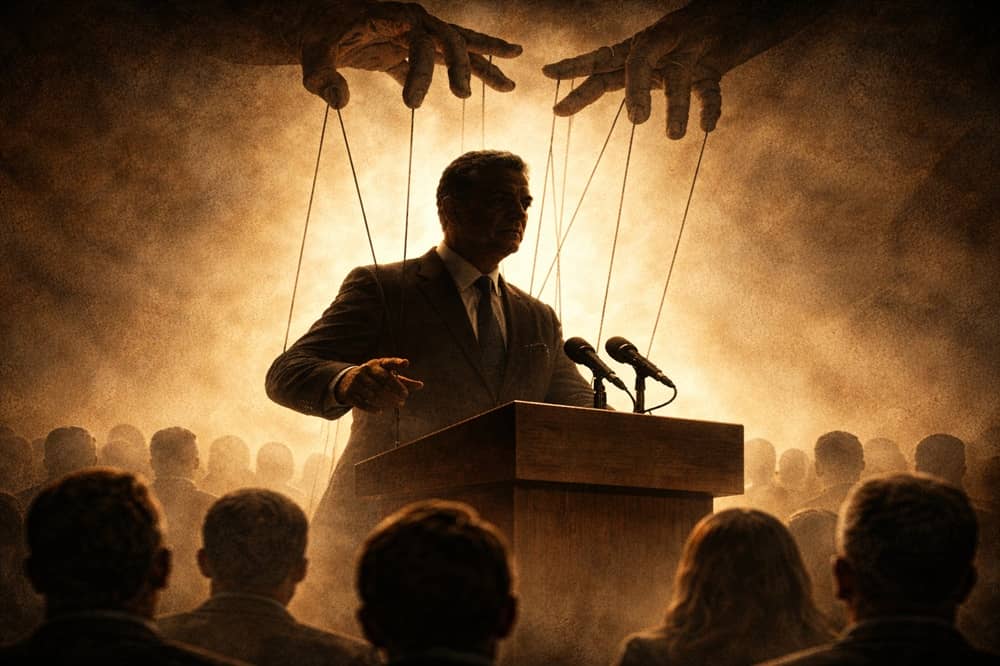
The French outlet ultimately suggests that the core illusion surrounding Reza Pahlavi is the illusion of autonomy. Beneath the royal branding, the democratic rhetoric, and the international media packaging, Le Monde diplomatique sees something else: a movement aligned with far-right currents, surrounded by supremacist discourse, reliant on foreign networks, and increasingly shaped by the priorities of foreign actors. In that portrait, Reza Pahlavi is not an independent answer to Iran’s crisis. He is a foreign-backed political operation presented as national salvation.