

THIS PAGE WILL BE UPDATED WITH THE LATEST NEWS
UPDATE: 08:00 PM CEST
US to ‘Vigorously Prosecute’ Buyers and Sellers of Sanctioned Iranian Oil as Hormuz Blockade Begins

The United States has warned that it will take strict legal action against anyone involved in trading sanctioned Iranian oil, as it moves ahead with a naval blockade in the Strait of Hormuz following failed peace talks with Iran. US Acting Attorney General Todd Blanche issued a strong warning targeting the global oil trade linked to Iran. “The Department of Justice will vigorously prosecute anyone who buys or sells sanctioned Iranian oil,” Blanche said in a post on X.
“The Department of Justice fully supports our Commander in Chief @POTUS and our military,” he added.
Iran’s Hidden Billions Are Routed Through Hong Kong: Decoding The 4 Key Mechanisms

Hong Kong serves as a critical hub for Iran’s “shadow banking” system, enabling the flow of billions in illicit oil revenue and the procurement of restricted technology for its military.
The city’s role in facilitating these hidden financial flows relies on several key mechanisms, News18 explains.
The Wall Street Journal and other reports highlight the mechanism:
Extensive Shell Company Networks: Hong Kong’s ease of company registration allows sanctioned actors to create a shifting array of front firms that mask their ties to Tehran.
Entities in Hong Kong — mostly shell companies — transacted approximately $4.8 billion in financial activity related to Iranian shadow banking, second only to the UAE. These front companies convert yuan earned from oil sales into dollars, euros, or other foreign currencies needed by Iran for international trade.
UPDATE: 07:30 AM CEST
Message from Maryam Rajavi to the Iranians Demonstrating in Paris
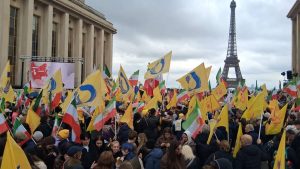
On Saturday, April 11, coinciding with a wave of global protests against the execution of members of the People’s Mojahedin Organization of Iran (PMOI/MEK) and courageous young protesters by the regime, thousands of Iranians, along with prominent figures and French supporters of the Iranian Resistance, held a demonstration in Paris. In a video message addressed to the demonstrators, Maryam Rajavi said: “Fellow compatriots, friends and supporters of the Iranian Resistance, Your gathering today is a flame of the Iranian people’s Resistance and uprising; people who are counting the days to achieve freedom and popular sovereignty, and who have raised the banner of peace and freedom. The January uprising has brought Iran to the threshold of change. The ruling clerics have seized upon war as an opportunity to tighten the noose and block the path of a new generation of resistance and uprising, especially the forces of the Liberation Army. They seek to contain the consequences of the January massacre through executions and the gallows. They aim to confront the rising tide of uprisings that will follow once the war subsides.”
The Voice They Could Not Silence: Vahid Bani-Amerian’s Final Testament

The executions carried out in Ghezel Hesar Prison between March 30 and April 4, 2026, in which six imprisoned PMOI/MEK members—Vahid Bani Amerian, Mohammad Taghavi, Babak Alipour, Pouya Ghabadi, Akbar Daneshvarkar, and Abolhassan Montazer—were put to death, stand as a stark reminder of the Iranian regime’s determination to crush organized resistance.
These six individuals were not isolated political prisoners; they were members of one of the PMOI’s Resistance Units, a network that has come to symbolize defiance, sacrifice, and persistence in the face of relentless repression. Their execution was meant to silence them, yet their lives and final words have only deepened public understanding of the spirit and structure of these Resistance Units.
From inside prison, they sent numerous letters and messages to the outside world—testimonies that offer a rare and powerful window into the identity, conviction, and resilience of the PMOI’s Resistance Units and their unwavering struggle. Reading or listening to these messages provides a clearer picture of their commitment to resistance and the moral strength that sustained them under extreme pressure.
Ceasefire Without Normalcy: Internet Blackout and Security Grip Expose Iran’s Internal Anxiety
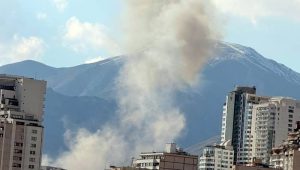
Four days after the cessation of hostilities between Iran’s regime and the United States and Israel, one might expect signs of de-escalation inside the country. Instead, what persists is a communications blackout, a security-focused atmosphere, and a widening credibility gap between the state’s narrative and public perception. According to reports by Net Blocks, Iran’s internet disruption has now exceeded 1,000 hours—stretching into its sixth week. Access to the global internet remains effectively cut off for the general population, who are largely confined to the country’s National Information Network.
At the same time, reports indicate that selected accounts—particularly those linked to privileged SIM cards—retain access to global platforms, often to amplify pro-government messaging. This is not merely a technical restriction; it is a deliberate architecture of information control.
Executions, Organized Dissent, and the Regime’s Shrinking Margin for Control in Iran
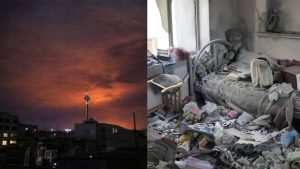
At a time when Iran’s regime is doubling down on repression—most visibly through the acceleration of execution sentences—there are mounting indications that the country is entering a qualitatively different phase of internal crisis. The state’s reliance on coercive instruments is not new. What is new, however, is the evolving nature of societal resistance—more organized, more persistent, and increasingly difficult to contain through traditional methods of control. This shift is not occurring in isolation. It is unfolding alongside a broader regional context in which Iran’s internal dynamics are becoming inseparable from questions of stability and security across the Middle East.
Executions in Iran are not episodic responses to isolated threats; they are embedded within the architecture of governance. Since the establishment of the current political system, capital punishment has functioned as a mechanism for managing crises of legitimacy. In moments of heightened vulnerability, the state has consistently turned to maximalist repression.
A Fresh Wave of Arrests and Judicial Repression in Iran

As the widespread repression of citizens continues across different parts of Iran, the intelligence and law enforcement bodies of Iran’s regime have announced the arrest of dozens more citizens; allegations once again raised with accusations such as ties to enemies and espionage.
The IRGC Intelligence Organization announced that 123 people have been arrested in the provinces of Hamedan, Semnan, and Gilan on charges of links to anti-government networks, Israel, and foreign-based media outlets.
According to this claim, 18 people were arrested in Hamedan as part of several networks that were allegedly involved in collecting and transmitting information from sensitive sites and planning sabotage operations, and weapons and ammunition were also reportedly discovered from them.
21-Hour Negotiations Between United States and Iranian Regime End with No Results
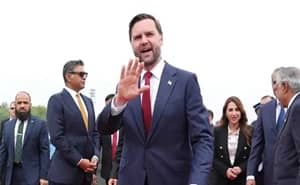
According to Reuters, after 21 hours of intensive talks between representatives of the United States and the Iranian regime in Pakistan, the negotiations ended without reaching an agreement, and the American delegation left the country. U.S. Vice President J.D. Vance said in a brief press conference Sunday morning Islamabad time that the talks had been detailed and substantive but ultimately failed to produce a result.
He emphasized that this lack of agreement would have more negative consequences for Iran than for the United States. Referring to Washington’s position, Vance said that “our red lines were completely clear; we made clear where we have flexibility and where we do not.” According to Vance, the Iranian regime refused to accept the terms proposed by the United States, while the American side had entered the negotiations in good faith. He also added that the best and final U.S. offer remains on the table, and it now depends on Iran’s decision whether to accept it.
Iran-US Talks End Without Deal After 21 Hours, Nuclear and Hormuz Disputes Persist
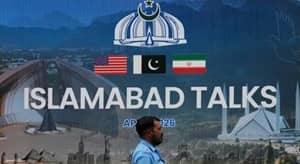
Marathon negotiations in Islamabad failed to produce a final agreement, but both sides signaled continued diplomacy amid deep divisions over nuclear issues, sanctions, and maritime control.
The Iran-US talks ended without a deal after roughly 21 hours of negotiations, leaving key disputes unresolved and the fragile ceasefire at risk. According to Reuters, the high-level meeting—described as the most direct engagement in over a decade—failed to bridge core differences despite intensive discussions.
Iran’s Foreign Ministry said the Iran–US talks covered a wide range of issues, including the nuclear program, the Strait of Hormuz, sanctions relief, war reparations, and a broader end to regional conflict. Spokesman Esmail Baghaei stated that progress depends on “serious intent and goodwill” from the United States, warning against what Tehran views as excessive or unlawful demands.
Stockholm Rally Condemns Executions of PMOI Prisoners and Protesters, Backs Democratic Republic in Iran
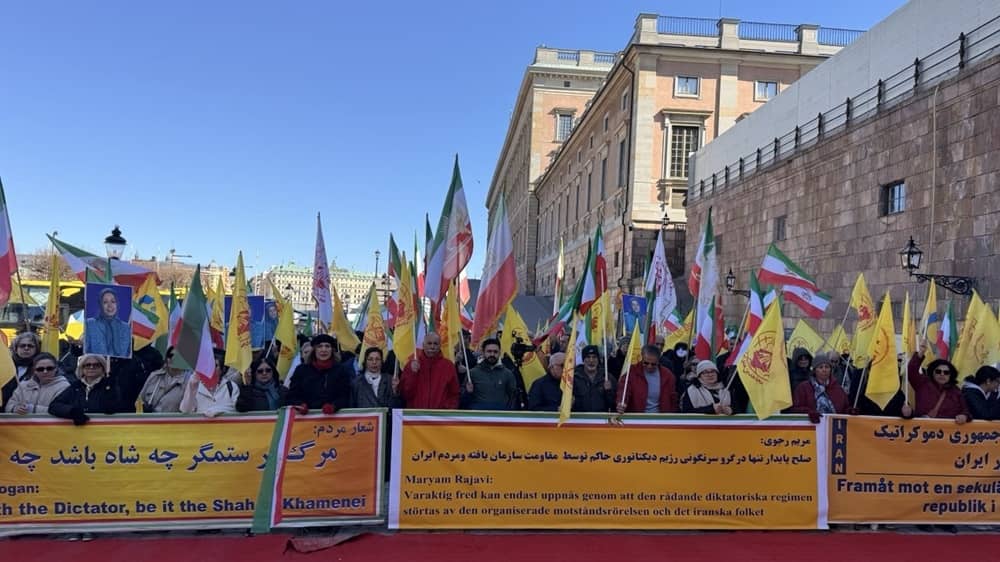
Stockholm, Sweden – April 11, 2026 — Freedom-loving Iranians and supporters of the Iranian Resistance, gathered in front of the Swedish Parliament in Stockholm to support the overthrow of the ruling clerical dictatorship in Iran. They also rejected the former monarchical dictatorship and voiced their backing for the establishment of a democratic republic.

Participants, described as freedom-loving Iranians, condemned the executions of political prisoners, including members of the People’s Mojahedin Organization of Iran (PMOI/MEK) and protesters detained during the January uprising, calling the executions acts of repression aimed at suppressing dissent.
Freedom-Loving Iranians Rally in Paris Back Democratic Republic, Condemn Executions of Political Prisoners

Paris, April 11, 2026 — A large gathering of Iranians took place at Place du Trocadéro, where supporters of the National Council of Resistance of Iran (NCRI) and the People’s Mojahedin Organization of Iran (PMOI/MEK), joined by Kurdish and other Iranian nationalities, rallied and marched in support of a democratic republic and the Iranian people. Protesters condemned the executions of political prisoners, including members of the PMOI and young protesters detained during the January uprising, describing the executions as acts of repression aimed at suppressing dissent.